
If you manage newsletter sponsorships, the right tools can be a game-changer. They handle the nitty-gritty of scheduling, invoicing, and reporting. This saves you a ton of time and helps you sidestep costly mistakes that can sneak up on anyone. Moving away from a jumble of spreadsheets to a real workflow means you get paid on time, every time, and an ad slot never gets missed.
Why Spreadsheets Are Holding Your Newsletter Back
Juggling sponsors in a spreadsheet? You probably know the low-grade, constant anxiety that comes with it. Did I send that invoice? Is this the right ad copy? Did they even pay yet? These are not just minor headaches. They are the little things that cost you real money and can strain your professional relationships. For many creators, this manual grind is the silent killer of growth.
The hidden costs of clinging to spreadsheets add up faster than you think. All those hours spent on admin tasks are hours you are not spending on creating content or finding new partners. A simple tool could do that work in seconds. Think about the time it takes to manually change a cell from "invoiced" to "paid," then jump over to your calendar to double-check the ad is scheduled for the right day. Every single manual step is another chance for something to go wrong.
The True Cost of Manual Management
This mess is not just an internal problem. It makes you look unprofessional to your sponsors. When a partner has to chase you for an invoice or resend ad creative because it got lost in an email chain, it chips away at their confidence. You are not just selling ad space. You are selling them on a smooth, professional partnership. Spreadsheets make that promise hard to keep. For a deeper dive into the numbers, this CRM automation versus manual data entry ROI comparison highlights the financial upside of getting organized.
Let's be honest, the newsletter world is exploding. Professionalism is quickly becoming the one thing that sets successful creators apart from the rest.
A platform like beehiiv saw its newsletter count jump from around 26,911 to 52,809 in a single year. That is a 96.2% growth rate, which tells you just how crowded this space is getting. You can see more in this 2025 State of Newsletters report.
With so much competition, sponsors can afford to be picky. They will always choose to work with the newsletters that are organized and easy to partner with.
Let’s look at what this really means in practice.
Manual vs. Automated Sponsor Workflow
| Workflow Stage | Manual Method (Spreadsheets & Email) | Automated Tool Method |
|---|---|---|
| Sales & Booking | Back-and-forth emails, manually checking calendar availability. High risk of double-booking. | Sponsors book available slots directly from a public-facing calendar. The system handles confirmation. |
| Contracts | Manually creating, sending, and tracking documents. Chasing for signatures via email. | Contracts are auto-generated from templates and sent for e-signature. Status is tracked in-app. |
| Invoicing | Creating invoices one by one in Word or PayPal. Manually tracking "sent," "due," and "paid." | Invoices are generated and sent automatically upon booking. Payment reminders go out on a schedule. |
| Ad Management | Creative assets get buried in email threads. Last-minute scrambles to find the right copy and links. | All ad creative, copy, and tracking links are stored with the booking. Centralized and easy to find. |
| Fulfillment | Manually pasting ad content into your newsletter draft. Prone to copy-paste errors. | The tool provides the correct ad block to insert, or integrates directly with your ESP. |
| Reporting | Manually pulling stats (clicks, opens) and compiling them into a report to send to the sponsor. | Performance reports are automatically generated and shared with the sponsor via a dedicated portal. |
The difference is night and day. One path is filled with friction and potential for error, while the other is built for efficiency and a better partner experience.
Moving Beyond Manual Chaos
A smooth, professional sponsorship workflow is not a "nice-to-have" anymore. For any serious creator, it is essential.
Using a dedicated newsletter sponsor CRM brings everything under one roof, from the first email to the final performance report. This is not just about getting organized. It is about unlocking more revenue, building stronger sponsor relationships, and freeing yourself up to do what you do best: create amazing content.
Building a Professional Sponsorship Workflow
If you want a reliable sponsorship program, you cannot rely on guesswork. It needs a clear, repeatable process. This means stepping away from the chaos of scattered emails and messy spreadsheets. You need to break down the entire lifecycle of a sponsorship deal into predictable stages. This is not just about saving time. It is about looking like a pro that sponsors are eager to work with again.
That jump from manual chaos to an organized system is a game-changer for any creator looking to grow their revenue.
This diagram perfectly illustrates that journey, from the familiar stress of spreadsheet management to a smooth, automated workflow.
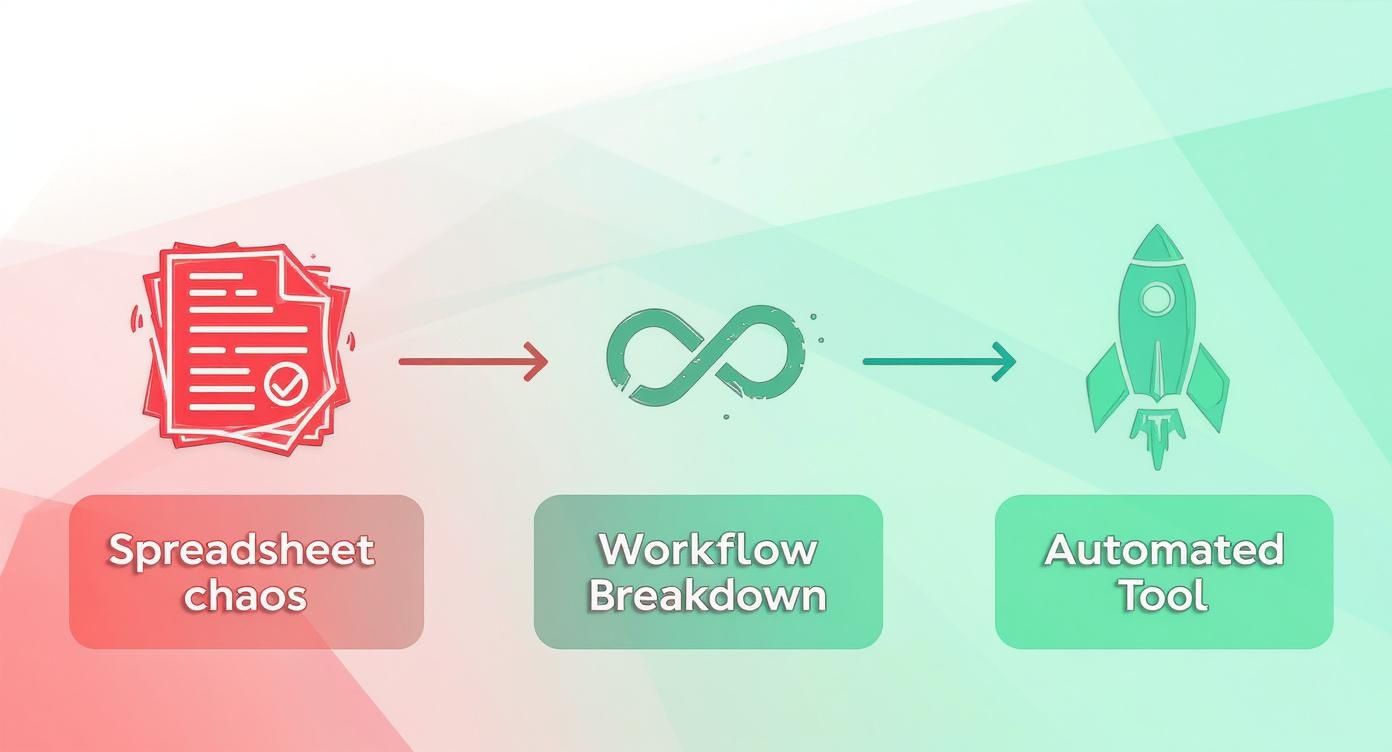
Think of it this way: you need to build the system first. Only then can you find the right tool to power it.
From Initial Contact to a Closed Deal
Let's start at the beginning with your sales pipeline. This is where you track every potential sponsor, from the moment they first reach out until you have a signed agreement. Without a solid process here, promising leads just vanish into your inbox, never to be seen again. Your goal is to create a simple, reliable way to capture, track, and follow up with every single brand that shows interest.
Once a sponsor gives you the green light, you need to lock in the commitment and make sure you get paid. This boils down to two critical pieces of the puzzle:
- Contracts: Even a simple agreement that outlines the ad placement, dates, and payment terms is a must. It protects you and the sponsor, leaving no room for confusion.
- Invoicing: You need to send professional invoices, and you need to send them on time. Manually creating PDFs and chasing down payments is a massive time-drain that is incredibly easy to automate.
Nailing these admin steps right off the bat sets a professional tone. It helps you avoid those awkward money conversations later on.
Managing Ad Inventory and Creative Assets
With deals signed, your focus shifts to actually running the ads. First up is managing your ad inventory. I can tell you from experience that nothing sours a sponsor relationship faster than a double-booking or a completely missed placement. A visual calendar showing all your sold and available ad slots is non-negotiable. If you want to see what this looks like in practice, check out how newsletter ad scheduling software gives you a bird's-eye view of your inventory to prevent these costly mistakes.
Next, you have to wrangle the ad creative. You need one central hub to collect the sponsor's copy, images, and tracking links. Frantically digging through old email threads for assets minutes before your publishing deadline is a recipe for disaster. This is where automated approval workflow systems can be a lifesaver, ensuring all creative is submitted and approved well ahead of time.
A classic mistake I see creators make is treating ad creative as an afterthought. The pros have a firm deadline for asset submission, usually 3-5 business days before the send date. This simple rule prevents so much last-minute chaos.
Proving Your Value with Performance Reporting
The final piece of the workflow happens after the ad has gone live. This is where you prove your value by delivering a clear, concise performance report. Do not just send a screenshot. Give them a clean report that shows exactly what they paid for, highlighting key metrics like clicks, opens, and engagement.
This is not just a nice thing to do. It is a powerful sales tool. A great report gives a sponsor all the data they need to justify rebooking with you. It helps you turn a one-off deal into a long-term partnership. Each of these stages flows into the next, creating a seamless and professional experience from start to finish.
What to Look For in a Sponsor Management Tool
Picking the right tool to manage your newsletter sponsors can feel overwhelming, but it does not have to be. Forget about platforms with a million confusing bells and whistles. You just need something that nails the fundamentals so you can get back to creating great content.
Think of it this way: the best tools bring clarity and automation to the table. They turn your messy, spreadsheet-driven workflow into a smooth, predictable system.
This diagram shows what that organized workflow actually looks like inside a dedicated tool. You can see clear, defined stages for every single sponsorship deal.
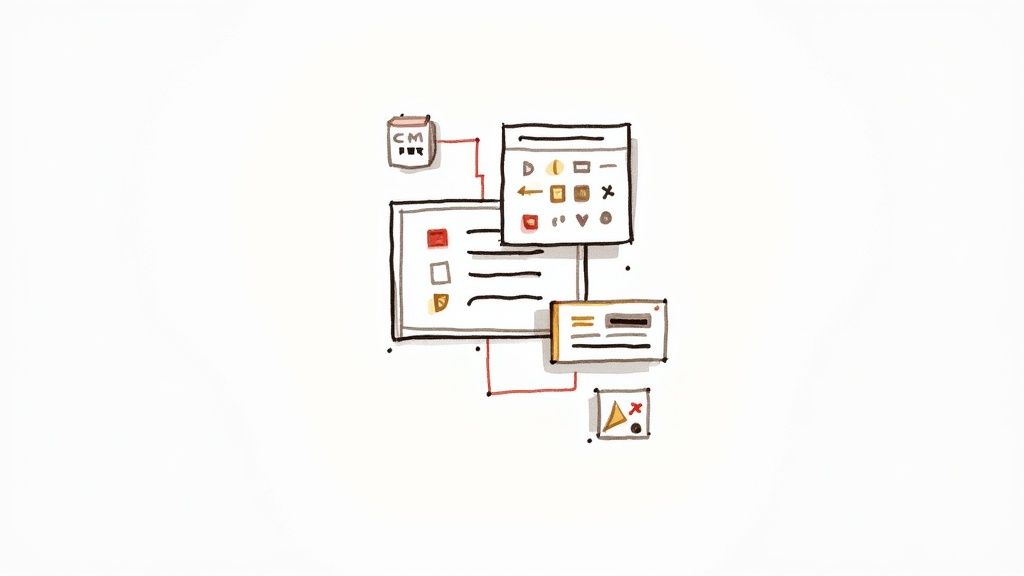
Having this kind of bird's-eye view is a game-changer. It gives you an instant status update on every campaign without having to dig through a mountain of old emails or cross-reference different spreadsheets.
The Non-Negotiable Features
When you start comparing platforms, there are a few features that are absolute must-haves. These are the ones that will save you the most time and have the biggest impact on both your sanity and your revenue.
A solid system needs to have:
- A Centralized CRM: This is your command center. It is where every email, contract, note, and piece of communication with a sponsor lives. No more frantic inbox searches for that one critical detail.
- A Visual Ad Calendar: We've all been there, the fear of double-booking an ad slot. It is a rookie mistake that can seriously damage a relationship. A visual calendar shows you all your sold and available inventory at a glance, making scheduling foolproof.
- Automated Invoicing and Payments: Manually creating invoices and then chasing them down is a soul-crushing time suck. The right tool will automatically send invoices and payment reminders, which means you get paid faster without sending awkward "just following up" emails.
One of the most underrated features I've seen is a creative asset library. It is a dedicated portal where sponsors upload their ad copy, logos, and tracking links. Trust me, you will never have to scramble for materials five minutes before your newsletter is scheduled to go out again.
Reporting That Proves Your Worth
If I had to pick one thing, the most important feature might just be the reporting dashboard. A good tool makes it incredibly simple to generate clean, professional reports that show sponsors exactly what they paid for. This is how you turn a one-off sponsorship into a long-term partnership.
But what do sponsors actually care about? They want to see proof of momentum and engagement. They are looking at your subscriber growth, unique clicks on their ad, and whether you are retaining other sponsors. A great report goes beyond a simple open rate. It should show new subscriber counts over the last 30 to 90 days to really demonstrate your newsletter's value. You can find more on this in an excellent breakdown from Wellput.io.
Ultimately, you want a platform that can grow with you. It should simplify every step, from booking and invoicing to reporting and fulfillment. With the right features in place, you can even take advantage of things like automated newsletter ad insertion to make that final step of placing the ad completely effortless.
From Chaos to Control: A Real-World Scenario
Theory is great, but let's see what this looks like in practice.
Meet Alex, the creator of 'The SaaS Weekly,' a newsletter that is really starting to gain traction with tech founders and marketers. For months, Alex managed sponsorships with a color-coded spreadsheet and a maze of email folders. Sound familiar? It was organized chaos at best.
An email lands in Alex's inbox from "Growthly," a new CRM startup wanting to sponsor a primary ad slot. In the old days, this kicked off a frantic, manual scramble. Alex would have to dig through the spreadsheet to find an open date, then start a long back-and-forth email chain just to get it confirmed.
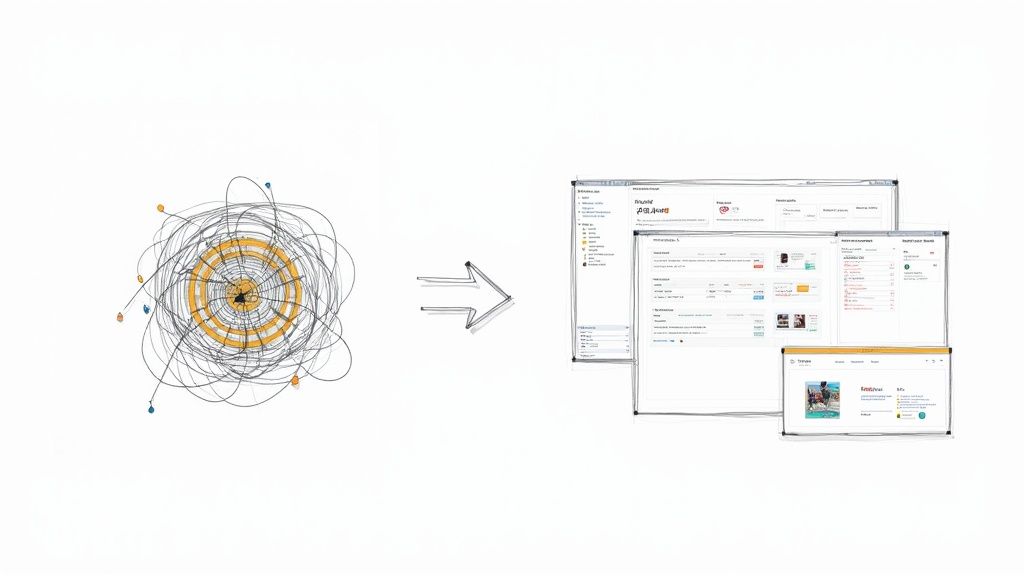
This time, things are different. Alex has finally moved to a real sponsor management tool.
From Inquiry to Invoice in Minutes
Instead of digging through a spreadsheet, Alex replies with a polished, templated email that links to a public booking page. This page shows Growthly exactly which ad slots are available and when. It is a small touch, but it makes a huge difference in looking professional and being easy to work with.
Here is a simplified version of the email Alex fired off:
Hi [Sponsor Name],
Thanks so much for your interest in sponsoring The SaaS Weekly! We'd love to partner with you.
You can view all of our available ad slots, pricing, and package details directly on our booking page here: [Link to Public Booking Page]
Once you select a date that works for you, the system will guide you through the next steps. Let me know if you have any questions!
Best,
Alex
The team at Growthly clicks the link, sees an open slot in two weeks that is perfect for their launch, and books it right there. The moment they confirm, the system automatically generates and sends a professional invoice. What used to be a messy, multi-day email exchange is now done in minutes.
Automated Asset Collection and Scheduling
With the deal secured and payment pending, the system handles the next tedious job: collecting the ad creative. Growthly gets an automated email directing them to a simple portal where they can upload their logo, ad copy, and the crucial tracking link.
No more hunting through email threads for attachments. Everything is neatly tied to the booking in Alex's calendar. Better yet, once the assets are uploaded, the ad slot in the calendar visually updates from "Booked" to "Ready for Placement." This simple cue prevents that nightmare scenario of sending a newsletter with a blank or wrong ad. Of course, getting paid on time is just as important, which is why reliable automated payment tracking for newsletters is a must-have to keep cash flow steady without constant follow-ups.
Delivering a Report That Secures Renewals
Two days after 'The SaaS Weekly' issue goes live, the system automatically generates a performance report and sends it to Growthly. This is not just a screenshot of open rates. It is a clean, professional PDF that highlights the metrics sponsors actually care about.
The report breaks down performance clearly:
- Total Clicks: The raw number of clicks the sponsored link received.
- Click-Through Rate (CTR): The percentage of subscribers who clicked the ad.
- Audience Snapshot: A quick overview of the newsletter's subscriber count and engagement for that issue.
The Growthly marketing manager is thrilled. The campaign beat their click target by 15%, and the report gave them everything they needed to prove the ROI to their boss. They immediately reach back out to Alex to book a package of four more ad slots.
Just like that, a one-time deal becomes a recurring partnership. This whole seamless process, from first contact to renewal, was only possible because Alex ditched the spreadsheet chaos for a controlled, automated workflow.
How to Migrate to a New System Without Breaking Things
Making the leap to a new tool for managing your newsletter sponsors can feel like a huge undertaking. I get it. The fear is that you'll drop the ball on an active deal or just create a massive headache for yourself. But with a solid plan, the transition can be surprisingly painless.
The first step is always about connecting the dots. Before you move a single piece of data, you need to link up your essential services. Think of it as building the foundation for your new, automated workflow.
Most good sponsorship platforms will ask you to connect your key accounts right away. You will typically link your email service provider (like beehiiv or Substack), your calendar for scheduling, and your payment gateway, which is usually Stripe. Once connected, the new tool can automatically see your availability and process payments. This immediately lifts a ton of manual work off your shoulders.
Tackling Your Data Migration
Alright, let's talk about the scariest part for most creators: moving all that existing data. You have got active deals, sponsor contacts, and future bookings all living in a spreadsheet. The thought of losing any of that is enough to make you stick with the old, chaotic system.
But we can break it down.
First thing is first: clean up your spreadsheet. Seriously. This is the perfect excuse to finally fix those inconsistent date formats, get rid of duplicate contacts, and make sure every single deal has a clear status (e.g., "live," "invoiced," "completed"). A little bit of prep work here will save you from a world of pain later.
Once your data is tidy, you can start the move. Here is how I would approach it:
- Export Sponsor Contacts: Pull all your sponsor info into a simple CSV file. All you really need are columns for the company name, the contact person, and their email. This will be the first thing you upload into your new tool’s CRM.
- Manually Enter Active Deals: This might sound tedious, but for any current or future sponsorships, I strongly recommend entering them into the new system by hand. It is far safer than a bulk import. It ensures crucial details like ad creative deadlines and scheduled send dates are 100% correct from day one.
- Archive, Don't Import, Old Deals: You do not need to import years of completed sponsorships. Just save your old spreadsheet somewhere safe for reference. Starting fresh in the new system keeps your dashboard clean and focused on what is actually making you money right now.
I have seen so many people make the same migration mistake: they try to move everything at once. Just focus on what is active and what is coming up. A clean start in a new system is way more valuable than a cluttered dashboard full of old deals.
By taking it one step at a time, you can move to a more powerful system without all the drama. This is not just about swapping out a tool. It is about giving your entire sponsorship operation a serious upgrade.
Got Sponsorship Questions? We've Got Answers.
Once you start treating sponsorships like a proper part of your business, a ton of questions pop up. It is a good thing. It means you are taking it seriously. The answers, thankfully, are usually pretty straightforward. Let's dig into the common hurdles creators face when they finally ditch the spreadsheet chaos.
Landing those first few sponsors is a massive win, but it is also where the real work begins. You need to look professional and deliver results so they will want to come back for more. But you do not want to get bogged down with a complicated system before you really need one.
What Tool Should I Use When I Only Have a Couple of Sponsors?
With just one or two sponsors, going all-in on a dedicated platform can feel like buying a bus to drive to the corner store. It is overkill.
The most important thing at this stage is not the software, but building solid habits. You can absolutely get by with a simple, free CRM and your calendar. The real goal is to nail down a process you can repeat every single time a new deal comes in.
Once you find yourself juggling three or more active sponsors at once, that is your cue. The time you will save with a dedicated tool will easily pay for itself.
How Do I Figure Out What to Charge?
Pricing is always a bit of an art, but there is a science to it, too. A fantastic place to start is just by doing some homework. See what other newsletters in your niche with a similar audience size are charging. This gives you a realistic baseline to work from.
A simple flat fee is the easiest way to kick things off. For instance, a newsletter with 10,000 engaged subscribers might reasonably charge between $250 to $750 for a main ad placement.
As you run more campaigns, you'll start gathering performance data. This is your gold. Having real numbers to back up your value is how you confidently raise your rates. Eventually, you can introduce more sophisticated pricing models like cost-per-click (CPC), which larger, data-focused sponsors love to see.
Just to put the potential in perspective, a newsletter that charges $10,000 for a special monthly edition can bring in $120,000 a year from that one slot alone. It is worth exploring different newsletter revenue models to see how sponsorships can fit into your bigger picture.
What Metrics Actually Matter in a Sponsor Report?
Sponsors want to see a return on their money. Your report is the proof. Open rates are interesting, but they do not really show impact.
You need to focus your reports on the metrics that tie directly to their business goals. These are the three that count:
- Total Clicks: The raw number of people who clicked their link. Simple, but crucial.
- Click-Through Rate (CTR): The percentage of your audience that actually engaged with the ad.
- Conversions: This is the holy grail. If you can track how many people signed up or bought something, you have proven your value beyond a doubt.
A pro tip? Do not just send numbers. If you get positive replies from your subscribers about a sponsor, screenshot them and include them in your report. That kind of feedback is pure gold and can be the single thing that convinces a sponsor to renew.
Ready to stop wrestling with spreadsheets and start managing your sponsorships like a professional? Ad Slots handles everything from booking and invoicing to fulfillment and reporting, all in one place. See how you can save hours every week at https://adslots.co.