
At its core, a newsletter advertising platform is software designed to automate the entire process of selling, managing, and tracking sponsorships for your newsletter. Think of it as your dedicated operations manager. It handles all the tedious administrative work so you can stay focused on what really matters: creating fantastic content.
Why Newsletter Advertising Is Exploding
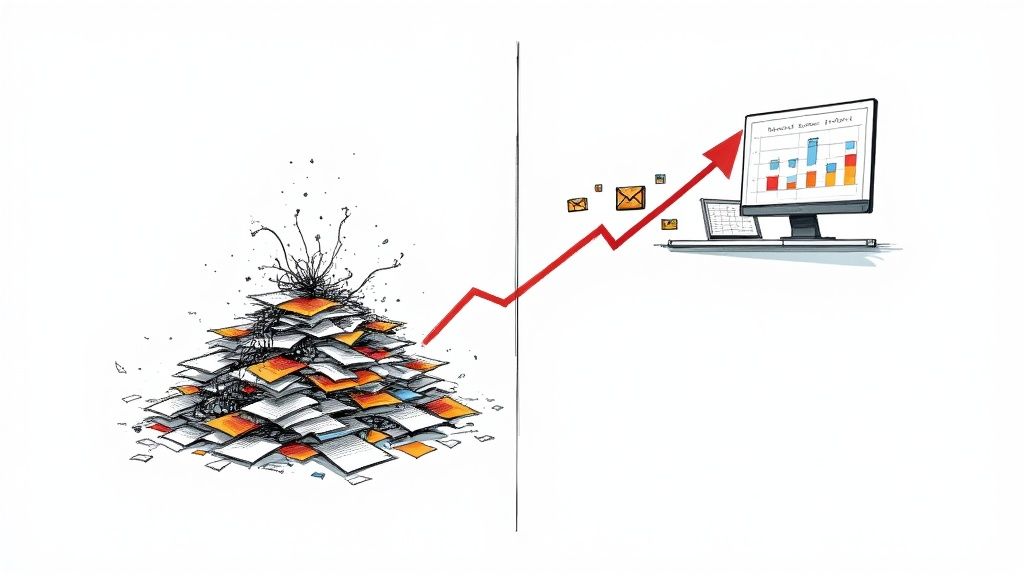
Let's be real. Managing ad sales by hand is a total grind. Once you've built a loyal audience, monetizing your newsletter is the logical next step. But that exciting new chapter can quickly devolve into an administrative nightmare of back-and-forth emails, messy payment tracking spreadsheets, and chasing down ad creative.
This is the classic growing pain every successful creator hits. All that "busywork" pulls you away from what you're actually good at, writing stuff your audience loves. The more sponsors you land, the more your time gets eaten up by logistics instead of creation.
The Rise of Newsletters as a Trusted Channel
In a world of ever-changing social media algorithms, the humble newsletter has emerged as an incredibly powerful way for brands to reach engaged audiences. It's a direct line to people who have explicitly asked to hear from you. No algorithm can get in the way.
That direct connection fosters a level of trust that’s hard to find anywhere else. Brands are catching on and shifting their ad dollars accordingly. The numbers back this up.
A study by Morning Brew found their flagship newsletter maintains a 40% open rate. Similarly, HubSpot data shows the average email marketing open rate is about 21.33%. Newsletters consistently outperform this benchmark, delivering highly engaged readers.
With that kind of engagement, it's no wonder newsletters are becoming a go-to channel for advertisers who want to see real impact.
Moving From Passion Project to Profitable Business
This is where a newsletter advertising platform changes the game. It’s the modern fix for the old headache of managing ads manually. By automating everything from booking and scheduling to invoicing and reporting, these platforms give you the power to turn your passion project into a real, sustainable business.
Instead of drowning in logistics, you can focus on building an even stronger bond with your readers. Imagine a popular tech newsletter like TLDR. They could set up a self-serve portal for advertisers. A brand can visit the site, see available ad slots, book a sponsorship, and pay for it in minutes, all without a single email exchange. It's not just a massive time-saver. It makes your entire operation look far more professional to potential sponsors.
That jump from manual chaos to automated efficiency is exactly how smart creators are scaling their revenue without burning out. The tools handle the grunt work, freeing you up to focus on growth. You can find more great insights into the newsletter industry's impressive growth on beehiiv's blog.
How a Newsletter Advertising Platform Actually Works
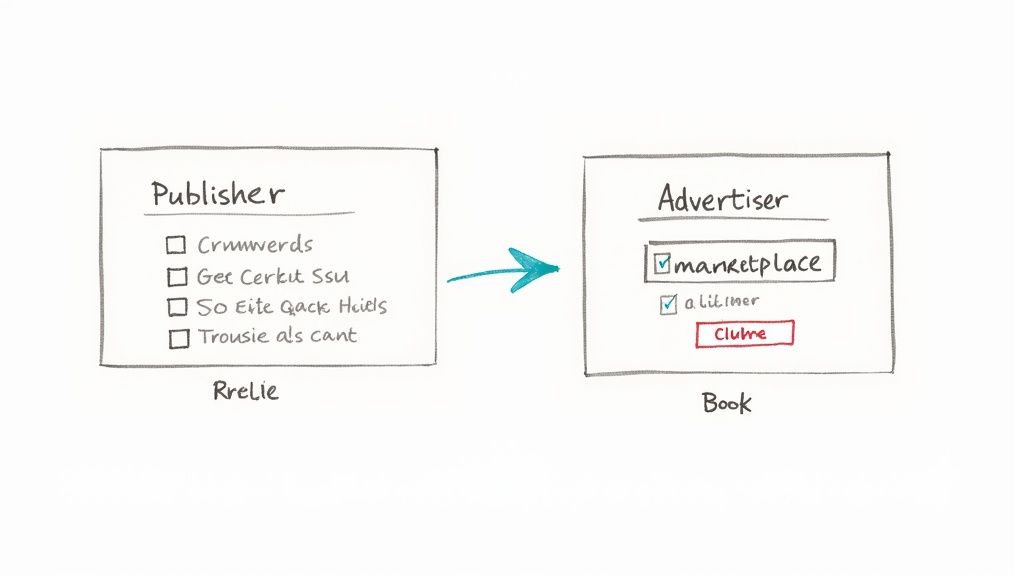
Think about trying to book a vacation by calling every single hotel individually. You'd spend hours on the phone just to compare prices and check availability. Now, think about using a site like Booking.com. That’s the leap you make when you switch from manual ad sales to a newsletter advertising platform.
It acts as the central meeting point for newsletter creators and advertisers, turning what was once a messy, time-consuming process into something incredibly straightforward.
The Two Sides of the Platform
Essentially, a newsletter ad platform is a digital marketplace and an operations manager all in one, serving two distinct groups.
For newsletter publishers, it’s their command center. It's where they can list their ad inventory, set their prices, and show off their audience stats to attract the right kind of sponsors. All the tedious back-office work that used to clog up their day is handled for them.
For advertisers, it’s like a curated catalog of opportunities. Brands can easily browse newsletters by niche, audience size, or engagement rates to find the perfect home for their message. It gives them a direct line to highly engaged audiences without all the usual guesswork and outreach.
Automating the Entire Ad Sales Workflow
The real game-changer is how these platforms automate the entire sales cycle from start to finish. Let's walk through what that actually looks like.
-
Listing Ad Inventory: A creator starts by setting up their newsletter’s profile. They define the different ad slots they sell, maybe a "title sponsorship" at the top or a "classified" at the bottom. Then, they simply set the price and mark which dates are available on a calendar.
-
Advertiser Discovery and Booking: An interested brand, let's say a company selling productivity software, logs in. They can filter for newsletters in the "business" or "tech" space with a certain subscriber count. Once they find a great match, they see the open dates and book their ad slot right there on the spot.
-
Payment and Creative Submission: As soon as the slot is booked, the platform takes over. It securely processes the payment, often through an integration like Stripe, and automatically sends an invoice. The advertiser then uploads their ad copy and images, which are neatly stored for the creator to grab when they need them.
This self-serve model cuts out almost all the back-and-forth emails. A deal that used to take days of negotiation can now be sealed in a few minutes.
Managing and Tracking Performance
Even after the booking is done, the platform keeps everything running smoothly in the background. It maintains an organized ad calendar and sends automated reminders to both the creator and the advertiser about upcoming campaigns, so nothing ever falls through the cracks.
The best platforms don't just handle logistics. They provide clear, actionable data. Instead of trying to track clicks in a clunky spreadsheet, both sides can log into a dashboard and see real-time metrics like open rates, click-through rates (CTR), and conversions.
This data-first approach is a massive win for everyone involved. Publishers can prove the value they deliver and justify their ad rates with hard numbers. Advertisers get the exact insights they need to measure their ROI and fine-tune their campaigns for even better results.
A feature like automated newsletter ad insertion is what makes this truly seamless. By linking the platform directly to their email service provider, creators can have the correct ad placed in the right newsletter issue automatically, without any manual copy-pasting.
What to Look For in a Newsletter Advertising Platform
Let's be honest, not all platforms are created equal. Some offer little more than a simple booking link, while others can truly automate your entire ad sales operation from start to finish. Choosing the right one means you look more professional, save a massive amount of time, and can finally focus on scaling your newsletter.
So, how does a platform actually work? It acts as the bridge connecting you (the creator) with advertisers, making the whole process smooth for everyone involved.
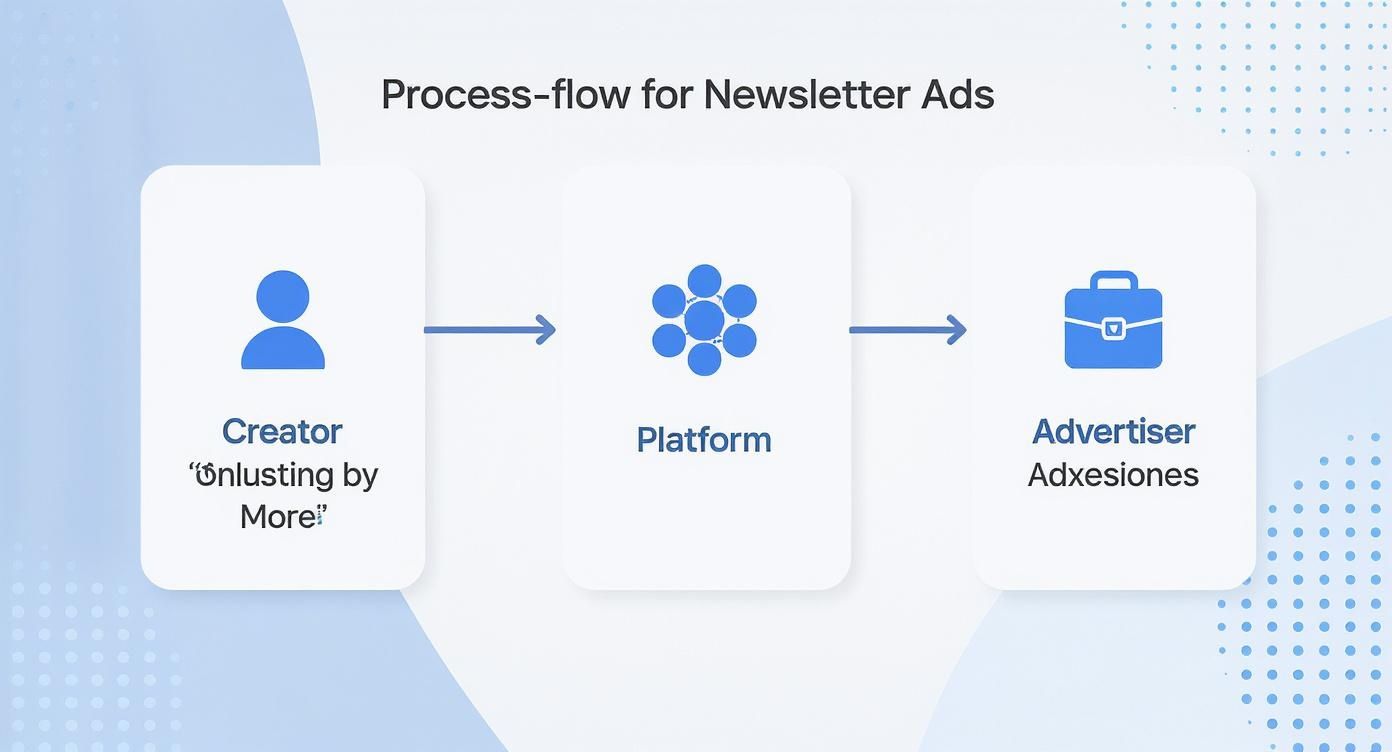
The platform becomes your central command center, making it simple for brands to find and book ads with you. Here are the non-negotiable features that make this possible.
A Self-Serve Ad Marketplace
Think of this as an online storefront for your ad inventory. A self-serve marketplace is a public page where potential sponsors can browse your available ad slots, see your rates, and book a campaign, all without ever sending you an email.
Imagine a brand wants to sponsor you. Instead of a long email chain, they just visit your marketplace, see an open "Main Sponsor" slot in two weeks, add it to their cart, and pay. Done. This one feature makes your newsletter bookable 24/7 and cuts out countless hours of administrative back-and-forth.
Dynamic Ad Inventory Management
If you're still managing your ad sales in a spreadsheet, you know how quickly it becomes a mess. A dynamic ad inventory system is the solution. It’s an interactive, real-time calendar of all your ad slots, showing what's available, what's sold, and what's on hold.
But it’s so much more than just a calendar. A great platform lets you:
- Create Custom Ad Products: Easily define different ad types like "Title Sponsorship," "Deep Dive," or "Classified Ad," each with its own price and description.
- Block Off Dates: Quickly mark holidays or personal time off as unavailable so you don't get surprise bookings.
- Forecast Your Revenue: Get a clear picture of your booked and potential income for the weeks and months ahead.
Staying organized is everything. For anyone serious about growth, using dedicated newsletter ad scheduling software is the key to managing your calendar like a pro.
Automated Booking and Payments
This is where the real magic happens. Once an advertiser picks a date, the platform should take over completely. That means automatically sending a confirmation email, generating a professional invoice, and securely processing their payment through an integration like Stripe.
This automation ensures you get paid on time, every time, without the awkwardness of chasing down invoices. For advertisers, it provides a seamless and trustworthy booking experience that encourages them to come back again and again. As you evaluate options, look for how well a platform’s automation fits with your current workflow. Solid tools should complement an effective email marketing automation strategy, not complicate it.
To see just how big a difference this makes, let's compare the old way with the new way.
Manual Ad Management vs Platform Automation
| Task | Manual Process (Without a Platform) | Automated Process (With a Platform) |
|---|---|---|
| Availability Checks | Back-and-forth emails confirming open dates. | Advertiser sees real-time availability on a public calendar. |
| Booking | Manually updating a spreadsheet and sending a confirmation. | Advertiser self-books online; the calendar updates instantly. |
| Invoicing | Creating and sending invoices by hand. | Invoices are generated and sent automatically after booking. |
| Payments | Chasing payments and sending follow-up reminders. | Secure payment is collected upfront via Stripe or another gateway. |
| Creative Collection | Emailing reminders to get ad copy and images on time. | Automated reminders are sent to the advertiser before the deadline. |
As you can see, the right platform doesn't just save a little time. It completely overhauls your workflow.
Easy-to-Read Performance Dashboards
After an ad runs, both you and your sponsor will want to know one thing: how did it do? A good platform gives you a clear, simple dashboard that tracks the most important metrics.
No more fumbling with spreadsheets to calculate click-through rates. A solid dashboard will instantly show you total impressions, CTR, and even conversion data. This is the proof you need to show advertisers their investment is paying off.
This data-driven approach lets you confidently justify your ad rates and helps sponsors see a clear return, making them far more likely to book again. It's no wonder that a Who's Who in Publishing report noted that 46% of marketers find newsletters generate ad revenue faster than other content formats. The results are clear and immediate.
How to Choose the Right Platform for You
Picking the right newsletter advertising platform isn’t a one-size-fits-all deal. What works for a solo creator just getting their sea legs will be totally different from what a small media company needs to scale. The right choice can be a game-changer, saving you hours of admin work and making your ad sales process look incredibly professional.
To make a smart decision, you have to look beyond the shiny marketing promises. You need to dig into the core features that will actually make a difference for you. Getting this right means finding a true asset for your business, not just another monthly subscription fee to track.
Your Personal Buyer's Checklist
So, where do you start? Run every platform you're considering through this simple checklist. These questions will help you cut through the marketing fluff and zero in on what truly matters for your newsletter.
-
Is it actually easy to use? A platform's main job is to save you time. Can you get your ad products set up, connect your Stripe account, and have a live storefront in under an hour? If you need a computer science degree to figure it out, it’s already failing.
-
How do they get paid? Look closely at the pricing. Some platforms charge a flat monthly fee, while others take a percentage of your ad revenue. A commission model can be great when you're starting out, but a flat fee might save you a ton of money once you have a steady stream of sponsors.
-
Does it play nice with your ESP? Check how well it integrates with your email service provider, whether that's Beehiiv, Substack, or something else. A good connection means your ads can be dropped into your newsletter automatically, saving you from the tedious and error-prone world of manual copy-pasting.
-
Do they bring sponsors to you? This is a big one. Does the platform just give you tools to manage sponsors you find yourself, or does it have its own network of advertisers? A built-in network can be a massive advantage, serving up new leads you'd never have found on your own.
A Practical Example: A Newsletter for Remote Workers
Let's make this real. Imagine you run "The Remote Roundup," a weekly newsletter with 25,000 subscribers who are all remote workers, freelancers, and digital nomads. Your needs are very specific.
You'd want a platform that has deep connections with SaaS, productivity, and tech companies. Getting sponsorship offers from project management tools or VPN services would be a perfect fit for your audience. You'd also need a way to manage both the deals you sell directly and the ones that come from the platform's marketplace, all in one place. Essentially, the platform should act as your command center, much like a good newsletter sponsor CRM keeps all your client communications tidy.
This focused approach helps you land sponsors whose products your readers will genuinely love, which means better results for the advertiser and more repeat business for you.
Making the Final Decision
The newsletter world is booming. Valued at USD 14.2 billion in 2024 by sources like Verified Market Research, the market is on track to hit USD 23.92 billion by 2033. That explosive growth means there's a huge opportunity for creators, but it also means you need professional tools to stand out from the crowd.
Ultimately, you're looking for a platform that feels like a natural part of your business. It should handle the boring stuff, give you clear data, and help you grow your ad revenue without compromising the content your readers love. For a wider view on how different tools help creators earn a living, check out this ultimate guide to creator monetization platforms. By carefully weighing your options against your specific needs, you can find a partner that will help your newsletter truly thrive.
It's one thing to talk about theory, but the real "aha!" moment comes when you see how a newsletter advertising platform cuts through the chaos of manual ad sales.
Let's pull back the curtain and walk through how our own platform, AdSlots, works in the real world. We'll look at it from both sides of the coin: first, how a newsletter creator gets set up, and then how an advertiser finds and books a sponsorship with them.
Here's a quick look at the AdSlots dashboard. It gives creators a single, clear view of upcoming ads, open slots, and total revenue.
This dashboard alone is a game-changer. It instantly replaces that messy spreadsheet and gives publishers an at-a-glance command center for their entire ad business.
The Creator's Experience: Setting Up for Success
Let's say you run a weekly newsletter called "The SaaS Scoop" with 15,000 subscribers. Your first move in AdSlots is to build your public-facing storefront. We designed this to be incredibly fast. You can go from zero to a live, bookable ad marketplace in just a few minutes.
-
Define Your Ad Products: First, you list what you're selling. For "The SaaS Scoop," you might offer a "Title Sponsorship" for $500 and a smaller "Classified Ad" for $150. You can add a quick description for each, so advertisers know exactly what they're getting for their money.
-
Set Your Availability: Next, you open up your calendar. It's as simple as clicking the dates you want to sell. Taking a week off? Just block those dates so no one can book them. This one step eliminates all those painful back-and-forth emails about what's available and when.
-
Connect Your Payments: The final piece is linking your Stripe account. This is the key to automation. When an advertiser books a slot, the payment is handled securely on the spot, and the money lands directly in your account. You'll never have to create or chase an invoice again. For more on this, check out our guide on the benefits of Stripe integration for newsletter ads.
With those three steps done, your ad sales are officially on autopilot. You now have a professional, self-serve portal that lets advertisers book sponsorships 24/7, even while you're asleep.
The Advertiser's View: Finding the Perfect Fit
Now, let's flip the script. An advertiser from a new project management tool wants to reach tech professionals. They find the AdSlots marketplace, filter by category, and discover "The SaaS Scoop." It's a perfect match.
From their side, the process is just as refreshingly simple.
- Browse and Select: They click on your newsletter's profile to see your subscriber count, open rates, and the ad products you offer. The "Title Sponsorship" looks like exactly what they need.
- Book and Pay: They pull up your real-time calendar and see an open slot in three weeks. They select it, fill in their company details, and pay with a credit card right then and there.
- Submit Creative: After paying, they're prompted to upload their ad copy and logo. The platform neatly organizes all this for you and sends a notification. No more digging through emails for ad assets when you're on deadline.
The entire transaction, from discovery to payment, can happen in under five minutes without a single email being sent. This is the magic of a dedicated platform. It removes the friction for everyone, turning a drawn-out negotiation into a simple e-commerce transaction.
This workflow directly solves the biggest headaches of selling ads manually. The endless email threads, the confusing spreadsheets, and the awkward payment follow-ups are all replaced by a smooth, automated system. Creators get dozens of hours back each month, and advertisers get a professional, easy experience that makes them want to come back for more.
The platform handles the admin, so you can get back to what you do best: building relationships and creating great content.
The Future of Your Newsletter Business
Let's be clear. Moving away from spreadsheets isn't just a small upgrade. It’s a total game-changer for how the best newsletters are run. When you bring in a dedicated advertising platform, you’re not just organizing your sales process. You’re transforming your entire monetization strategy from a time-sucking chore into a professional, scalable growth engine.
This shift gives you back your most precious resource: time. Time you can pour back into what really matters, writing killer content that keeps your audience hooked.
By bringing everything from ad bookings and payments to performance tracking under one roof, you instantly professionalize your entire operation. Sponsors are no longer just emailing a creator. They're partnering with a legitimate media brand.
What's on the Horizon for Newsletter Ads?
And things are only going to get better. The next big leap forward in this space will come from even smarter tech, designed to make advertiser partnerships more seamless and effective than ever.
We're heading toward a future where:
- AI-Powered Matchmaking will intelligently connect brands with their perfect newsletter partners. Think of a system that automatically analyzes your content and audience to surface ideal sponsors, saving advertisers countless hours of painful, manual research.
- Deeper Personalization will open the door to hyper-targeted ad placements. Instead of a one-size-fits-all ad, platforms could let you show different ads to different segments of your audience in the same email, making each ad more relevant and driving much better results.
The next chapter is all about smarter automation and data-backed connections. For creators, this means finding better-fit sponsors with less grunt work. For advertisers, it means sharper targeting and, ultimately, a much healthier return on their ad spend.
At the end of the day, a newsletter advertising platform is a true partner in turning your passion into a real business. It takes the operational headaches off your plate so you can get back to building an incredible relationship with your readers.
If you’re tired of living in spreadsheets and ready to seriously scale your revenue, taking a look at a platform like AdSlots is the most logical next move you can make.
Got Questions? We've Got Answers
If you're still on the fence, that's completely normal. Let's tackle some of the most common questions we hear from publishers who are thinking about using a newsletter advertising platform.
What’s This Going to Cost Me?
This is usually the first question on everyone's mind, and the answer is: it depends on the platform's model. Most platforms fall into one of two buckets.
The first is a commission-based model, where the platform takes a cut of each ad sale, typically somewhere between 10% and 30%. This is a fantastic way to get started if you're new to selling ads, because you don't pay anything until you actually make money.
The other common approach is a flat monthly subscription fee. If your newsletter is already pulling in a steady stream of ad revenue, this can be a much more cost-effective route. Your fee stays the same no matter how many ads you sell, which means you keep more of your earnings as you grow. The key is to balance the cost against the value you're getting, like access to new advertisers and time-saving tools.
Can I Still Bring in My Own Sponsors?
Of course! A good platform isn't meant to take over your business. It's there to support it. We know you’ve worked hard to build relationships with direct sponsors, and platforms like AdSlots are designed to make managing those deals easier, not replace them.
You can still bring in your own advertisers and simply use the platform as your command center. It can handle the booking, scheduling, and payment processing for your direct-sold ads right alongside the ones sourced through the platform. This keeps everything tidy and in one place, which not only saves you a headache but also makes you look incredibly professional to your clients.
What Numbers Should I Actually Be Paying Attention To?
Knowing your numbers is what separates the pros from the amateurs. A solid platform will help you track the metrics that truly matter, both for you and your sponsors.
For your advertisers, the focus is all on results. They'll want to see:
- Click-Through Rate (CTR): How many people actually clicked the ad? It’s the most basic measure of engagement.
- Conversion Rate: Of those who clicked, how many took the desired next step, like buying a product or signing up?
- Return on Ad Spend (ROAS): This is the bottom line. For every dollar they spent with you, how much revenue did they get back?
As a publisher, you'll be watching your total revenue, of course. But you should also keep an eye on your fill rate (what percentage of your available ad slots are sold?) and which ad formats are most popular. A great platform gives you a clean dashboard that puts all this info right in front of you, so you can prove your value and make smarter decisions.
Ready to ditch the spreadsheets and finally get your ad sales organized? AdSlots gives you the tools to manage sponsors, automate invoicing, and schedule your ad calendar in minutes, not hours. Learn more and get started with AdSlots today.