
Before you can juggle a weekly sponsor calendar, you need a newsletter worth sponsoring. This process is about building a solid foundation that sponsors can trust. The focus has to be on consistent engagement and a well-defined audience. That's what makes you valuable, often more so than just a big subscriber number.
When you get this part right, scheduling sponsors stops being a frantic chore. It turns into a smooth, predictable source of revenue.
Laying the Groundwork for Sponsorship Success
Jumping into sponsorships without a plan is like selling tickets to a show you haven't written yet. Potential sponsors are not just buying eyeballs; they are looking for proof of an engaged community that genuinely trusts what you have to say. So, before you ever open up a calendar to book slots, your entire focus needs to be on making your newsletter "sponsorship-ready."
Think of this as your shift from being a creator to becoming a reliable media partner. It’s all about understanding what numbers actually impress brands. Then you package your newsletter's value in a way they immediately get.
Focus on Metrics That Matter
Sponsors are savvy. They know how to spot the signals of a healthy, active readership. A huge subscriber list might look good on the surface, but experienced brands know that engagement is the real currency. For instance, Lenny's Newsletter, a major voice in the product management space, commands premium rates not just because of its subscriber count but because its open rates consistently exceed 50%. Brands will almost always ask for these metrics:
- Consistent Open Rates: This is your proof that subscribers actually look forward to your emails. If you can show an open rate of 40% or higher, you're signaling a truly loyal audience.
- Click-Through Rates (CTR): This number shows that your readers don't just read, they act. A CTR of 2-5% on your regular, non-sponsored links is a fantastic benchmark to hit before you start selling placements.
- Audience Demographics: Who exactly are you talking to? Knowing their job titles, what they're interested in, and the problems they face lets you attract sponsors who are a perfect match, which almost always leads to better results for everyone.
These aren't just numbers; they're your proof. They are the hard data that backs up your pricing and gives a sponsor the confidence to book a spot.
Before diving in, it's a good idea to see where you stand.
Sponsorship Readiness Checklist
Use this checklist to assess if your newsletter is ready to attract and retain high-quality sponsors.
| Metric | Beginner Goal | Established Goal |
|---|---|---|
| Subscriber Count | 500+ | 2,000+ |
| Average Open Rate | 35%+ | 45%+ |
| Average Click Rate (CTR) | 1.5%+ | 3%+ |
| Publishing Cadence | Consistent (Weekly) | Consistent (Weekly) |
| Defined Niche | Clear Audience Profile | Hyper-Specific Audience |
This simple check-up helps you identify strengths and areas where you might need to focus a bit more effort before going all-in on sponsorships.
Craft a Compelling Media Kit
Your media kit is basically your newsletter’s resume. It’s a professional, straightforward document that does the selling for you by answering a sponsor's questions before they even have to ask. A sharp-looking media kit makes you look credible and organized, removing a ton of friction from the sales process.
A great media kit should always include:
- A quick story about you and your newsletter's mission.
- Clear details on your audience demographics.
- Your key performance metrics (open rate, CTR, subscriber count).
- The ad spots you offer (e.g., main sponsor, classified) with examples.
- Your sponsorship pricing, including any package deals.
- A few glowing testimonials from past sponsors or even loyal readers.
Setting Your Sponsorship Rates
Pricing can feel like guesswork, but it shouldn't be. A common starting point is CPM (Cost Per Thousand Subscribers), with rates often falling between $25 to $75. But don't let that be your only guide.
Think about a value-based model instead. If you write for a very specific B2B niche like AI product managers, your audience is way more valuable than a general consumer audience of the same size. Your ability to connect a brand with that exact person is what you're really selling.
This is why managing these relationships effectively is so important. As you grow, having the right tools in place, like a dedicated newsletter sponsor CRM, can make all the difference in keeping things organized and professional.
Building a Repeatable Sponsor Scheduling System
If you're still relying on sticky notes, a messy spreadsheet, or just your memory to manage weekly newsletter sponsors, you're on a fast track to burnout. A repeatable system is not just a nice-to-have; it's the only way to grow your revenue without losing your mind to double bookings and missed deadlines. We're talking about building a master sponsorship calendar that acts as your single source of truth.
A solid system gives you a bird's-eye view of your revenue pipeline. More importantly, it prevents those embarrassing "oops, I booked two sponsors for the same day" mistakes. You can start with a simple spreadsheet, but as you grow, you’ll quickly appreciate what dedicated tools can do for you.
Before you can even think about scheduling, you need to get your newsletter sponsor-ready. This flow chart breaks down the essentials.
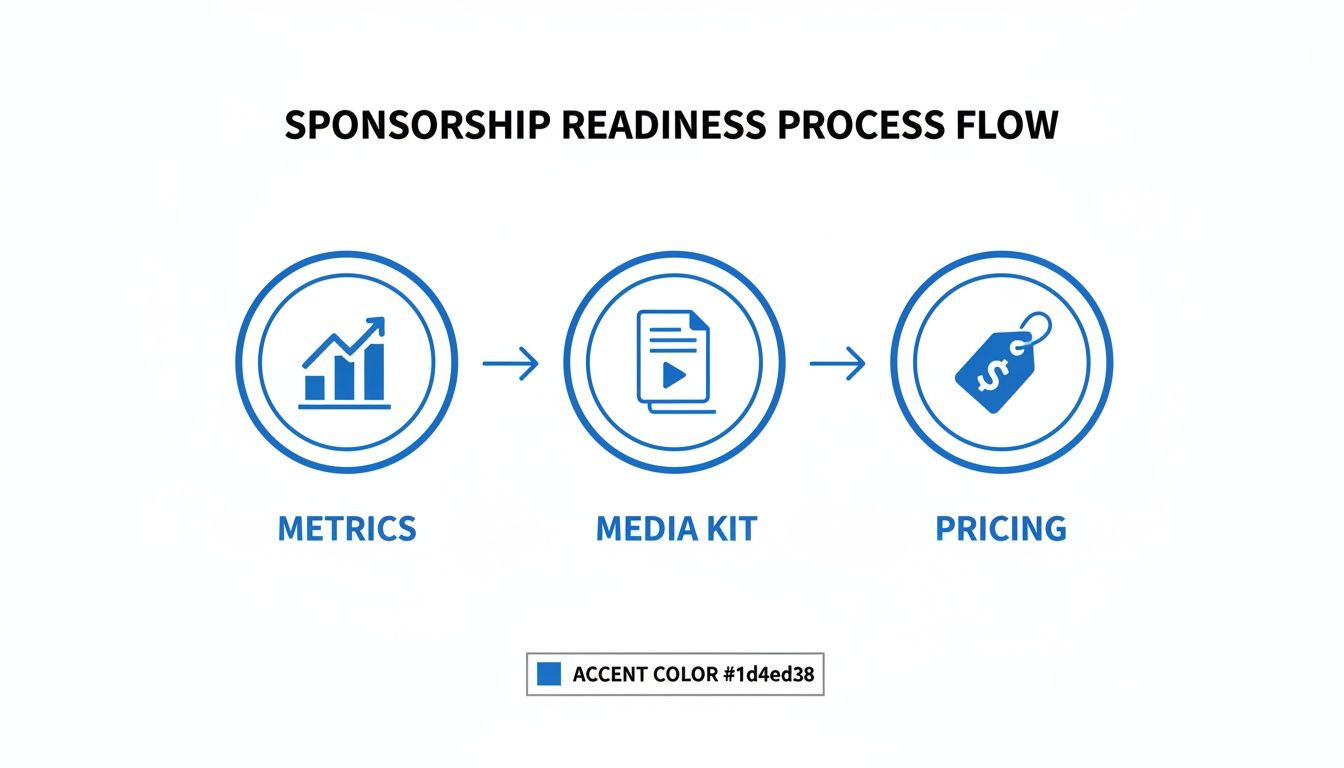
As you can see, having your metrics nailed down, a professional media kit ready to go, and clear pricing are the foundational pillars. Get these right first.
Define Your Sponsorship Tiers
Not all sponsorships are created equal. You cannot schedule anything until you know exactly what you're selling. Defining clear, distinct tiers makes the entire booking process smoother for both you and your potential partners.
Think about the different kinds of value you can offer. Most successful newsletters boil it down to a few key options:
- Main Sponsor: This is your premium, top-of-the-newsletter slot. It usually gets a dedicated section with an image and maybe even a personal mention in your intro. It’s often sold at a flat rate. Top newsletters like TLDR charge thousands for their primary spot.
- Classified Ad: A smaller, text-only mention placed further down. These are perfect for brands with smaller budgets or those just wanting to test the waters. They're a fantastic way to fill your calendar with consistent, recurring revenue.
- Sponsored Deep Dive: This is a much more integrated partnership where you collaborate on a piece of content. It’s more work for you, but it can also command a much higher price.
Laying these out clearly in your media kit cuts through the confusion. It helps sponsors pick the best option for their goals and budget right away.
A classic mistake I see is offering too many options. Stick to two or three well-defined tiers to start. This keeps your inventory manageable and prevents decision fatigue for sponsors.
Set Up Your Master Sponsorship Calendar
Your master calendar is the heart of your operation. It’s where you’ll track every booking, see your availability at a glance, and avoid those costly errors. You've got a couple of options here.
A Google Sheet or an Airtable base can work perfectly well when you're just starting out. You can create columns for the sponsor's name, the newsletter date, the ad tier, the status (e.g., booked, paid, assets received), and the price. It's free, but this method is entirely manual. It can get chaotic once you're juggling more than a handful of sponsors.
This is where purpose-built software really shines. A platform designed specifically for ad sales centralizes everything and gives you a much more professional setup.
Using a dedicated tool provides a clean, visual overview of your entire sponsorship calendar. It instantly shows you booked slots, available inventory, and revenue projections all in one spot.
Create Recurring Slots and Manage Rotations
Long-term partners are the lifeblood of a sustainable newsletter business. These are the sponsors who see the value, love the results, and are happy to book multiple weeks or months in advance, often for a small discount. Your scheduling system needs to make this dead simple.
Creating Recurring Slots
If a sponsor wants to book the first Tuesday of every month for the next quarter, your system should let you block that out in a few clicks. This locks in guaranteed revenue and dramatically reduces your ongoing sales workload. It's common practice to offer a 10-15% discount for partners who commit to three or more placements.
Rotating Sponsors for Freshness
Even with your best long-term partners, you want to keep your newsletter from feeling stale to your readers. A simple rotation strategy is the answer. For instance, if you have two main sponsors booked for a month:
- Week 1 & 3: Sponsor A gets the top placement.
- Week 2 & 4: Sponsor B gets the top placement.
This approach gives both partners that premium visibility while preventing your newsletter from looking like a static ad banner. The key is to communicate this rotation plan upfront to set clear expectations.
This is exactly where having the right newsletter ad scheduling software becomes a non-negotiable. It can automate these complex arrangements and prevent manual errors that could easily damage a valuable sponsor relationship.
Using Automation to Streamline Your Workflow
If you're managing a growing newsletter, manual work is your biggest enemy. Juggling sponsor assets, chasing down payments, and sending endless reminder emails is a one-way ticket to burnout. Trust me, I've been there. Automation is your secret weapon here. It lets you manage your weekly sponsor schedule without needing to hire a full-time ad ops team.
The goal isn't just to save your own time and sanity. It’s about creating a seamless, professional experience for your sponsors. When brands find it easy to work with you, they're far more likely to come back for more. Let’s dive into the actual tools and workflows that make this a reality.
Here’s a look at what a typical automated workflow can look like, from that first sponsor inquiry all the way to getting them booked on your calendar.
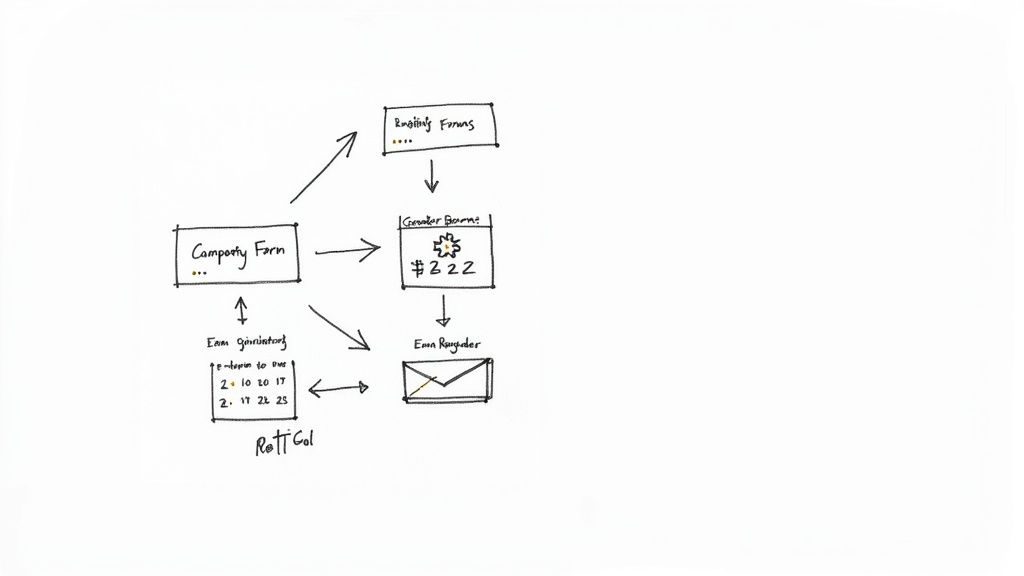
As you can see, a single form can kick off this entire chain of events, drastically cutting down the manual touchpoints you have to manage.
Choosing Your Automation Tools
The right tool for the job often comes down to where your newsletter is hosted. Many creators start with the features baked into their platform of choice. They only realize later that they need something with a bit more muscle.
-
Newsletter Platforms: For anyone just getting started, platforms like Beehiiv or Substack are fantastic. Beehiiv, in particular, has built-in ad network features and basic sponsorship tools that handle some of the initial heavy lifting. They're great for dipping your toes into monetization without complicating your tech stack. The downside? They can feel a bit restrictive once you start handling a higher volume of direct-sold deals or need more custom workflows.
-
Dedicated Ad Management Software: This is where tools like AdSlots come in. They are built from the ground up specifically for newsletter advertising. You get a much deeper feature set. Think automated booking calendars, integrated invoicing, and portals for collecting ad assets. This is the logical next step when sponsorships become a real revenue driver and you've officially outgrown your spreadsheets.
For a lot of us, the desire for consistent weekly scheduling really pushes this decision. We know that midweek, late-morning emails tend to perform best. In fact, research from Campaign Monitor shows that emails sent on a Tuesday have the highest open rates. Naturally, this makes those days prime real estate for sponsors. Managing that high-value inventory is just so much easier with a dedicated system.
To help you decide what's right for you, here’s a quick comparison of the options.
Sponsor Scheduling Tool Comparison
Choosing the right platform can feel overwhelming. This table breaks down some popular options to help you find the best fit for your newsletter's current needs and future growth.
| Platform | Key Scheduling Features | Best For |
|---|---|---|
| AdSlots | Self-serve booking calendar, automated invoicing, asset collection, blackout dates. | Creators with consistent direct-sold sponsorships looking to fully automate. |
| Beehiiv | Integrated ad network, basic sponsorship slots, some in-platform management tools. | Beginners and those who want an all-in-one solution for monetization. |
| Substack | Pledges and direct payment support, but no native ad management or scheduling tools. | Writers focused on subscriptions; sponsorships are managed manually. |
Ultimately, the best tool is the one that removes friction from your process. It lets you focus on creating great content, not on administrative headaches.
Setting Up Automated Booking Forms
The single most powerful piece of automation you can set up is a smart booking form. This is not your average "contact us" page. It’s your front-line sales and operations assistant, gathering everything you need from a sponsor right at the beginning.
A well-designed form completely gets rid of those endless back-and-forth email chains.
Your booking form should automatically collect:
- The sponsor’s company name and contact details.
- Their desired sponsorship date(s), pulled from your live inventory.
- All the ad creative: copy, headline, and images.
- The specific tracking link they need to use.
- Payment information through a secure gateway like Stripe.
By gathering all this in one go, you turn what could be a multi-day email marathon into a simple five-minute task for your sponsor. It makes you look incredibly organized and professional from the very first interaction.
The moment I switched from manually booking sponsors over email to an automated form, my sponsorship workload dropped by about 70%. That's not an exaggeration. The form acts as a filter, ensuring I have everything I need before a booking is even confirmed.
Automating Reminders and Deadlines
Missed deadlines are a massive source of stress for any creator. You're on the cusp of hitting "publish," but you're still waiting on ad copy. This is exactly why automated email reminders are a non-negotiable part of a solid system.
You can set up a simple sequence that triggers automatically based on the booked sponsorship date.
- 7 Days Before Publication: An email goes out as a friendly heads-up that their ad creative is due in two days.
- 3 Days Before Publication: If the assets still haven't been submitted, a final, firm reminder is sent.
- 1 Day After Booking: If payment wasn't made upfront, an automated invoice reminder gets sent.
These reminders are not about being pushy. They establish a clear, professional process and ensure you get all the materials you need well ahead of time. This gives you a buffer to review everything and ask for changes if something isn't right. This kind of system for automated newsletter ad insertion is what separates the amateurs from the pros. It guarantees that nothing slips through the cracks.
Dealing with Scheduling Conflicts and Last-Minute Cancellations
Let's be realistic. Even the most meticulously planned sponsorship calendar will hit a snag now and then. A sponsor might pull out at the last minute, two fierce competitors will want the same prime spot, or you’ll just need a well-earned vacation. The difference between a smooth operation and a frantic mess is having a game plan for these moments.
This is not about preventing every problem. It’s about handling them with a cool head to protect your revenue, your reputation, and frankly, your sanity. When you're prepared, a potential crisis can actually become a chance to show your sponsors how professional you are.
Blocking Out Your Own Time Off
First, let's talk about you. You need to be able to step away without watching your sponsorship income evaporate. Planning a vacation or heading to a conference should not trigger a panic-fueled email storm to reschedule sponsors. The trick is to get ahead of it.
Whether you're using a dedicated ad platform or a souped-up spreadsheet, you can set blackout dates. As soon as you know your vacation schedule, block those weeks off on your public booking calendar. I try to do this at least a quarter in advance.
Doing this accomplishes two things:
- It stops new sponsors from booking slots when you'll be out of office, so you don't have to have that awkward "sorry, I need to cancel" conversation.
- It also gives your long-term partners a clear picture of your availability, nudging them to book the slots around your time off. You can secure future revenue before you've even started packing.
A quick heads-up goes a long way in showing respect for your sponsors' own planning. I find that a simple note like, "Just letting you know I'll be offline the first week of July, so let's get your June and August campaigns locked in," works wonders.
Navigating Conflicts Between Competitors
Here’s a classic scenario: a big name in your niche books the first week of the month. The next day, their main competitor inquires about that exact same spot. How you handle this can either lose you two great partners or cement your reputation as a publisher who is fair and easy to work with.
Your media kit is your first line of defense here. A simple clause stating you won’t run ads from direct competitors in the same issue (or even back-to-back issues) sets clear expectations from the start.
When a conflict does pop up:
- First come, first served. The sponsor who confirmed and paid first gets the slot. No exceptions. It's the only way to be fair.
- Offer a great alternative. Get in touch with the second sponsor right away. Don’t just tell them the date is taken. Propose the next available premium slot and maybe toss in a small value-add, like an extra social media shout-out, as a gesture of goodwill.
- Start a waitlist. If they can't commit to another date, ask if they'd like to be on a priority waitlist. If the booked sponsor cancels for any reason, they get first dibs. It keeps them in your orbit and shows you value their interest.
What to Do When a Sponsor Bails Last Minute
Nothing stings quite like a last-minute cancellation. It leaves you with an empty ad slot and an unexpected dent in your revenue forecast. But don't panic. This is precisely why you have a waitlist and a network of past partners.
Before you do anything, refer to your sponsorship agreement. It should have a crystal-clear cancellation policy. For instance, requiring 50% of the fee for any cancellation within 14 days of the send date is a common and fair practice. This helps weed out flaky sponsors and gives you a financial cushion.
When a spot suddenly opens up, here’s my go-to checklist:
- Hit up the waitlist. This is your list of warm leads. A quick email—“Hey, a prime spot just opened up for next week, are you interested?”—can often fill the slot in a matter of hours.
- Circle back to past sponsors. Reach out to partners who've had successful campaigns with you before. They already know you deliver results and might be thrilled for an unexpected placement, especially if you offer a small "last-minute" discount of 10-15%.
- Promote yourself. If you can’t find a replacement in time, the ad slot is still valuable real estate. Use it to promote your own digital product, push a high-performing affiliate offer, or simply drive readers to your most popular content.
Tying Your Calendar to Invoices and Getting Paid
Let's be honest: a full sponsorship calendar is just a pretty picture if you're not getting paid on time. The real magic happens when your scheduling workflow flows directly into your payment process. This simple connection is what separates the pros from the amateurs. It eliminates friction and the awkward task of chasing down money.
When you nail this, your booking process naturally and immediately triggers the payment process. It’s a game-changer.
The core idea is to sync your invoicing with the booking confirmation. As soon as a sponsor locks in a slot, the payment workflow should kick off. This one tweak shifts the dynamic from, "I really hope they pay me," to "your payment officially confirms this booking." That's a much more powerful place to be.
If you're looking for a way to connect the dots, you can often utilize Google Calendar for scheduling in a way that links up with your other financial tools, creating a really smooth system.
Timing Your Invoices for Success
In the newsletter world, the gold standard is payment upfront. Period. Asking for payment when they book secures their commitment. More importantly, it ensures you don't do a bunch of work for free. If a sponsor tries to push back on this, I usually see it as a potential red flag.
Here’s a simple timeline that works wonders:
- Invoice Goes Out Immediately: The moment a sponsor books a date, your system should fire off an invoice. Tools with a direct Stripe integration are your best friend here.
- Payment Due Within 7 Days: Give them a clear, firm deadline. A week is pretty standard and totally reasonable.
- The Slot is Held, Not Confirmed: This is a crucial piece of communication. Make it clear their spot is tentatively reserved and will be released if payment isn't received by the due date.
This approach creates a healthy sense of urgency and protects your most valuable asset: your ad inventory. It's a fair system that filters for serious partners who are ready to go. You can dig deeper into the power of a direct payment gateway in this guide to Stripe integration for newsletter ads.
Your Pre-Flight Sponsorship Checklist
There’s nothing worse than the last-minute panic of finding a broken link or the wrong logo moments before your newsletter goes out. It's not just embarrassing; it can seriously damage a sponsor relationship. That's why a "pre-flight" checklist, built right into your workflow, is non-negotiable.
Think of this as your final quality control. I can't tell you how many times running through a quick checklist a few days before publishing has saved me from a cringe-worthy mistake. It takes five minutes and can literally save a sponsorship deal.
Here’s a bare-bones checklist to run for every single sponsor before you hit send:
- Ad Creative Approved: Does the copy and imagery fit your newsletter's voice?
- Tracking Links Work: Click every single link. Does it go where it's supposed to? Is the UTM tracking set up right?
- Final Invoice Paid: A quick glance to confirm the money is in the bank.
- Sponsor Details Correct: Is their company name spelled right? Is it the correct logo?
This isn't about being rigid; it's about being a professional. Sponsors notice and appreciate this level of detail.
Setting and Enforcing Asset Deadlines
One of the biggest headaches for any newsletter operator is chasing sponsors for their ad creative. If your deadlines are vague, you're inviting last-minute submissions that leave you no time to review, edit, or fix problems. You have to build firm deadlines directly into your scheduling system.
A solid rule of thumb is to require all assets at least three business days before the send date. This is not a secret. It should be stated clearly in your media kit, on the booking form, and in the confirmation email you send them. Repetition is key.
And what if they miss the deadline? You need a clear policy. My go-to approach is to run a placeholder ad (or a previous creative if they're a repeat sponsor) with a small note explaining that the new assets were not provided on time. This protects your publishing schedule and subtly reinforces that your deadlines are real.
Demonstrating ROI with Clear Performance Reports
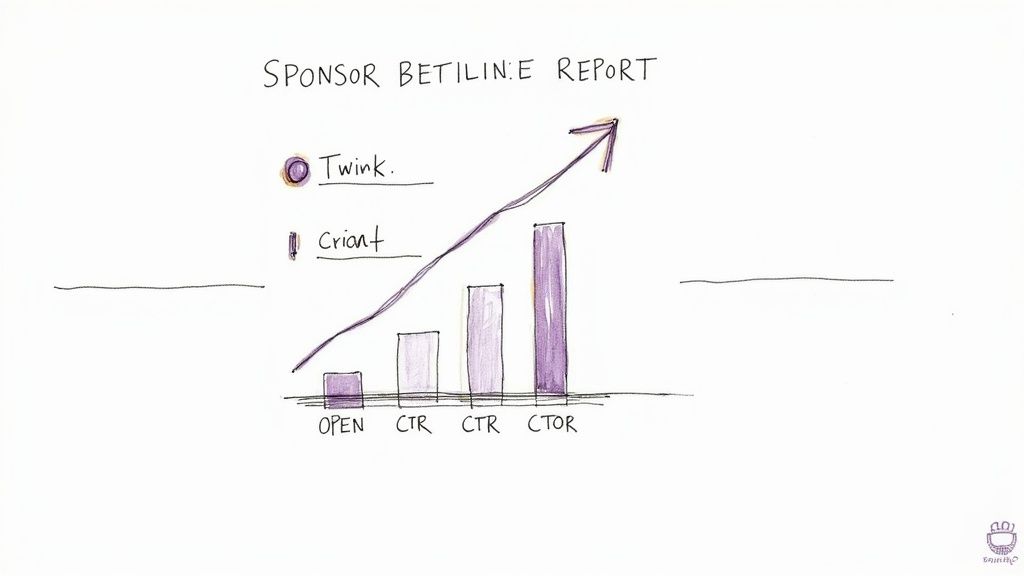
The secret to turning a one-time sponsor into a long-term partner? Proving their investment was worth every penny. Once a campaign is live and the email is sent, your job isn’t quite finished. You need to close the loop with a performance report that clearly shows them the win.
This is not about sending a data dump or a confusing spreadsheet. It's about crafting a simple, compelling story with numbers that justifies their spend and gets them excited to book their next slot.
Key Metrics to Track and Share
Your report needs to zero in on what sponsors really care about: how many of your readers engaged with their brand. Don't just forward a screenshot from Substack or Beehiiv. Instead, hand-pick the metrics that matter most.
- Total Opens & Open Rate: This is your reach. It tells the sponsor how many eyeballs saw their name and message.
- Total Clicks & Click-Through Rate (CTR): This is the action. It's concrete proof that people were interested enough to click their link.
- Click-to-Open Rate (CTOR): This is my personal favorite. It shows what percentage of people who opened the email also clicked. It’s a powerful measure of how well the ad resonated with your most engaged readers.
Showing a strong click-to-open rate (CTOR) is a massive selling point. Industry benchmarks suggest anything from 10-20% is excellent. It tells a sponsor that your audience isn't just large, it's the right audience. For more on this, you can dig into how newsletter KPIs influence pricing and scheduling.
Presenting Data That Tells a Story
How you present the numbers is just as important as the numbers themselves. I always stick to a clean, branded, one-page PDF. It’s professional and easy for a busy marketing manager to digest.
Lead with your best stat right at the top. Use bold text to call out the total clicks or an impressive CTOR. You want them to see the value immediately.
A great report doesn't just list data; it frames the results as a success story for the sponsor. Instead of just "CTR: 3.5%," try something like, "Your ad drove over 500 targeted clicks in just 24 hours." One is a statistic, the other is a result.
Going Beyond the Numbers
While the data is crucial, a little human touch goes a long way. This is where you can really strengthen the relationship and set yourself apart.
Did the sponsor mention seeing a spike in demo requests or sales? Don't be shy, ask them for specifics. Including a direct quote from their team, like, "We saw our best day of trial sign-ups right after your newsletter went out," is pure gold. It’s the kind of social proof that makes rebooking a no-brainer.
This final step completes the entire sponsorship cycle. It reinforces the value you provide and makes them eager to lock in their next campaign with you.
Got Questions About Sponsorships? I've Got Answers
As you start juggling weekly newsletter sponsors, you're bound to run into a few common sticking points. Thinking through these scenarios before they happen is the key to managing relationships like a pro and keeping your sponsorship revenue flowing smoothly.
What’s a Good, Inexpensive Scheduling Tool for a Beginner?
Honestly, you do not need a fancy, expensive system when you're just starting out. A clean Google Sheet or a simple Airtable base works perfectly for managing your first handful of sponsors.
When you're ready for something a bit more integrated but still want to watch your budget, check out platforms like Beehiiv. Many of their plans, including the free ones, have built-in sponsorship tools. It’s a great way to manage sponsors right inside the platform you’re already using to write and send.
How Should I Handle Sponsors Who Want Exclusivity?
Exclusivity is a premium add-on, and you should absolutely charge more for it. If a brand wants to be the only company from their niche featured in your newsletter for a month, it's totally fair to bump up the price by 25-50%.
Why the extra charge? You’re being compensated for the other sponsors you'll have to turn away. Just make sure you get this agreement in writing. Clearly spell out the terms and how long the exclusivity period will last.
What if a Sponsor's Campaign Doesn't Do Well?
The first thing to do is dig into the data. Was the open rate for that particular issue lower than usual? Maybe the ad copy just didn't resonate with your audience. A big part of this is tracking the right KPIs in digital marketing to understand what "success" even looks like.
After you have some data, be proactive and have an honest chat with the sponsor. More often than not, offering a "make-good" like a free ad spot in a future issue or a discount on their next booking can salvage the relationship. It shows you're a true partner and helps build long-term trust.
I’ve found the sweet spot for booking sponsors is 4-6 weeks out. This gives you plenty of time to fill your calendar and plan content without the last-minute stress of trying to sell an empty ad slot.
Tired of wrestling with spreadsheets to manage your sponsors? Ad Slots can automate the whole process, from booking and scheduling to invoicing. You can see how it works at https://adslots.co.