
When you have too many newsletter sponsors to track, the answer isn't a more complex spreadsheet. It's time to build a smart, centralized system that actually works for you.
This means creating a single source of truth for all your sponsor info, automating the tedious parts like scheduling and invoicing, and setting up reminders so nothing ever falls through the cracks. This guide is your step-by-step playbook to build that exact system.
Recognizing the Sponsor Spreadsheet Problem
If you're reading this, your sponsorship spreadsheet is likely a beautiful, chaotic mess of color-coded cells, notes-to-self, and conflicting dates. Many of us have been there. It’s a classic growing pain for any successful newsletter. What starts as a simple tracker for a few partners quickly turns into a major bottleneck that eats your time and causes a ton of stress.

This isn't just a minor organizational headache. It has real financial consequences. A missed ad placement can sour a great sponsor relationship you worked hard to build. A forgotten invoice is literally leaving money on the table.
Signs Your Sponsorship Tracking Is Broken
Let's get specific. Does any of this sound painfully familiar? Here’s a quick look at common problems creators face and the simple fixes we'll cover in this guide.
| Common Problem | What It Costs You | The Solution Ahead |
|---|---|---|
| "Did I invoice them yet?" | Lost revenue and awkward follow-ups. | Automated invoicing and payment reminders. |
| "Wait, who booked that date?" | Double-booking slots and damaging your reputation. | A centralized calendar and booking system. |
| "Where is that ad copy?" | Last-minute scrambles and running the wrong creative. | A central hub for all sponsor assets. |
| "I forgot to follow up." | Missed renewal opportunities and cold leads. | Automated follow-up sequences. |
If you nodded along to any of these, you're in the right place. These issues are fixable, and you do not have to keep patching a broken system.
When Manual Tracking Fails
The newsletter world is booming. According to a SponsorGap trends report, sponsorship activity has exploded by over 150% since 2022. In the last year alone, more than 5,200 unique brands have actively sponsored newsletters. For instance, The Hustle, a popular business newsletter, reportedly earns over $15 million annually from sponsorships by managing dozens of advertisers at once.
More opportunity is great, but it also pours gasoline on the fire of a messy manual system. When that system finally breaks, it looks like this:
- Double-Booked Slots: You accidentally promise the same ad spot to two different brands, leading to an awkward apology and a potential refund.
- Lost Revenue: An unpaid invoice gets buried in your to-do list, and you completely forget to follow up.
- Damaged Relationships: You run the wrong ad creative or miss a placement date entirely, making you look unprofessional and unreliable.
If your current process leaves you constantly feeling swamped, you're not alone. It might be helpful to learn how to stop being overwhelmed by tasks.
The goal isn't just to get organized. It's to build a reliable, scalable engine for your newsletter's revenue that operates smoothly in the background, freeing you to focus on creating great content.
This guide will give you a straightforward playbook to make that happen. We will walk through the whole process, from diagnosing the real problems to setting up a dedicated newsletter sponsor CRM that does the heavy lifting for you.
Let's turn that spreadsheet chaos into a professional, automated workflow that helps you grow.
First, Let's Get a Handle on Your Sponsorship Pipeline
Before you can tame the chaos, you need to know exactly what you're up against. The word "audit" might sound intense, but it's really just about taking stock of everything. Think of it as a quick health check for your newsletter's sponsorship business. It's the first step to building a system that's professional and can actually grow with you.

This step is absolutely crucial when you have too many newsletter sponsors to track. It forces you to look at all the details you've let scatter across countless emails, random spreadsheets, and half-forgotten invoices. The goal here is simple: create a complete inventory of every deal, every ad creative, and every dollar.
Gathering Your Sponsorship Data
Alright, time to put on your detective hat. Your first task is to hunt down every single piece of information related to your sponsorships, both past and present. Do not stress about organizing it perfectly just yet. For now, just focus on gathering it all up.
Here’s a simple checklist to get you started:
- Sponsor Agreements and Contracts: Dig up every email confirmation, signed PDF, or DM thread that lays out the terms of a deal.
- Contact Information: Who are your go-to people at each sponsor? Grab their names, titles, and email addresses.
- Ad Creative and Assets: Round up all the ad copy, images, and links your sponsors have ever sent you.
- Placement Dates: Make a note of every single date an ad was scheduled to run.
- Payment and Invoicing Records: Collect all your invoices and check their status, whether paid, pending, or overdue.
- Performance Metrics: Find any reports you've shared with partners, like click-through rates, sponsored issue open rates, or conversion data.
Once you have all this raw info in one place, you can finally start to see the big picture. This process often uncovers some real eye-openers, like which sponsors are your most profitable or where you might be leaving money on the table.
This isn't just about finding what's broken. A good audit also shows you what's working, so you can double down on your most successful partnerships and pricing strategies.
Analyzing Your Findings
With all your data collected, it's time to start looking for patterns, strengths, and weaknesses. You're trying to answer questions like, "Which sponsors stick around the longest?" or "What was my average ad slot fill rate over the last six months?"
This is where you really get a sense of the true health of your sponsorship business. For creators on specific platforms, this is also a great time to see what else is out there. For instance, if you're on Substack, you might discover that exploring a few Substack sponsor tracking tools could make this whole process a lot easier down the road.
By the time you're done with this audit, you will have a clear, data-backed snapshot of your entire sponsorship pipeline. This knowledge is the solid foundation we need to build the organized, automated system we will tackle next.
Building a Central Sponsorship Hub
Alright, it’s time to call it: the era of scattered spreadsheets and chaotic email threads is officially over. We're going to build a single, reliable source of truth for your entire sponsorship operation. Think of this as the command center that finally brings order to the chaos, especially when you have too many newsletter sponsors to track.
Instead of frantically searching your inbox for that one piece of ad copy or trying to remember which spreadsheet has the actual payment status, everything will live in one clean, organized place. This shift gives you an instant, at-a-glance overview of your entire business, making it nearly impossible for crucial details to fall through the cracks again.
Choosing Your Sponsorship Management Tool
Look, there’s no single "best" tool out there. The right one depends entirely on your needs and how comfortable you are with tech. The only thing that matters is picking what works for you.
Here are a few popular choices creators are using successfully:
- Airtable: This is like a spreadsheet on steroids. It’s incredibly flexible and lets you build simple databases that connect sponsors to their specific campaigns, invoices, and creative assets. It's a fantastic starting point.
- Notion: If you’re a more visual person who loves a clean, wiki-style dashboard, Notion is perfect. You can create dedicated pages for each sponsor, complete with calendars, to-do lists, and embedded files.
- Dedicated CRM: As you grow, a real Customer Relationship Management (CRM) tool like HubSpot might make sense. These are built from the ground up to manage relationships and sales pipelines, which is exactly what you're doing with sponsors.
And if you’re working with a team on sponsor outreach and management, nailing down your shared inbox management strategies is non-negotiable. It makes sure every email is logged and visible to the whole team, which stops embarrassing crossed wires or missed messages in their tracks.
The best tool is the one you will actually use every day. Start simple. You can always upgrade to a more powerful system later as your sponsorship revenue grows and things get more complex.
Structuring Your New Sponsorship Hub
Once you've picked your tool, it's time to build the structure. You are essentially creating your own custom database for sponsors. That just means deciding on the key pieces of information (or "fields") you need to track for every single partner.
Here is a practical example of a sponsorship hub structure in Airtable. A creator could set up a "Sponsors" table with fields for Company Name, Primary Contact, and Status. Then, create a linked "Campaigns" table with fields like Ad Slot Date, Price, and Ad Creative. This connects every campaign back to the specific sponsor.
Your hub should be built around a main "Sponsors" table. Each record is a different sponsor company. From there, you will want to track a few essential data points to keep your business running like a well-oiled machine.
A solid foundation for your sponsor hub should include fields for:
- Sponsor Status: I highly recommend a dropdown menu here. Use tags like
Prospect,Negotiating,Active,Paused, orCompleted. This gives you that quick pipeline view. - Primary Contact: Obvious but essential. Store the name, email, and job title for your main point of contact.
- Ad Inventory Calendar: This is a game-changer. Link out to a calendar that shows which ad slots are booked and which are still up for grabs.
- Communication Log: A simple text field where you can jot down notes from calls or log key decisions. You will thank yourself for this later.
- Creative Assets: A place to drop in or link to all the ad copy, images, and tracking links for each campaign.
Seriously, building this central hub is the biggest leap you can take toward professionalizing your newsletter sponsorships. It turns a reactive, stressful process into a proactive, organized system that can actually scale with your success.
Automating Your Invoicing and Scheduling
Alright, this is where you start to really win back your time. Manually chasing invoices and juggling ad placements are the two biggest time-sucks for any creator. It's repetitive work that is easy to mess up, especially when you have too many newsletter sponsors to track.
A few simple automated workflows can do all this heavy lifting for you. You do not need to be some kind of tech genius to set them up. Tools like Zapier or Make are perfect for this, acting as a bridge between the apps you are probably already using, like your sponsorship hub, calendar, and invoicing software.
Set Up Automatic Invoicing
Let’s start with the most important part: getting paid.
Imagine this: you update a sponsor's status to "Deal Confirmed" in your Airtable hub, and an invoice is instantly generated in Stripe and sent directly to your client. No more forgetting. No more tedious data entry.
Here’s a real-world example of how that workflow plays out:
- Trigger: You change a sponsor's status in Airtable to "Ready to Invoice."
- Action 1: Zapier sees the change and automatically pulls the sponsor’s contact info and deal amount.
- Action 2: It then uses that info to create a new invoice draft in Stripe or QuickBooks.
- Action 3: Finally, it pings you on Slack or via email to give the draft a quick once-over before it goes out.
This simple setup turns a 15-minute manual task into something that happens in the background in seconds. It ensures you get paid on time, every single time, and it makes you look incredibly polished and professional to your partners.
This diagram shows how the process flows together. It all starts with building your sponsorship hub, which becomes the engine for these automations.
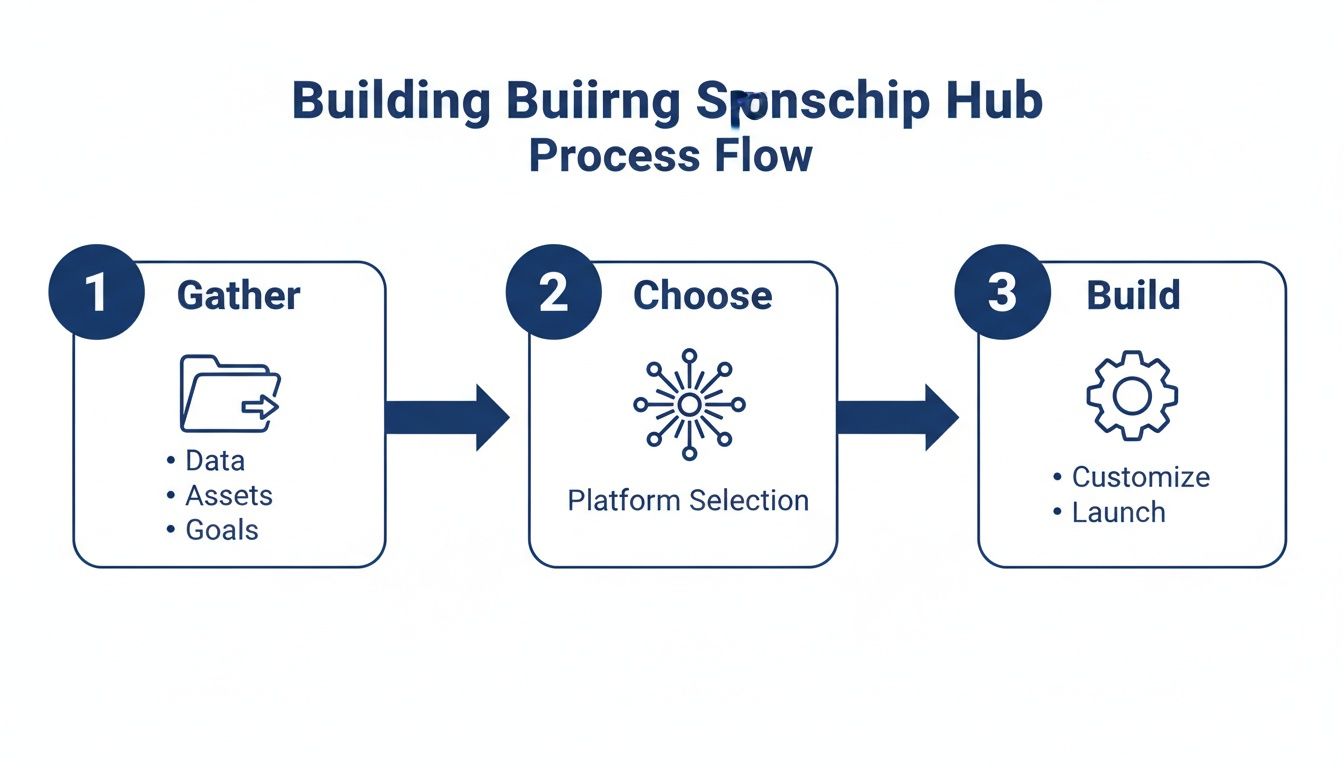
The key takeaway is that by first organizing your data and choosing the right platform, you lay the groundwork for the automations that truly make your system scalable.
Sync Your Sponsorship and Content Calendars
Double-booking an ad slot is the kind of nightmare scenario that can seriously damage a sponsor relationship. An automated calendar sync makes that mistake almost impossible.
You can set up a workflow that takes a sponsor's booked date from your central hub and adds it directly to your master content calendar. A newsletter like Lenny's Newsletter manages its extensive sponsorship inventory this way, syncing their Airtable bookings directly to a shared Google Calendar.
This gives you a single, clear view of both your editorial plan and your ad inventory. You will know instantly which slots are filled and which are available, which means you can stop conflicts before they even have a chance to happen.
The goal of automation isn't just about being faster. It's about building a reliable system that prevents expensive mistakes and frees up your brainpower for what really matters: creating fantastic content.
This is more critical than ever. A recent Beehiiv analysis found that average sponsorship fees can hit $2,500 per placement, and advertisers are often juggling 15-20 newsletter partnerships at once. For them, reliability is a huge factor in deciding who gets their budget long-term.
By setting up these automations, you are not just getting organized. You're building a professional, scalable operation that sponsors can count on. For creators looking to go even further, dedicated automated newsletter invoice software can offer an all-in-one solution without needing to stitch multiple tools together.
Creating Smart Reminders and Reports
A great system doesn't just hold your data; it makes you act on it. Now that you have a central sponsorship hub, you can build simple, proactive alerts and performance reports on top of it. This is how you get ahead of deadlines and prove your value to partners, especially when it feels like you have too many newsletter sponsors to track.
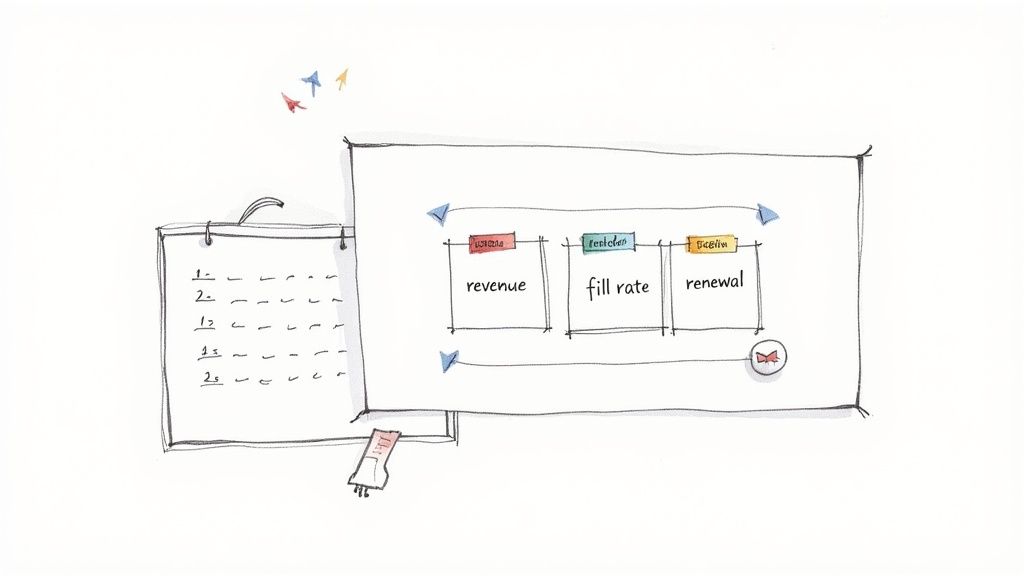
This little shift turns your system from a passive database into an active assistant. Instead of you having to remember to check on everything, your system will start telling you what needs attention, right when it matters.
Build Proactive Deadline Reminders
First, let's kill the last-minute scramble. Using tools like Zapier or the built-in automations in Airtable, you can set up simple triggers that watch for key dates in your sponsorship hub and send you a ping. No more waking up in a cold sweat realizing the ad creative was due yesterday.
Think about setting up alerts for these critical moments:
- Creative Due Date: A reminder that hits your inbox seven days before the deadline. This gives you plenty of time to send a gentle nudge to the sponsor if you have not received anything.
- Invoice Overdue: An alert triggered three days after an invoice's due date. This is your cue to send a polite follow-up. For many creators, using a system for automated payment tracking for newsletters just solves this problem entirely.
- Campaign Launch: A notification on the morning an ad goes live. This reminds you to double-check the placement and shoot a confirmation link over to the sponsor.
These small, automated nudges are lifesavers. They stop minor oversights from snowballing into big problems, keeping your operation running smoothly and your sponsors happy.
Create a Simple Performance Dashboard
Your sponsorship hub is now a goldmine of data, so let's put it to work. Creating a basic dashboard gives you a live, at-a-glance look at the health of your business. You can build this right inside tools like Airtable or Notion to keep an eye on the numbers that matter most.
An effective report tells a story. It should clearly show a sponsor the value they received and give you the data you need to renew the partnership at a higher price point.
Performance reporting has become absolutely critical as the newsletter space gets more crowded. SponsorPulse's 2025 trends report found that sponsor awareness can dip by 28% in non-exclusive newsletters, which makes solid data your best friend. The same report shows that top newsletters are now juggling an average of 45 sponsors a year, a massive jump from just 22 in 2023. You can read more about the sponsorship trends to watch for in the new year on SponsorPulse.com.
Your dashboard should be tracking a few key numbers:
- Total Revenue Per Sponsor: Instantly see who your most valuable partners are.
- Ad Slot Fill Rate: How well are you selling your inventory? This tells you.
- Renewal Rate: A vital sign of sponsor satisfaction and the long-term health of your business.
Having this data at your fingertips empowers you to make smarter decisions about pricing, focus your energy on the right partners, and confidently show sponsors the return they're getting.
Answering Your Toughest Sponsor Questions
Even with a killer system, you're bound to have questions. Let's tackle some of the most common ones I hear from creators who feel like they're drowning in sponsorship deals and trying to get organized.
What's the Best Tool to Use When I'm Just Starting Out?
If you're ready to graduate from spreadsheets but not quite ready for a heavy-duty CRM, my top recommendation is almost always Airtable. Think of it as a spreadsheet on steroids. It is powerful, but not overwhelming.
You can begin with a really simple setup, just a basic tracker for your sponsors, the deals you've closed, and who's paid up. The beauty of it is that as your newsletter grows, Airtable can grow with you. You can start linking different tables for specific ad campaigns or even creative assets. It hits that sweet spot between being super flexible and genuinely easy to use.
How Often Should I Be Sending Performance Reports to Sponsors?
Sending a performance report is one of the best ways to prove your value and get that all-important renewal. The sweet spot is to send a report within 48 hours after their sponsored campaign wraps up.
This timing is clutch because the results are still fresh in their minds. The report itself does not need to be a 10-page analysis. Just hit the highlights:
- Total subscribers the ad was sent to
- The open rate for that specific issue
- Click-through rate (CTR) on their ad link
- Any great reader replies or positive feedback you received
What Do I Do About Sponsors Who Are Late with Their Ad Creative?
This is the classic headache. This is where having a system really saves you. Those automated reminders we talked about are your first and best defense. I always set one to ping me one week before the creative is due.
If it's a few days before send-off and you're still empty-handed, it's time for a polite but firm follow-up. A simple email works wonders: "Hey, just a friendly reminder that your ad creative for Friday's newsletter is due tomorrow to make sure we can get it included."
The goal here is to be proactive, not reactive. A good system forces you to follow up consistently, so you are not left scrambling at the eleventh hour. This kind of professionalism also teaches sponsors to respect your deadlines moving forward.
Can I Really Automate Everything?
Automation is a game-changer, but it is not a magic wand. You can't just set it and forget it entirely. The real win is automating the tedious, repetitive tasks that eat up your time, things like sending that first invoice, blocking out a spot on your calendar, and setting up reminders.
Where you need to keep the human touch is in the relationship-building. Negotiating deals, personally checking in with your sponsors, and analyzing the performance data to give them real insights, that is all you. Think of automation as the world's best assistant, freeing you up to be a great partner.
Stop letting spreadsheet chaos run your business. Ad Slots handles the tedious work of sponsor tracking, invoicing, and scheduling so you can get back to what you do best: writing. Reclaim your time and professionalize your sponsorships today at adslots.co.