
Running a Substack newsletter is about writing great content. Once you start getting sponsors, you can find yourself trapped in a mess of spreadsheets, tracking payments, and chasing ad copy. This manual work is a common problem that pulls you away from what you do best: creating for your audience. It’s a time consuming distraction that costs you focus and, potentially, revenue.
This guide breaks down the best Substack sponsor tracking tools available today, helping you move beyond chaotic spreadsheets. We will look at what makes each one different, who it is for, and how it can help you get organized and paid faster. From simple databases for finding new sponsors to complete platforms that automate your entire ad operation, we cover the full spectrum of solutions.
Each tool in our list includes screenshots, direct links, and a clear breakdown of its features, pricing, and ideal use case. Our goal is to give you a practical comparison so you can choose the right platform for your specific needs, whether you're a solo creator or a growing media team. By the end, you’ll have a clear idea of which tool can replace your spreadsheet chaos for good. Let's find the right fit for your newsletter.
1. Ad Slots
Ad Slots is a powerful, yet lightweight, solution designed to replace the chaotic spreadsheets many newsletter creators rely on. It’s purpose built to automate the entire ad operations workflow, from initial scheduling and tracking fulfillment to invoicing and payment reconciliation. This focus makes it a superior choice for Substack creators who want a dedicated system to manage their direct sold sponsorships without the complexity of an all in one enterprise tool.
The platform's calendar first interface is its standout feature. It provides an immediate visual overview of your ad inventory, clearly distinguishing between booked, pending, and fulfilled slots. This design prevents double booking and simplifies future campaign planning, a common pain point with manual tracking.
Ad Slots stands out as one of the best Substack sponsor tracking tools because it directly addresses the most time consuming administrative tasks. Its one click Stripe integration, for example, automates invoicing and uses real time webhooks to track payments. This drastically reduces the need for awkward follow up emails with sponsors. Another unique feature is the built in AI ad copy generator, which helps overcome writer's block by producing ready to edit ad snippets.
Key Features & Benefits
- Automated Ad Ops: Manages the full sponsorship lifecycle, saving creators hours each week on administrative tasks.
- Visual Calendar: Offers a clear, at a glance view of ad inventory to prevent scheduling errors and streamline planning.
- Stripe Integration: Automates invoicing and payment tracking, ensuring faster and more reliable payments.
- AI Ad Copy Generator: Quickly creates draft ad copy, reducing the time spent on content creation for sponsors.
Pricing
- Starter: Free forever for up to 5 active sponsors, including basic scheduling and Stripe integration.
- Growth: $39/month for unlimited sponsors, advanced automation, and priority support.
Who is it for?
Ad Slots is an ideal solution for independent Substack writers and small publishing teams who want to scale their direct sponsorship revenue without hiring a dedicated ad ops manager. It removes the friction from sponsor management, letting you focus on writing.
- Website: Ad Slots
- Learn More: For deeper insights, explore Ad Slots' guide on newsletter advertising best practices.
2. Paved
Paved operates as both a sponsorship marketplace and an ad network, connecting Substack writers directly with a large pool of advertisers. Instead of you finding sponsors, Paved helps sponsors find you. It’s ideal for creators who want to build a steady pipeline of inbound sponsorship requests and streamline the entire sales process, from pitch to payment.
The platform stands out by offering a complete workflow. Once you list your newsletter, brands can discover you and book campaigns. Paved then manages the creative approvals, scheduling, and payments, which significantly reduces the administrative burden of sponsor management. It's more than just a tracking tool; it's a comprehensive monetization engine. For example, a creator behind a 50,000 subscriber newsletter like Dense Discovery can get a steady stream of inbound offers through the marketplace, simplifying their sales efforts.
Key Features and Pricing
- Sponsorship Marketplace: List your newsletter to get discovered by thousands of vetted brands.
- Ad Network: Opt in to have remnant inventory filled automatically with performance based ads.
- End to End Workflow: Tools for managing briefs, ad creative, approvals, and invoicing are all built in.
- Pricing: Paved takes a commission on sponsored deals, typically ranging from 10% to 30% depending on the arrangement. The Ad Network operates on a revenue share model.
Our Takeaway: Paved is one of the best Substack sponsor tracking tools for creators who want to automate lead generation. The high competition is a drawback, so make sure your profile is detailed and your metrics are strong to attract top tier brands.
Website: https://www.paved.com
3. Who Sponsors Stuff
Who Sponsors Stuff is less a tracking tool and more of a sponsorship intelligence database. It helps you see which brands are actively sponsoring other newsletters in your niche, making it perfect for proactive outreach. Instead of waiting for sponsors to find you, this platform gives you the data to find them first. It’s a powerful resource for Substack writers who want to build a target list of potential advertisers.
The platform excels at providing context for your sales pitch. You can see the exact ad creative a brand ran in another newsletter, which helps you tailor your proposal. A practical example would be a tech newsletter creator noticing that Notion sponsored The Pragmatic Engineer. Armed with this data, the creator can reference that specific campaign in their pitch, explaining why their audience of product managers is an even better fit. This approach makes your outreach far more strategic and effective.
Key Features and Pricing
- Sponsor Database: Tracks thousands of sponsors and hundreds of newsletters to identify active advertisers.
- Creative Archive: View screenshots of past ad creatives and landing pages for campaign inspiration and context.
- Search and Alerts: Filter sponsors by vertical or keyword and get alerts when new advertisers appear in your niche.
- Pricing: A free version offers limited access. The paid Sales Pro plan unlocks the full database, contact information, and CSV export capabilities.
Our Takeaway: Who Sponsors Stuff is one of the best Substack sponsor tracking tools for creators focused on outbound sales. Its real value lies in providing the intel to craft highly personalized pitches, though you'll need the paid plan to fully leverage its features.
Website: https://signup.whosponsorsstuff.com
4. SponsorGap
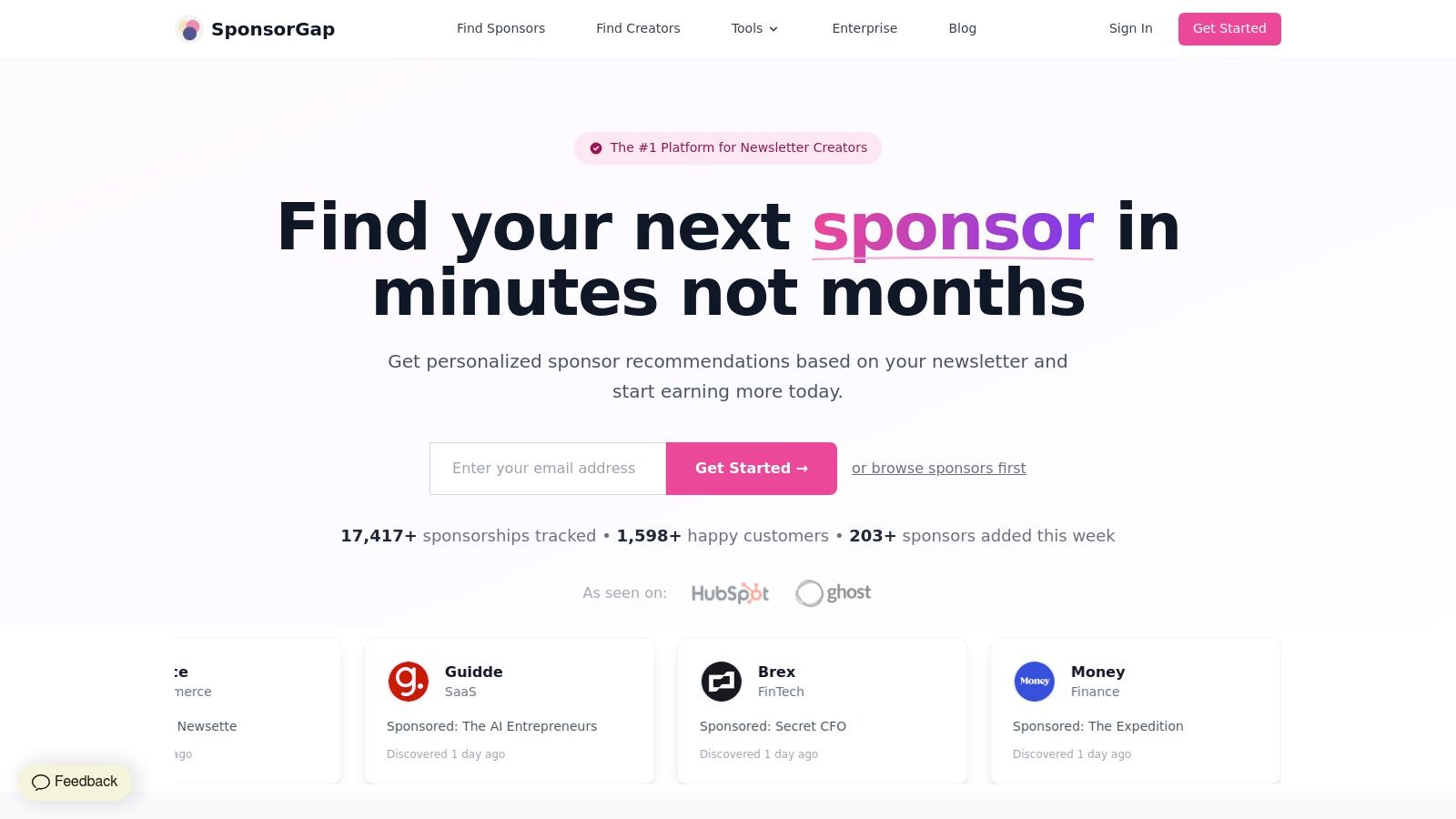
SponsorGap is a powerful discovery tool designed to help newsletter creators find and connect with relevant sponsors. It functions as a searchable database of brands known to sponsor newsletters, giving you the data needed to build targeted outreach lists instead of waiting for inbound leads. This makes it a great choice for proactive Substack writers who prefer to control their own sales pipeline.
The platform excels at providing actionable intelligence. You can filter through thousands of brands by industry, budget, and sponsorship history to find the perfect fit. For instance, a finance newsletter can quickly identify fintech companies that have recently sponsored similar publications, then access their contact information to pitch a partnership directly. It combines prospecting, outreach, and basic tracking into a single, efficient workflow.
Key Features and Pricing
- Sponsor Database: Access a list of over 4,600 unique sponsors with detailed profiles.
- Advanced Filtering: Narrow your search by niche, budget, and past sponsorship activity.
- Contact Information: Find email addresses and LinkedIn profiles for key marketing contacts.
- Activity Tracking: Get alerts when new sponsorships are detected for brands you follow.
- Pricing: SponsorGap offers paid subscription plans, but the exact pricing is not listed publicly on its website.
Our Takeaway: SponsorGap is one of the top Substack sponsor tracking tools for creators focused on outbound sales. While the quality of contact data can vary, its extensive database and filtering capabilities provide a massive head start in prospecting.
Website: https://sponsorgap.com
5. SponsorLeads
SponsorLeads takes a different approach by providing a continuously updated lead database of companies actively buying newsletter sponsorships. Instead of waiting for brands to find you, this tool empowers Substack writers to build a consistent outbound prospecting pipeline. It’s essentially a curated, Airtable style list packed with decision maker contacts, making it perfect for creators who prefer to take the initiative in their sales process.
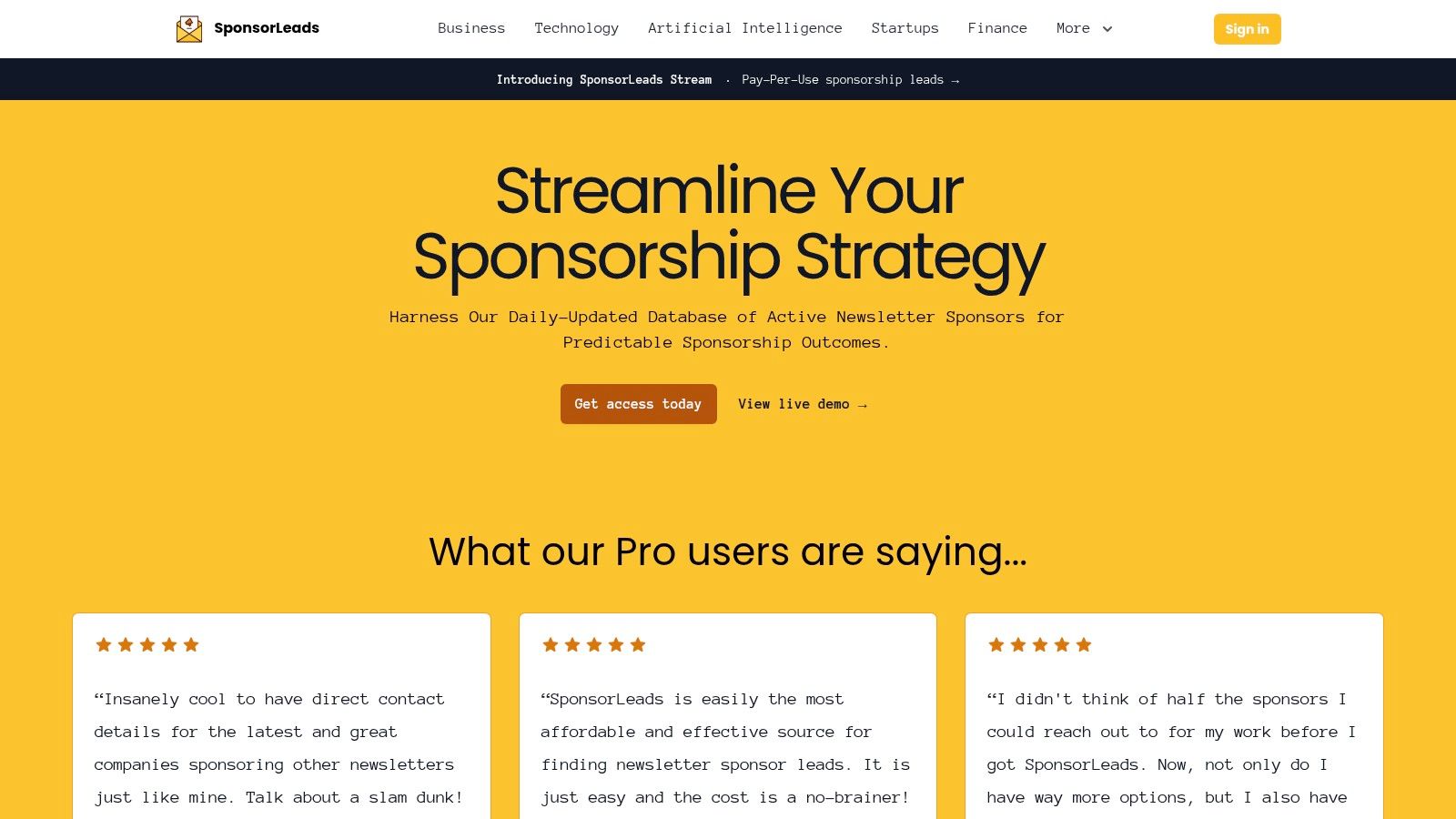
The platform is designed for speed and simplicity. You gain immediate access to a filterable database, find sponsors relevant to your niche, and get the direct contact details needed to start your outreach. A finance newsletter writer, for example, could filter the list for "fintech" companies and find the email addresses of marketing managers. The database shows that a company like Ramp has recently sponsored five different business newsletters. This kind of data makes it a high probability lead. This direct approach, combined with effective newsletter sponsor outreach templates, can significantly shorten the sales cycle.
Key Features and Pricing
- Curated Lead Database: Access a frequently updated list of companies known to sponsor newsletters.
- Direct Contact Details: Includes key decision maker emails and LinkedIn profiles to streamline outreach.
- Airtable Powered Interface: Easily filter, sort, and search for leads that match your newsletter's niche.
- Pricing: Access to the database requires a subscription, which is available on a monthly or annual basis behind a paywall.
Our Takeaway: SponsorLeads is an excellent tool for proactive Substack creators who want to control their own sales pipeline. While the lead quality can vary, the daily updates and direct contact information offer a massive advantage for consistent outbound efforts.
Website: https://getsponsorleads.com
6. Hecto
Hecto is a sponsorship marketplace designed for transparency, allowing Substack writers to list their ad inventory with clear, upfront pricing and specifications. This approach removes much of the back and forth negotiation that often complicates sponsor deals. Advertisers can browse newsletters, compare metrics, and book placements directly through the platform, creating a straightforward, self serve experience for both parties.
The platform's strength lies in its simplicity. Instead of managing complex proposals or lengthy email chains, you can direct potential sponsors to a public listing where they can see your available slots and rates. For example, a creator could set a price of $500 for a main sponsorship slot and let advertisers book it without needing a sales call. Hecto handles the basic booking flow and payment processing, making it an efficient tool for managing inbound interest. It’s one of the more transparent Substack sponsor tracking tools available.
Key Features and Pricing
- Public Marketplace Listings: Create a profile showcasing your newsletter's stats, audience, and available ad slots with visible pricing.
- Self Serve Booking Flow: Advertisers can book and pay for campaigns directly through your listing.
- Integrated Messaging: Communicate with sponsors within the platform to manage creative assets and campaign details.
- Pricing: Hecto takes a 10% commission from the publisher on successful bookings, plus a 5% fee for advertisers.
Our Takeaway: Hecto is a great choice for Substack writers who prefer a hands off, transparent sales process. The visible pricing model filters out low quality inquiries, but the limited inventory in certain niches means discovery can be a challenge. To learn more about different approaches, you can explore other types of newsletter ad management software.
Website: https://www.hecto.io
7. Subletter
Subletter is a performance based advertising network designed for newsletters. It allows advertisers to buy campaigns based on clicks or new subscriber opt ins, creating a direct link between spending and results. For Substack writers, this means you can monetize your audience through performance pricing, getting paid for the specific actions your readers take rather than a flat sponsorship fee.
The platform is particularly appealing to advertisers with smaller, experimental budgets, which in turn gives newer Substack creators a chance to secure sponsorships. Instead of complex negotiations, Subletter offers a self serve dashboard where publishers can find relevant ads to run. Imagine you run a newsletter on startup growth. You could easily find and run a pay per opt in campaign for a new SaaS tool, generating revenue for every reader who subscribes to that tool's list.
Key Features and Pricing
- Performance Campaigns: Monetize through pay per click (PPC) or pay per opt in (PPO) ad models.
- Self Serve Dashboard: Easily browse, select, and manage ad campaigns to run in your newsletter.
- One Click Opt In: A feature that simplifies list growth ads, making it easier for advertisers to get new subscribers and for you to earn.
- Pricing: Free for publishers. Subletter takes its fee from the advertiser side. Payouts are based on the performance of the campaigns you run.
Our Takeaway: Subletter is one of the more accessible Substack sponsor tracking tools for creators who prefer a hands off, performance based model. The programmatic ads may not always fit a highly curated newsletter style, but it's an excellent way to fill unsold inventory. For those managing ads on various platforms, check out how to integrate ad management across systems.
Website: https://www.subletter.io
8. Letterhead
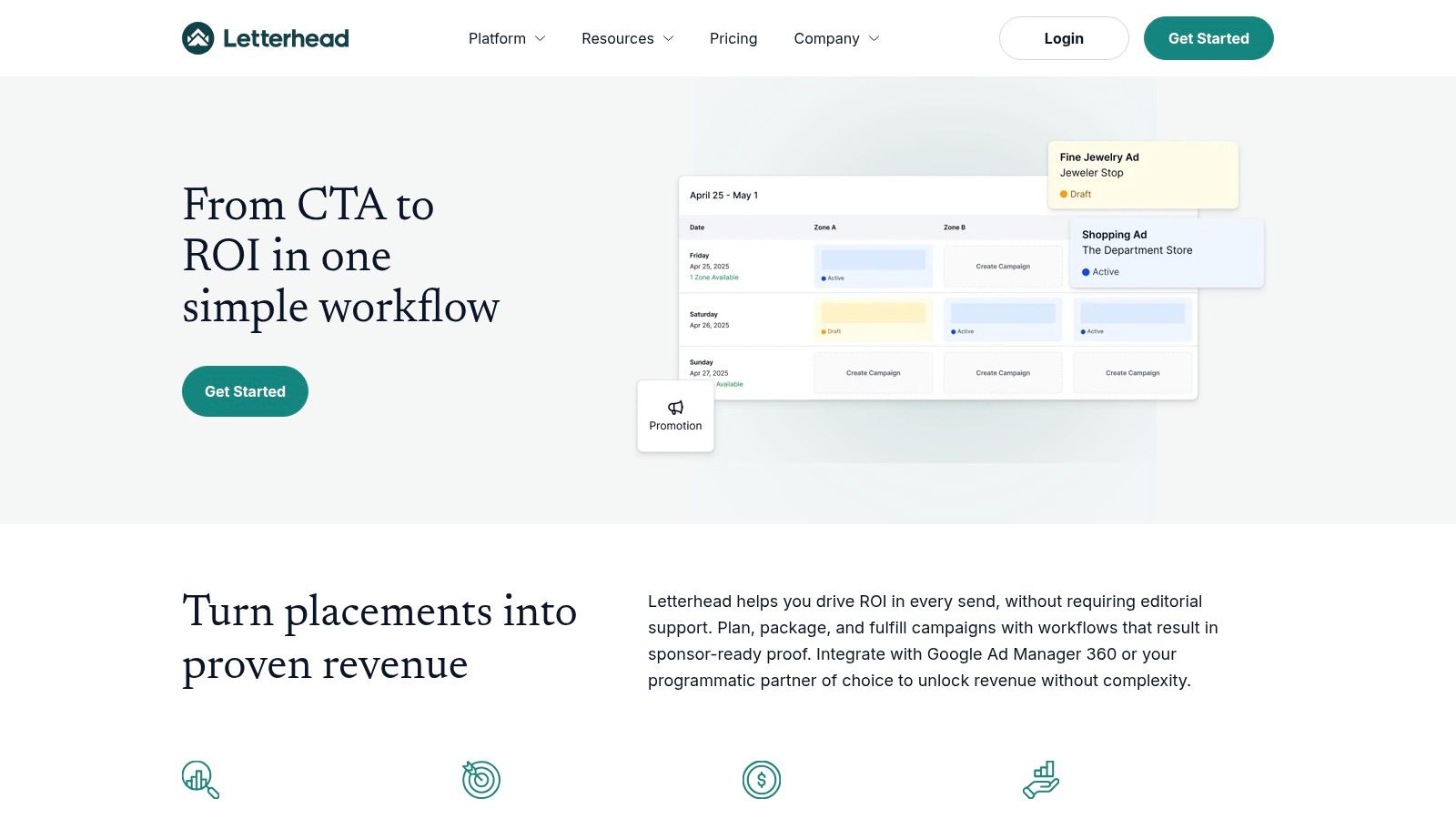
Letterhead is an operations platform designed to help publishers manage their entire newsletter advertising workflow. It serves as a powerful command center for Substack writers handling sponsorships manually, especially those managing multiple newsletters or working in teams. It centralizes ad inventory, standardizes rate cards, and automates fulfillment tasks, turning a messy sponsorship process into a streamlined operation.
The platform excels at bringing professional grade ad ops tools to independent creators. It allows you to manage availability, schedule campaigns, and generate performance reports from a single dashboard. For example, a writer running three different Substack publications can use Letterhead to create a unified rate card and calendar, preventing double bookings and ensuring sponsors receive consistent, branded recap reports with key metrics. This transforms a manual, spreadsheet heavy task into an efficient, scalable system.
Key Features and Pricing
- Centralized Inventory Management: View and manage ad slots across all your newsletters from one shared calendar.
- Automated Workflows: Streamline tasks like collecting ad creative, sending reminders, and scheduling placements.
- Standardized Rate Cards: Create and share professional rate cards with consistent ad specs and pricing.
- Branded Recap Reports: Automatically generate and send performance reports to sponsors after a campaign ends.
- Pricing: Letterhead’s pricing is customized based on scale and is typically handled through a sales consultation.
Our Takeaway: Letterhead is one of the best Substack sponsor tracking tools for established creators or small media companies aiming to professionalize their ad operations. It's overkill for beginners but invaluable for those managing multiple publications or a high volume of sponsors.
Website: https://www.tryletterhead.com/newsletter-monetization
9. PostApex
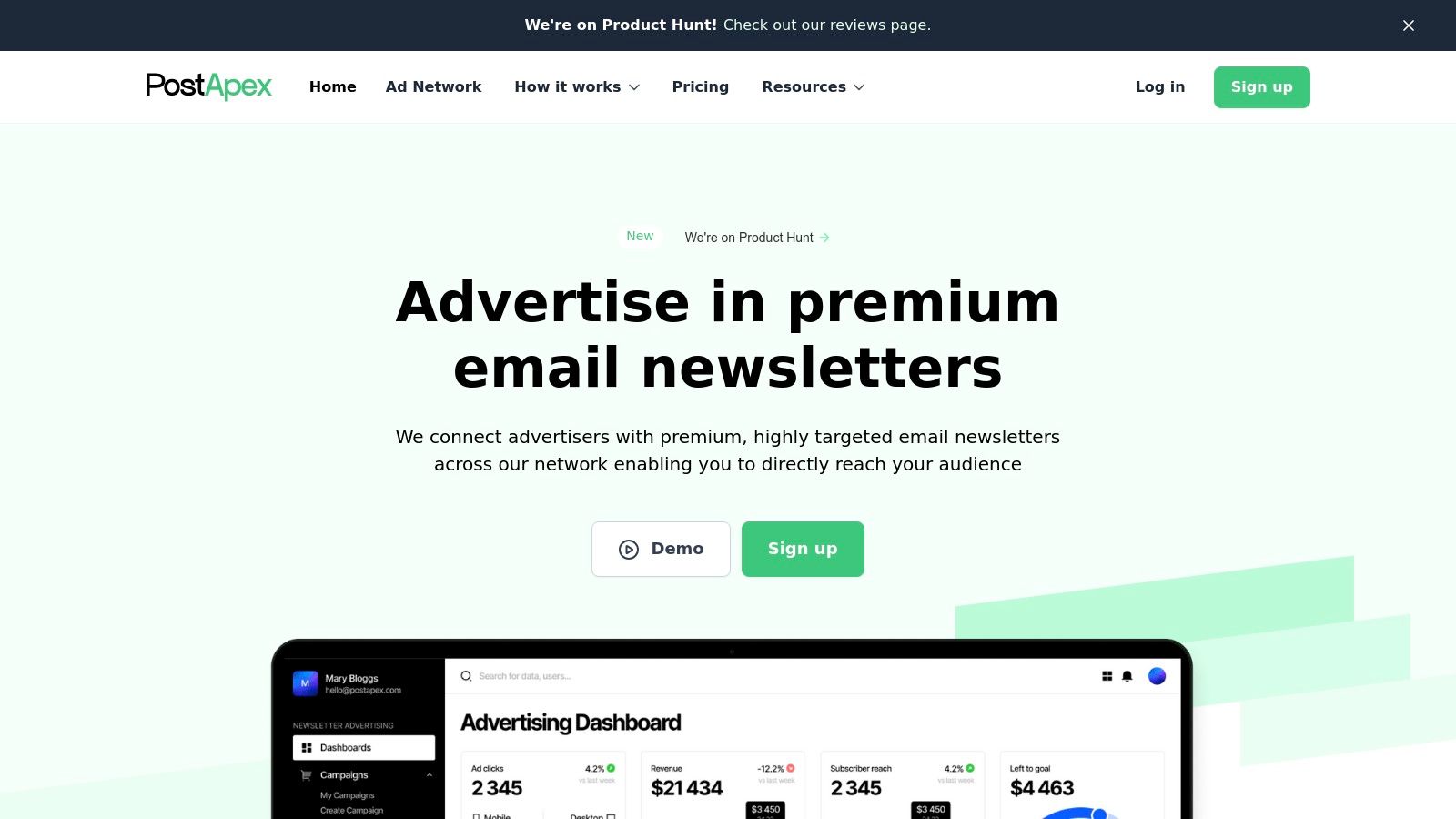
PostApex functions as a dedicated newsletter ad network and marketplace, connecting Substack creators with advertisers looking to run native ad campaigns. The platform is designed to facilitate discovery, allowing publishers to list their newsletters and advertisers to browse them by category. Its primary focus is on simplifying the process of booking and tracking native sponsorships directly within email content.
The main advantage of PostApex is its specialization in native advertising. It provides tools for both advertisers and publishers to manage campaigns seamlessly. A Substack writer focused on tech can join the marketplace and be discovered by a software company looking for a targeted audience. The platform’s real time dashboard then helps both parties track clicks and conversions, offering clear performance metrics. This makes it a useful, if smaller scale, tool for sourcing and managing sponsors.
Key Features and Pricing
- Newsletter Marketplace: A searchable directory where publishers can list their Substack and advertisers can find relevant sponsorship opportunities.
- Native Ad Tools: Features built specifically for creating and managing native ad placements within newsletters.
- Real Time Reporting: A dashboard that provides up to date tracking on ad performance, including clicks and other engagement metrics.
- Pricing: PostApex operates on a commission model, taking a percentage of the sponsorship fee. Pricing is not standardized, as publishers set their own rates.
Our Takeaway: PostApex is a solid choice for creators who want a simple, no frills marketplace focused on native newsletter ads. While its network is smaller than larger competitors, its focused approach makes it one of the more straightforward Substack sponsor tracking tools for finding relevant brand partners.
Website: https://postapex.com
10. Admailr
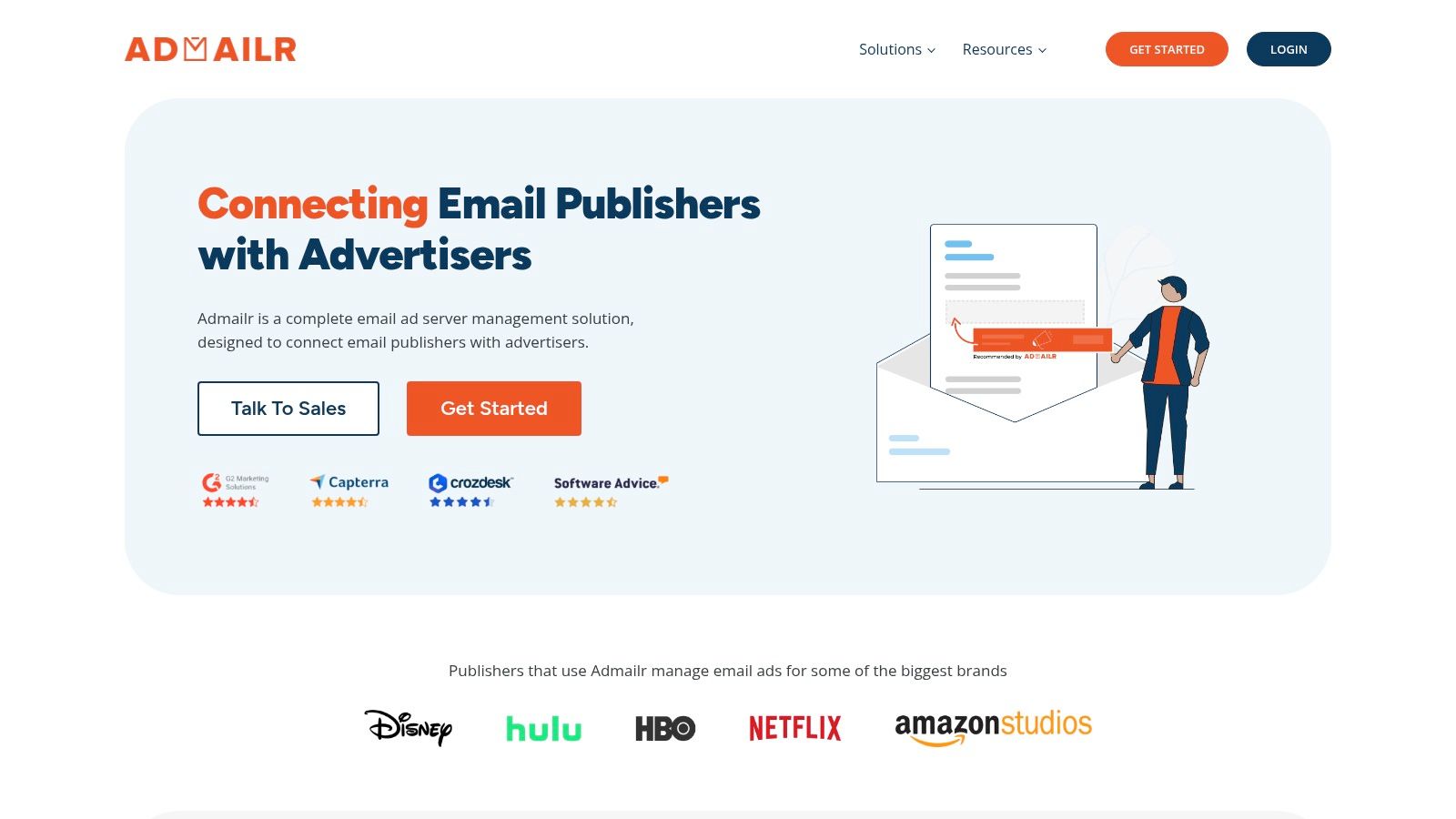
Admailr focuses on filling your newsletter's unsold inventory with programmatic ads. It acts as a safety net, ensuring you monetize every send even when you don't have a direct sponsorship deal lined up. The platform connects you to an advertiser marketplace and uses per recipient targeting to serve relevant ads, making it a powerful tool for supplemental revenue.
This approach is perfect for creators who want to maximize their earnings without adding more sales work. Let's say your direct sold ad slot is only booked for three out of four newsletters a month. Admailr can automatically fill the empty slot in the fourth issue. It seamlessly integrates with most email platforms, including Substack, by providing a simple code snippet to place in your template.
Key Features and Pricing
- Programmatic Ad Placements: Automatically insert targeted ads into your emails to fill unsold inventory.
- Advertiser Marketplace: Gain access to a network of advertisers competing for your ad space.
- Reporting and Optimization: Track ad performance, clicks, and revenue within a simple dashboard.
- Pricing: Admailr operates on a revenue share model. You earn a percentage of the ad revenue generated from your newsletter, which is a common setup for programmatic services.
Our Takeaway: Admailr is an excellent choice for adding a passive, automated income stream to your Substack. While it's not a direct Substack sponsor tracking tool for your manual deals, it complements them perfectly by monetizing remnant ad space. The payouts can be variable, so it works best alongside direct sponsorships rather than as a complete replacement.
Website: https://www.admailr.com
11. SponsorsHQ
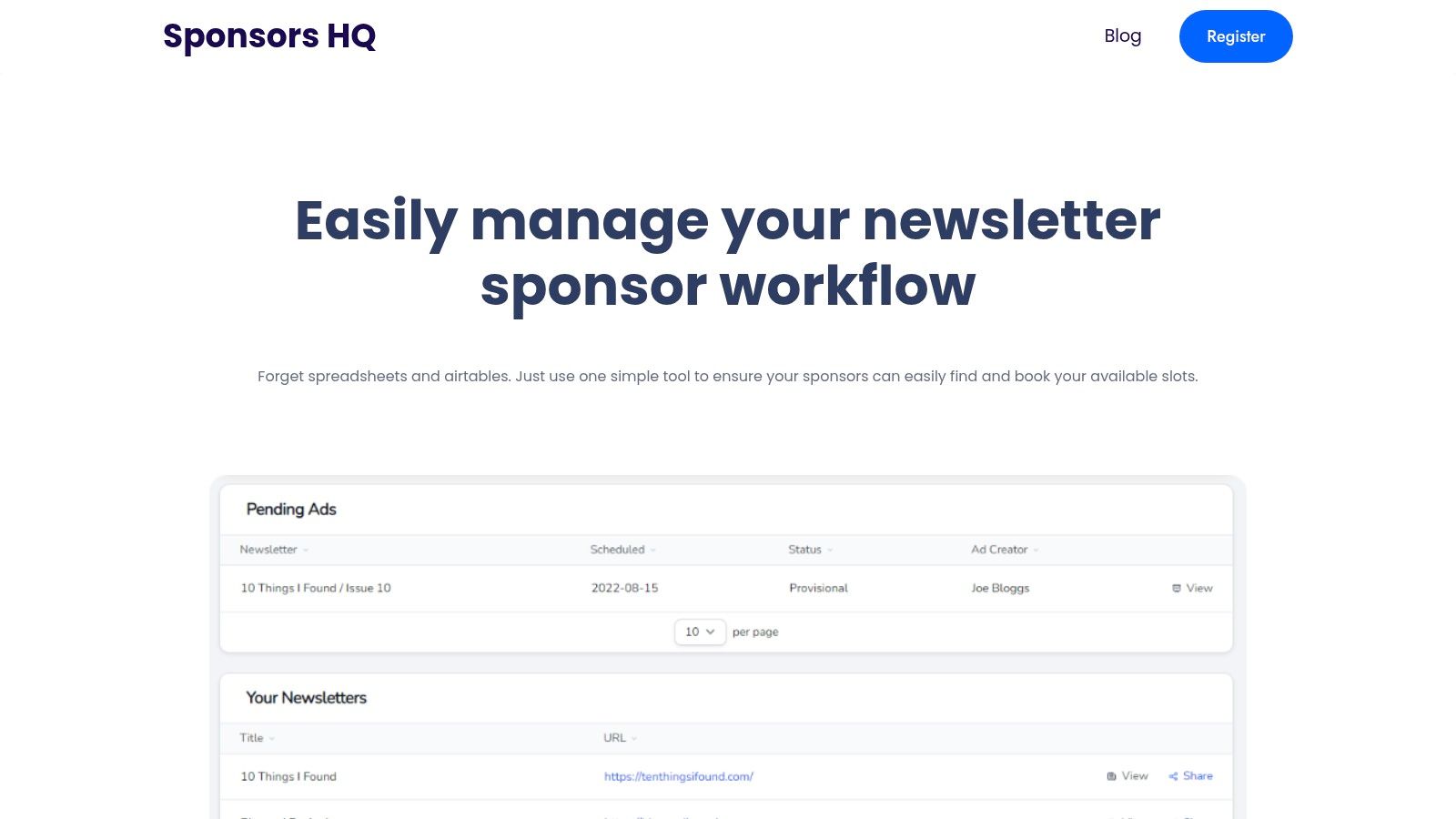
SponsorsHQ is a lightweight sponsor booking and workflow tool designed to replace the manual chaos of spreadsheets and forms. It helps individual Substack creators publish their sponsorship availability, collect bookings, and manage creative assets in one place. Its core function is to streamline the administrative side of sponsorships, letting writers focus more on content.
The platform is particularly useful for creators who are just starting to formalize their ad operations. A newsletter author managing 5 to 10 sponsors per quarter can use SponsorsHQ to create a public booking page. This page shows available ad slots, so potential sponsors can self serve, reducing back and forth emails about scheduling and availability. It centralizes the entire booking process from initial inquiry to creative submission.
Key Features and Pricing
- Public Booking Calendar: Display open sponsorship slots publicly so brands can see your availability at a glance.
- Workflow Automation: Built in intake, messaging, and notification workflows to guide sponsors through the process.
- Multi Newsletter Support: Manage ad types and availability across more than one publication from a single account.
- Pricing: SponsorsHQ is currently in a free public beta. Future pricing details have not yet been announced.
Our Takeaway: SponsorsHQ is an excellent starting point for solo creators looking to professionalize their sponsorship process without committing to a complex, expensive system. Its simplicity is its biggest strength, though its limited feature set means it may not scale for larger operations.
Website: https://sponsorshq.com
12. Sponsor This Newsletter
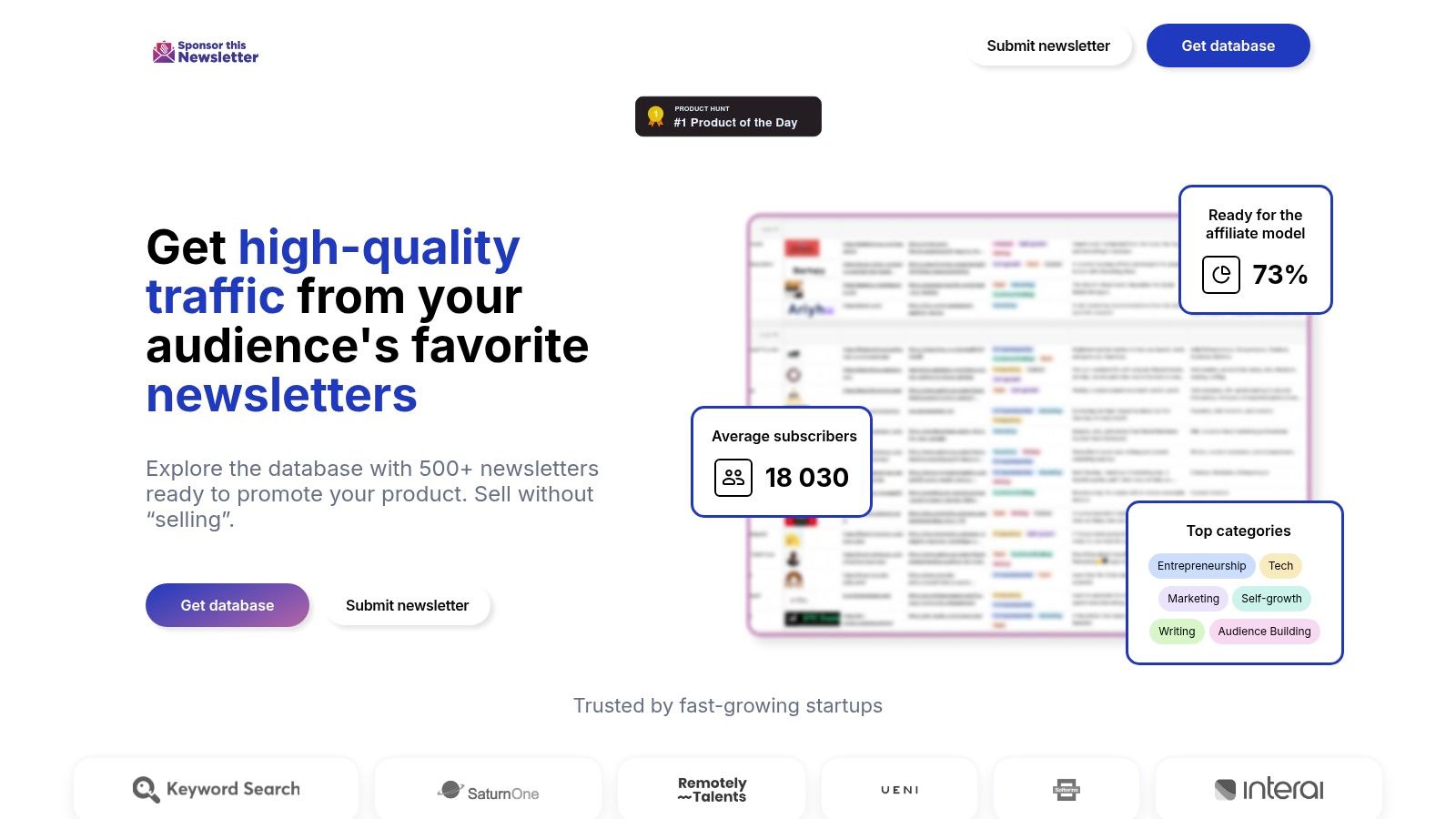
Sponsor This Newsletter offers a different approach to sponsorship management by providing a comprehensive, one time purchase database. Instead of a live platform, you get an Airtable directory of over 500 vetted newsletters, complete with media kit details and performance metrics. This tool is perfect for creators who want to conduct market research, find comparable newsletters for price discovery, or build a targeted outreach list without committing to a monthly subscription.
The database is essentially a launchpad for your sales efforts. A new Substack writer could filter the list to find newsletters in their niche, analyze their sponsorship pricing, and build a list of potential sponsors who are already active in the space. The inclusion of bundled training materials also helps new creators learn how to pitch and close deals effectively, making it a valuable educational resource in addition to a prospecting tool.
Key Features and Pricing
- Vetted Newsletter Directory: Get lifetime access to a downloadable Airtable base with 500+ newsletters.
- Monthly Updates: The database is updated monthly to ensure the information remains current.
- Bundled Sponsorship Masterclass: Includes training materials to help you master the art of sponsorship outreach and negotiation.
- Pricing: Available for a one time purchase, providing lifetime access without recurring fees.
Our Takeaway: Sponsor This Newsletter is less of a live tracking tool and more of a strategic asset. It’s ideal for research and building an initial outreach pipeline. The primary drawback is its static nature; you won't get real time spending data, but the one time cost makes it an excellent value for budget conscious creators.
Website: https://www.sponsorthisnewsletter.com
Substack Sponsor Tracking — 12-Tool Comparison
| Product | Core features | UX & Reliability (★) | Value & Pricing (💰) | Target audience (👥) | Unique selling points (✨ / 🏆) |
|---|---|---|---|---|---|
| Ad Slots 🏆 | Calendar-first scheduling, Stripe invoice & payment sync, AI ad‑copy | ★★★★★ — fast setup, reliable webhooks | 💰 Starter free (5 sponsors); Growth $39/mo — strong ROI | 👥 Indie newsletter creators, small teams, agencies | ✨ Calendar UX + one‑click Stripe + AI ad copy; 🏆 built-for-newsletters ops |
| Paved | Marketplace listings, campaign workflow, analytics | ★★★★☆ — proven marketplace UX | 💰 Marketplace fees / deal-dependent | 👥 Creators seeking brand pipeline & easy bookings | ✨ Large advertiser pool, end‑to‑end campaign tools |
| Who Sponsors Stuff | Sponsor database, creative screenshots, contact exports | ★★★★☆ — focused data & search | 💰 Free tier + Sales Pro paid exports | 👥 Outreach-driven Substack/creators | ✨ Creative archives + contact intel for pitches |
| SponsorGap | 4,600+ sponsors, advanced filters, contact details & alerts | ★★★★☆ — large coverage, good filtering | 💰 Paid tiers (pricing not public) | 👥 Prospecting creators & sales teams | ✨ Big database + alerting for active sponsors |
| SponsorLeads | Daily lead updates, Airtable interface, contact details | ★★★★☆ — lightweight, fast updates | 💰 Subscription (paywall) | 👥 Substack/Solo creators focused on outreach | ✨ Airtable workflow + daily lead cadence |
| Hecto | Public listings with pricing/specs, messaging & booking | ★★★☆☆ — simple browse & booking | 💰 Marketplace pricing visible per listing | 👥 Creators wanting transparent, bookable slots | ✨ Visible prices/specs, built‑in booking flow |
| Subletter | Performance campaigns (CPC/opt‑in), self‑serve dashboard | ★★★☆☆ — easy for small tests | 💰 Performance pricing, campaigns from ~$10 | 👥 Publishers testing low‑budget performance ads | ✨ Pay‑per‑click/opt‑in model; scales easily |
| Letterhead | Inventory, rate cards, shared calendars, reporting | ★★★★☆ — enterprise ops for teams | 💰 Pricing via sales (team plans) | 👥 Mid→large publishers, multi‑title teams | ✨ Centralized ops & branded recap reports |
| PostApex | Marketplace of newsletters, native ad styling, reporting | ★★★☆☆ — marketplace + tracking | 💰 Marketplace rates vary by publication | 👥 Advertisers & publishers for native placements | ✨ Native email styling + real‑time tracking |
| Admailr | Programmatic placements, per‑recipient targeting, reporting | ★★★☆☆ — easy integration with ESPs | 💰 Programmatic payouts vary | 👥 Creators needing fill for unsold inventory | ✨ Programmatic fill inside newsletters |
| SponsorsHQ | Public calendar, booking intake, messaging & notifications | ★★★☆☆ — lightweight, simple UX (beta) | 💰 Beta / paid plans (lightweight pricing) | 👥 Solo Substack creators & small publishers | ✨ Public booking calendar + automated intake |
| Sponsor This Newsletter | Downloadable Airtable (500+), monthly updates, training | ★★★☆☆ — static but fast to use | 💰 One‑time purchase (lifetime access) | 👥 Prospecting creators, price discovery seekers | ✨ Lifetime Airtable + bundled sponsorship masterclass |
Choosing the Right Tool to Grow Your Newsletter
Navigating the landscape of Substack sponsor tracking tools can feel overwhelming. The right system will transform your monetization strategy from a chaotic afterthought into a streamlined, professional operation. We have walked through a dozen distinct options, from simple discovery databases like Who Sponsors Stuff and SponsorGap to full featured marketplaces such as Paved and Letterhead. Each tool serves a unique purpose in the newsletter ecosystem.
The core takeaway is this: your ideal tool depends entirely on where you are in your creator journey. Are you just starting out and need to find your first few sponsors? A discovery platform is your best bet. Are you an established writer with a steady flow of inbound leads but drowning in spreadsheets and follow up emails? It is time to graduate to a dedicated ad management system.
Making Your Decision: Key Factors to Consider
Before you commit, take a step back and audit your current workflow. A clear understanding of your biggest pain points will guide you to the right solution.
- Your Primary Bottleneck: Identify the single biggest time sink in your sponsorship process. Is it finding leads? Is it managing inventory and scheduling? Or is it chasing invoices? Choose a tool that directly solves that problem.
- Stage of Growth: A solo creator with one or two sponsors a month has very different needs than a media operator managing a half dozen newsletters. Do not pay for enterprise features you won't use. Look for a tool that can scale with you, like AdSlots or Paved, which offer tiers for different growth stages.
- Integration vs. Standalone: How important is it that your tool integrates directly with your email service provider? While direct integration is convenient, a standalone tool that automates the administrative side of sponsorships often provides more value and flexibility. This allows you to manage ads across platforms if you ever decide to migrate from Substack.
From Manual Chaos to Automated Growth
Ultimately, the goal of any Substack sponsor tracking tool is to give you back your most valuable asset: time. Every hour you spend manually updating a spreadsheet, sending a reminder email, or creating an invoice is an hour you are not spending writing great content for your audience.
The transition from a manual system to an automated one is a critical inflection point for any serious newsletter business. It marks the shift from treating sponsorships as a side hustle to building a reliable, scalable revenue stream. By implementing a dedicated tool, you not only save time but also professionalize your entire ad operations. Sponsors notice and appreciate this. It makes you easier to work with, encouraging repeat business and referrals. Choose a system that empowers you to focus on growth, not just administration.
Ready to replace your sponsorship spreadsheet and automate your ad sales? Ad Slots offers a simple, powerful platform designed specifically for newsletter creators to manage inventory, book sponsors, and track payments all in one place. See why hundreds of top newsletters trust Ad Slots to streamline their ad operations. Get started with Ad Slots today.