
Managing your email list effectively begins long before you hit "send." The real work is about attracting high-quality subscribers from the start, not just grabbing any email address you can find.
By creating valuable incentives and making your signup process dead simple, you build a foundation of readers who actually want to hear from you. Getting this part right is the first real step toward great engagement and long-term growth.
Building a Healthy List from Day One
Getting those first few subscribers feels amazing, but the real win is attracting the right ones. A healthy email list isn't measured by its size. The quality and engagement of the people on it are what matter. Think of it less like a database and more like a community you're building. This initial phase is so important because it sets the stage for everything that follows.
This approach is more critical than ever, especially with how crowded inboxes are getting. Data from Statista shows that by 2025, there will be 4.6 billion email users worldwide. By 2026, the number of emails sent daily is expected to climb to a staggering 396 billion. With that kind of noise, you need a list of true fans to have any chance of standing out.
Attracting Engaged Subscribers
The secret to getting the right people on your list? Offer them something they genuinely want in exchange for their email. Marketers call this a "lead magnet," but really, it is just a helpful resource that solves a specific problem for your ideal reader.
Here are a few ideas that work wonders:
- Niche-Specific Checklists: A simple, one-page checklist can be incredibly valuable. If you run a newsletter for writers, you could offer a "Pre-Publishing Checklist." It’s a quick, actionable win for them.
- Resource Guides: Pull together a curated list of the best tools, articles, or resources on a topic. You're saving your audience hours of research and immediately establishing yourself as an expert.
- Free Workshops or Webinars: Hosting a live event is a fantastic way to attract subscribers who are genuinely motivated to learn from you and see your expertise in action.
A strong email list strategy isn't about collecting as many email addresses as humanly possible. It’s about nurturing the ones that matter. Quality over quantity is the mantra for sustainable growth and high engagement.
Look at a powerhouse like Morning Brew. They pull this off brilliantly. Their website uses clever, benefit-focused language and clean signup forms to turn casual visitors into loyal readers. Their promise is simple and clear: they'll make you "smarter in just 5 minutes." That's a value proposition that instantly connects with their target audience. If you're looking for more ideas, our guide on how to build email lists is packed with them.
Tools like HubSpot let you take this a step further by tailoring your signup offers to different people.
You can set up smart rules to show unique content based on things like a visitor's country, what device they're using, or how they've interacted with your site before. This makes your offers feel incredibly relevant and boosts your conversion rates.
Keeping Your List Clean for Better Deliverability
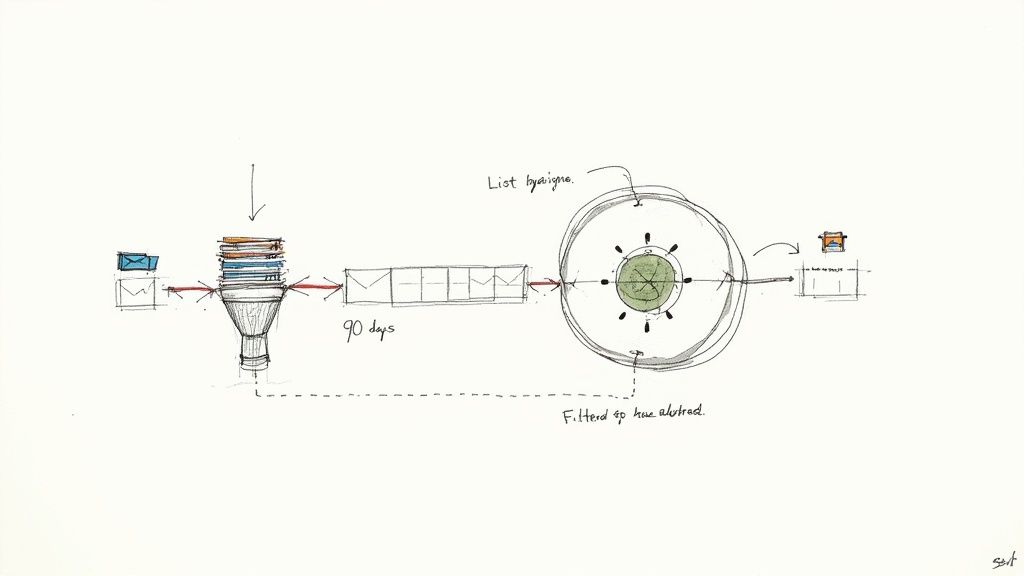
A healthy email list is a lot like a well-tended garden. If you don't prune it, it gets overrun with weeds that choke out the good stuff. For your newsletter, those "weeds" are the inactive subscribers, old email addresses, and spam traps that can absolutely wreck your sender reputation and land your content in the junk folder.
Think about it from the perspective of Gmail or Outlook. When they see a high number of your emails bouncing or sitting unopened, it's a huge red flag that people don't want your content. Regularly cleaning your list sends the opposite signal, showing you're a responsible sender who cares about their audience. This isn't just a "nice-to-have." It is essential for long-term success.
Create a Sunset Policy
One of the most powerful habits you can build is creating a sunset policy. This is a simple, automated rule to gracefully remove subscribers who have gone quiet. A great place to start is by flagging anyone who has not opened an email from you in the last 90 days.
Now, this does not mean you hit delete right away. The goal is to win them back first. Try running a re-engagement campaign with a simple sequence like this:
- The "Last Chance" Email: Send a friendly message with a direct subject line like, "Is this goodbye?" Let them know you've missed them and ask if they still want to hear from you. Sometimes a small incentive can work wonders here.
- The Final Notice: A week later, send a follow-up to anyone who didn't open the first one. Be upfront. Tell them you’re trying to keep your list relevant and will be removing them soon to respect their inbox.
- The Unsubscribe: If they still have not engaged, it’s time to let them go. It feels strange to shrink your list, but you’re just cutting dead weight. This single action will boost your open rates and improve your sender score. For example, the marketing agency OptinMonster pruned 130,000 inactive subscribers and saw their open rates double almost overnight.
A smaller list of true fans is always more valuable than a massive, unengaged one. Pruning your list protects your reputation and makes sure your emails actually reach the people who want to read them.
Use Proactive Verification
Of course, prevention is always better than a cure. The best way to keep your list clean is to stop bad email addresses from getting on it in the first place. Using an email verification tool is pretty much non-negotiable these days.
These services run a quick check for a few critical issues:
- Typos and Syntax Errors: They catch obvious mistakes like "user@gmal.com" before the address is ever added.
- Invalid Domains: The tool confirms that the domain actually exists and can receive mail.
- Known Spam Traps: They cross-reference the address against blacklists of known spam traps, which providers use to identify spammers.
By building a verification service right into your signup forms, you create a powerful first line of defense. It's a simple, automated step that helps you build your list on a solid foundation of real, engaged subscribers. When handling data, transparency is key. You can see an example of this in our privacy policy, which details how we approach data responsibly.
Sending Emails People Actually Want to Read with Segmentation
If you're sending the same generic email to your entire list, you’re missing a huge opportunity. The fastest way to the spam folder is to be irrelevant. True connection, the kind that builds a loyal audience, happens when you send the right message to the right person.
This is where segmentation comes in, and it's not as complex as it sounds. It is simply the practice of dividing your big list into smaller, more focused groups based on what you know about them.
By doing this, you can stop blasting everyone with the same content and start sending emails that feel personal and genuinely useful. This one shift can completely change your results. Campaign Monitor data reveals that marketers who used segmented campaigns noted as much as a 760% increase in revenue. You can dig into more of these email marketing statistics to see the full impact.
How to Start Segmenting Your Email List
Let’s get practical. Not everyone on your list signed up for the same reason, and their interests will naturally evolve. Your job is to recognize those differences and speak to them directly.
Here are a few straightforward ways to start slicing up your list:
- Demographic Data: This is the classic starting point. You can group subscribers by location, age, or job title. A local publisher, for instance, could send a weekend event guide only to subscribers in that city, making the content instantly more valuable.
- Engagement Level: Your subscribers' actions speak volumes. It's smart to create different buckets for your most engaged fans (the ones who open and click everything), those who are moderately active, and those who are slipping away and might need a gentle nudge to come back.
- Sign-Up Source: Where did they come from? Someone who signed up from a pop-up on a specific blog post is interested in that topic. Grouping by the sign-up form gives you a powerful clue about their initial intent.
The goal of segmentation isn't just to put people in boxes. It’s about understanding their individual needs and motivations so you can craft an experience that feels like it was made just for them.
Segmentation strategies can range from simple to incredibly sophisticated. Below is a table that breaks down some common approaches and why they are so effective at boosting engagement.
Common Segmentation Strategies and Their Impact
| Segmentation Type | Example Criteria | Why It Works |
|---|---|---|
| Location-Based | City, state, or country | Perfect for promoting local events, region-specific news, or sales in certain areas. |
| Engagement Level | Opens, clicks, last active date | Allows you to reward your most loyal fans and run re-engagement campaigns for inactive subscribers. |
| Sign-Up Source | Webinar registration, ebook download | You know their initial interest, so you can send highly relevant follow-up content. |
| Subscriber Preferences | Topics selected in a preference center | Puts the subscriber in control and guarantees you’re sending content they explicitly asked for. |
Each of these methods helps you move away from one-size-fits-all messaging and toward a more personal, one-to-one conversation.
Real-World Segmentation in Action
Let's make this less abstract. Imagine you run a newsletter for a B2B media company. Instead of sending every article and update to your entire list, you could get much smarter.
-
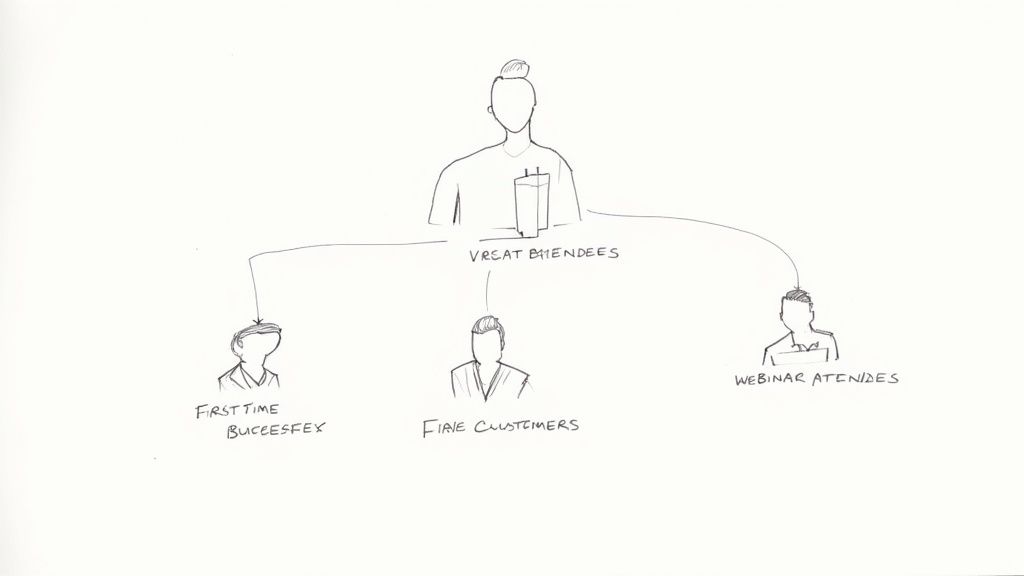
Scenario A: The Webinar Attendee
A group of subscribers signed up after attending your webinar on "The Future of AdTech." You can now tag them as "AdTech Interest." The next step? Send them a follow-up series with deeper dives on that topic, case studies, and maybe an invite to a private Q&A. This is miles better than a generic "thanks for coming" email. -
Scenario B: The Ebook Downloader
Another group joined your list by downloading a beginner's guide to programmatic advertising. Sending them advanced AdTech content would just confuse them. Instead, you can nurture them with emails that explain the basics, share success stories from similar companies, and offer an introductory course.
In both cases, the content directly addresses the subscriber's known interest, making it far more likely to be opened, read, and acted upon. That’s the magic of smart segmentation.
Setting Up Automations That Nurture Subscribers
Automation is your secret weapon. It is how you make every subscriber feel seen without having to manually hit "send" on every single email. Think of it as your way to deliver a personal, timely experience at scale, doing the heavy lifting in the background so you can focus on creating killer content.
When done right, these automated workflows are smart, data-driven systems that make your subscribers feel valued from day one. You’re creating a seamless journey for new readers and have a plan to re-engage those who’ve gone quiet. The goal isn't just to save time. It is about building a genuine connection with your audience by delivering value at exactly the right moment.
Crafting the Perfect Welcome Series
If you only build one automation, make it a great welcome series. This is your one shot to make a killer first impression, set expectations, and show new subscribers they made the right choice by signing up. Research from Omnisend shows that welcome emails have an incredible average open rate of 30.59%. This makes it one of the most powerful messages you’ll ever send.
Don't just stop at one email, though. A simple three-part sequence can work wonders to bring new readers into your world.
- The Instant Welcome (Sent Immediately): First things first, deliver whatever you promised them for signing up (your lead magnet). Thank them for joining, keep it brief and friendly, and focus on delivering that initial bit of value.
- The "Get to Know Us" Email (Sent 1-2 Days Later): Now's the time to share a little more about your mission or point them toward some of your most popular content. This email builds trust and gives them a taste of what to expect.
- The Ask (Sent 3-4 Days Later): You’ve delivered value and built some rapport. Now it’s okay to make a small ask. Encourage them to reply with a question, follow you on social media, or maybe check out a product or service.
Your welcome series sets the tone for your entire relationship with a subscriber. It’s your opportunity to prove your value immediately and start a conversation, not just a one-way broadcast.
Automations That Drive Action
Beyond the welcome, other automated flows can do some serious work behind the scenes. These are usually based on subscriber behavior, which makes them feel incredibly relevant and effective.
Here are a few powerful examples to get you started:
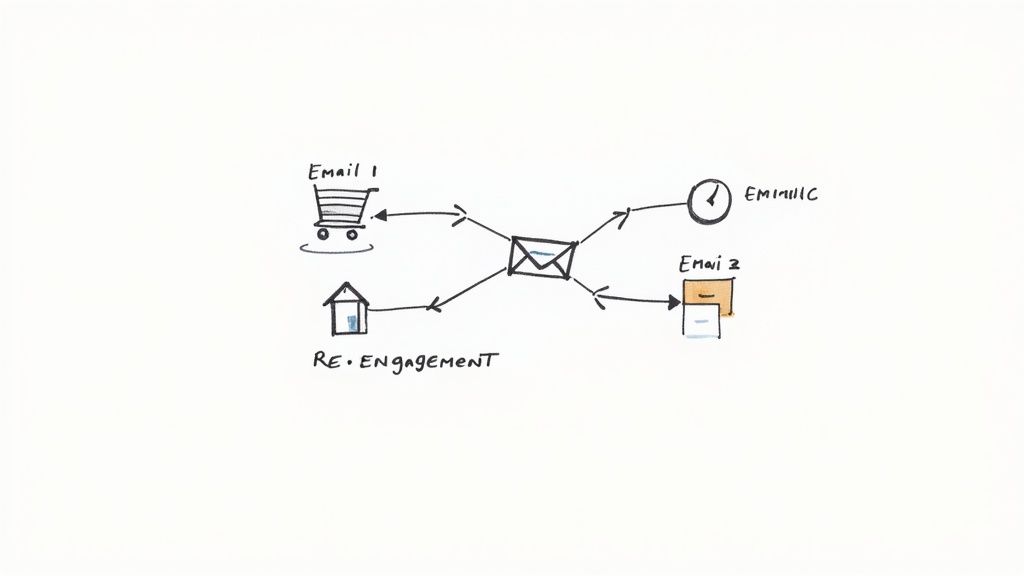
- Abandoned Cart Reminders: If you sell anything, this is a must-have. When a subscriber adds an item to their cart but gets distracted, an automated email can gently remind them, often recovering what would have been a lost sale.
- Re-engagement Flows: This ties directly back to good list hygiene. You can set up a trigger for subscribers who haven't opened an email in, say, 60 or 90 days. The system will automatically send a "we miss you" campaign to try and win them back.
- Sponsor Follow-ups: For anyone monetizing with sponsorships, automation is a lifesaver. You can trigger emails to sponsors after their campaign ends, sending over performance stats and inviting them to book again. Our newsletter sponsor outreach email templates can give you a great head start on crafting these messages.
By setting up these smart systems, you create a responsive, engaging experience that nurtures subscribers through every stage of their journey. This is how you manage an email list that doesn't just grow, it thrives.
Measuring What Matters for Continuous Improvement
If you're going to manage your email list effectively, you have to know what's working and what's falling flat. This means getting past the surface-level numbers like open rates and digging into the data that shows you the real health of your subscriber relationships. Guesswork will only get you so far. Consistent measurement turns your email strategy into a real engine for growth.
The payoff for this attention to detail is huge. Email marketing boasts an average ROI of 3600%, which breaks down to a staggering $36 for every $1 spent. That number gets even better for larger teams. According to research from emailmonday.com, teams with 3-5 full-time employees see an ROI of 42:1, compared to 30:1 for smaller teams of two or fewer.
Key Metrics That Tell the Full Story
Vanity metrics can fool you. Sure, a high open rate looks great on a report, but it doesn't mean much if nobody is actually taking action. To get a clear picture of what's happening, you need to zero in on a handful of indicators that reveal genuine engagement and business impact.
Here are the numbers you should be keeping a close eye on:
- Click-to-Open Rate (CTOR): This is your best measure of content quality. It pits the number of unique clicks against unique opens. A high open rate with a low CTOR is a classic red flag. Your subject line was great, but the email itself did not deliver the goods.
- Conversion Rate: This is where the rubber meets the road. It tracks how many subscribers actually did the thing you asked them to do, whether that’s buying a product or signing up for a webinar. It directly connects your email efforts to your business goals.
- List Growth Rate: This shows you the momentum of your list. A healthy newsletter should always be growing to outpace the natural attrition from unsubscribes and bounces.
- Unsubscribe Rate: Nobody likes seeing people leave, but this metric is an invaluable feedback loop. A sudden spike can tell you that your content has gone off-track or that your sending frequency is off.
The real magic isn't in a single campaign's numbers, but in the trends you see over time. Look for patterns in your data—that’s where you’ll find out what your audience truly wants.
Using A/B Testing to Make Smarter Decisions
Once you're tracking the right things, you can start making them better. A/B testing, or split testing, is a simple method for comparing two versions of an email to see which one performs better. You don't need fancy tools to get started, either.
Start with small but meaningful tests. For instance, pit a question-based subject line against one that's a direct statement. Or, try a call-to-action button that says "Get Started" versus one that reads "Learn More." Send each version to a small, random segment of your list, see which one wins, and then send that winning version to everyone else.
This simple process takes the guesswork out of the equation and lets your subscribers tell you what they prefer through their actions. Over time, you'll build a playbook of what works for your specific audience. To see how these small tweaks can impact your bottom line, you can even plug your numbers into a newsletter ad ROI calculator.
Common Questions About Managing an Email List
Even with a solid plan, you're going to have questions pop up as you get deeper into managing your email list. Let's tackle some of the most common ones I hear from newsletter creators.
How Often Should I Clean My Email List?
You should plan on doing a major list cleaning every 3 to 6 months. This just means finding subscribers who have not opened or clicked anything in a while and respectfully letting them go.
Beyond that big purge, think about ongoing hygiene. Using an email verification tool when people first sign up can catch typos and bad addresses before they ever hit your list. If you send a lot of emails or notice your engagement is a bit low, you might want to tighten that cleaning cycle to every 90 days.
The real goal here is to protect your sender reputation. It's always better to send emails to a smaller group of people who actually want them than to a huge list that ignores you. Quality trumps quantity, every single time.
What’s the Difference Between Single and Double Opt-In?
This is all about how someone confirms they want to join your list. The two main ways are:
- Single Opt-In: Someone fills out your form, hits submit, and boom, they're on your list. It's frictionless and great for capturing subscribers quickly, but it also opens the door to typos, fake emails, and even spam bots.
- Double Opt-In: This adds one extra step. After submitting their email, the person gets a confirmation email and has to click a link inside it to officially join. This proves they're a real person who genuinely wants your newsletter.
I'm a big fan of the double opt-in. Yes, your list might grow a little slower at the start, but the quality is so much higher. You end up with a list of truly engaged people, which pays off big time with better deliverability and engagement down the road.
Is a Large List or an Engaged List Better?
An engaged list wins, no contest. A large, dormant list is more of a liability than an asset.
Think about it from the perspective of Gmail or Outlook. They see everything. If you're sending thousands of emails that get ignored, marked as spam, or bounce, your sender reputation takes a massive hit. Before you know it, your emails start landing in the spam folder even for the people who do want to read them.
A smaller, highly engaged list, on the other hand, signals to email providers that you're sending valuable content. This leads to better deliverability, more clicks, and a much healthier newsletter.
What Is a Good Open Rate for My Email List?
This is a tricky one because "good" really depends on your industry. If you want a general benchmark, anything between 20% and 30% is often considered pretty solid.
But honestly, the most important number is your own open rate and whether it's trending up or down. Don't get too hung up on industry averages. Focus on what you can control. Write killer subject lines, send consistently, and build a list of people who are genuinely excited to hear from you. Aim to beat your own numbers month after month.
Stop letting spreadsheet chaos slow you down. Ad Slots automates your sponsor tracking, invoicing, and scheduling so you can focus on writing great content. Turn your newsletter ad ops into a streamlined system.