
Before you can sell your first ad slot, you need to get your house in order. A successful newsletter ad business is built on a solid foundation, not luck. This means getting clear on what you're selling, knowing your audience's worth, and having a professional media kit ready to go.
Think of it this way: you are packaging your newsletter's influence into tangible products that brands will be excited to buy.
Laying the Groundwork for Your Ad Business
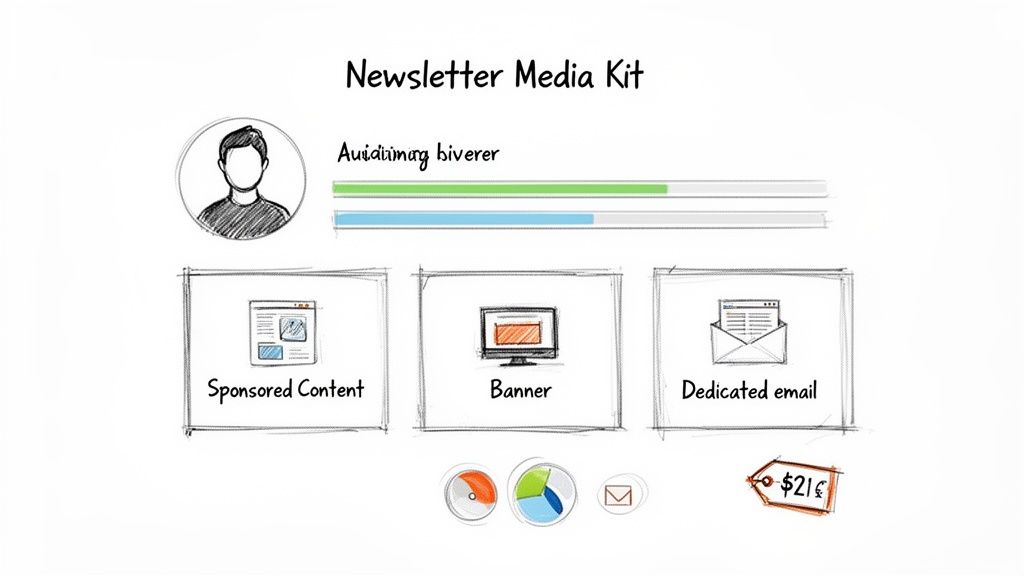
Before a single dollar changes hands, you must know exactly what is for sale. An ad business built on guesswork is doomed from the start. What you need is a clear, well-defined suite of offerings that sponsors can easily understand. Getting this initial setup right is the most critical part of the whole operation.
The newsletter world is booming, and that's a massive opportunity for you. Just look at a platform like beehiiv. In 2023 alone, its creators earned over $13 million from sponsorships. The potential is huge. With the global number of email users projected to hit 4.6 billion by 2025, you are tapping into a market that is only getting bigger.
Know Your Audience Inside and Out
First things first: you need to deeply understand the people reading your newsletter. Sponsors are not just buying ad space; they are paying for access to your audience. It is your job to paint a crystal-clear picture of who they will be reaching.
Start by digging into your data and pulling these key stats:
- Audience Demographics: What are their job titles? What industries are they in? Where are they located? This is the info that helps a sponsor know if your readers are their target customers.
- Engagement Metrics: You absolutely have to know your average open rates and click-through rates (CTR). A high open rate tells sponsors your content is valued, and a solid CTR proves your audience actually takes action.
- Subscriber Growth: Make sure to track your list's growth rate. A list that is steadily growing is a huge asset and a big draw for long-term partners.
These numbers are your currency. If you need a hand boosting your readership, our guide on how to manage an email list has some great, practical strategies. This data is not just for show. It is the foundation for your pricing and the proof of your newsletter’s value.
Define Your Advertising Products
Once you have a handle on who your audience is, you can start building ad packages that make sense for different types of sponsors. Do not just offer one generic banner ad. A tiered approach is much smarter because it lets you cater to a wider range of budgets and marketing goals.
Here is a good mix of ad types to consider offering:
- Sponsored Content: This is usually a short, native-style blurb written in your newsletter's voice. It is a fan favorite because it feels organic and blends right in with your regular content.
- Dedicated Email: This is the premium option. An entire email send dedicated to a single sponsor. It offers maximum exposure and is perfect for a big product launch or a major announcement.
- Classifieds or Text Links: Think of this as a simple, text-based ad, usually at the bottom of your newsletter. It is a fantastic, low-cost entry point for smaller brands just wanting to test the waters.
For a real-world example, look at a publication like The Hustle. They famously bundle a main sponsorship slot with smaller "snippets" in the same email. This smart move allows them to appeal to different advertiser budgets and maximize revenue from every single send.
Your goal is to create a menu of options, not a one-size-fits-all solution. Providing flexibility shows sponsors you understand their marketing needs and are willing to partner with them for success.
To give you a clearer idea, here is what a simple set of packages might look like.
Sample Newsletter Ad Packages
A breakdown of different advertising tiers to offer sponsors, showing what's included in each package to maximize value and appeal.
| Package Tier | Included Ad Placements | Typical Price Range (Example) | Best For |
|---|---|---|---|
| Bronze | One Classifieds text link in a single newsletter. | $150 – $300 | Small businesses or first-time advertisers looking for an affordable test. |
| Silver | One Sponsored Content block (150 words + image + link). | $500 – $1,200 | Brands wanting deeper engagement and a native ad experience. |
| Gold | One Sponsored Content block + one Social Media shoutout. | $1,000 – $2,500 | Companies aiming for multi-channel exposure to your audience. |
| Platinum | One Dedicated Email send to your entire list. | $3,000 – $7,000+ | Major brands with big announcements or product launches. |
This table is just a starting point, of course. You will want to adjust the pricing and features based on your own audience size, engagement, and niche.
Build a Professional Media Kit
Your media kit is your storefront. It is your business card, your sales pitch, and your price list all rolled into one professional document. A sharp, well-designed media kit saves you a ton of back-and-forth and instantly makes you look more credible and organized.
Keep it simple. A clean PDF usually works best. It needs to include your audience data, the ad package details you just defined, your pricing, and maybe a few examples of past sponsorships. This one document streamlines your outreach and answers most of a sponsor's questions before you even hop on a call.
Setting Prices That Reflect Your Value
Figuring out what to charge for your ad slots is where so many creators get stuck. If you price too high, you might scare potential sponsors away. Price too low, and you are leaving a ton of money on the table.
The key is to remember what you are really selling. It is not just blank space in an email. It is direct access to a valuable, targeted audience you have worked hard to build.
This is exactly why a B2B newsletter with 5,000 highly engaged subscribers can often charge way more than a general consumer newsletter with 50,000 readers. The real value is in the quality and focus of your audience. For instance, the Lenny's Newsletter charges $11,500 for a main sponsorship to its audience of product managers, a niche where each conversion is highly valuable. A sponsor selling high-ticket software would much rather reach 100 qualified decision-makers than 10,000 casual readers.
Choosing Your Pricing Model
There are a few standard ways to price your ads, and the right one for you really depends on your newsletter's niche and where you are in your growth journey.
Most creators start with a simple flat fee. It is easy for sponsors to understand, and it gives you predictable revenue right out of the gate. As your newsletter matures, though, other models might start to look a lot more appealing.
Here's a quick rundown of the most common pricing models you'll encounter.
Advertising Pricing Model Comparison
This table breaks down the pros and cons of the most common newsletter advertising pricing models to help you decide which one makes the most sense for your business.
| Pricing Model | How It Works | Pros | Cons |
|---|---|---|---|
| Flat Fee | A single, fixed price for an ad placement. | Simple to sell, predictable revenue for you. | Doesn't account for ad performance. |
| CPM (Cost Per Mille) | "Cost per thousand" impressions. You charge a set rate for every 1,000 subscribers. | Industry standard, scales with your list size. | Doesn't guarantee clicks or conversions for the sponsor. |
| CPC (Cost Per Click) | You get paid for every click your sponsor's ad receives. | High earning potential with an engaged audience. | Unpredictable revenue, puts all the risk on you. |
Ultimately, there's no single "best" model. Many established newsletters actually use a hybrid approach, like charging a base flat fee plus a performance bonus if an ad hits a certain click-through rate. This gives you some financial security while still giving the sponsor a reason to celebrate great results.
For a deeper dive into this, exploring different pricing strategies is a great next step.
Calculating Your Rates
So how do you actually land on a number?
A good place to start is with industry benchmarks. For a quality, niche newsletter, a CPM (cost per thousand subscribers) somewhere between $25 and $100 is a very common range.
You can use a simple formula to calculate a starting flat-fee price based on a target CPM:
(Your Subscriber Count / 1,000) x Your Target CPM = Your Flat Fee
Let's run through an example. Say you have 8,000 subscribers and want to aim for a $50 CPM:
(8,000 / 1,000) x $50 = $400 per ad placement.
This gives you a solid, data-backed number to start your conversations with. Over time, as you collect more data on your average click-through rates, you can fine-tune this price to better reflect the true value you deliver. For a more detailed breakdown, our guide on email advertising costs offers more insight into industry standards.
The market is also shifting. Newsletter advertising increasingly favors performance or outcome-oriented deals over simple flat fees. B2B and niche verticals typically command materially higher CPMs because advertiser willingness-to-pay rises with clear buying intent. For many specialized newsletters, CPMs in the mid-to-high tens or even hundreds of dollars are achievable.
Creating Ad Tiers to Maximize Revenue
A one-size-fits-all price is a missed opportunity. Just like you designed different ad packages, you should price them differently. Creating a few tiers is a brilliant way to capture revenue from sponsors with different budgets and goals.
Think about a simple tiered structure like this:
| Ad Tier | Placement Description | Example Price | Target Sponsor |
|---|---|---|---|
| Standard | A small classified ad or text link in the footer. | $200 | Startups or brands with smaller test budgets. |
| Premium | A native sponsored content block in the main body. | $600 | Brands seeking high visibility and engagement. |
| Takeover | A dedicated email send focused solely on the sponsor. | $2,000+ | Major companies with a significant product launch. |
This kind of tiered system is a fundamental part of running a profitable newsletter ad business. It creates natural upsell paths and ensures you have a viable option for almost any sponsor who comes knocking, helping you maximize your earnings from every single issue you publish.
Finding and Pitching Your First Sponsors
You have your packages priced and your media kit polished. Now for the fun part: actually finding businesses ready to pay for a spot in your newsletter. This can feel like a huge hurdle, but it is where the real work begins. Forget mass email blasts; success here is all about smart, targeted outreach.
The whole point is to find sponsors that make sense for your readers. A great sponsorship is a true win-win. The advertiser gets results, and your audience discovers something they actually find useful. When that alignment is there, an ad feels less like an ad and more like a solid recommendation from a trusted friend.
Identifying Your Ideal Sponsors
Before you even think about writing a pitch, you need a solid list of potential sponsors. This is not a numbers game. Sending ten well-researched, personalized emails will beat a hundred generic ones every single time. The mission is to find companies whose products your audience would genuinely consider buying.
So, where do you look? Start where your readers already are.
- Your Competitors' Newsletters: Who is already sponsoring other newsletters in your niche? This is the lowest-hanging fruit. These brands are already convinced that newsletter ads work.
- Industry Blogs and Podcasts: Check out the brands advertising on popular blogs or sponsoring podcasts that cover similar ground. Their marketing team gets your audience.
- Social Media: What tools and brands are the influencers in your space talking about? A quick search on X or LinkedIn for relevant hashtags can uncover a goldmine of potential leads.
Once you have a running list, it is time to do a little homework. Pop over to their website. Get a feel for what they sell and who they sell it to. This is not busywork. It is the critical foundation for a pitch that actually gets a reply.
Crafting a Pitch That Gets Opened
Your pitch email is your first impression, and you only get one. A generic "Dear Advertiser" is a fast track to the trash folder. You have to prove you have done your research and have a real reason for reaching out. A good pitch gets to the point and screams "value."
A winning pitch nails three things almost immediately:
- Show You Know Them: Mention something specific. A recent product launch, a blog post you liked, anything that shows you are not just copying and pasting.
- Explain the Audience Fit: Connect the dots for them. Spell out why your audience of, say, "early-stage SaaS founders" would be a perfect match for their product.
- Provide a Clear Call to Action: Do not be vague. Attach your media kit and suggest a quick 15-minute chat to explore how you can help them reach new customers.
Staring at a blank page can be intimidating. Starting with a proven structure helps. To get the ball rolling, you can grab some inspiration from these free newsletter sponsor outreach email templates.
A great pitch is not about you. It's about the sponsor. Focus your email on their goals and how a partnership with your newsletter can help them achieve those goals. Frame it as a solution to their customer acquisition challenges.
The Onboarding Workflow
When a sponsor finally says "yes," your job is not over. It is just started. A seamless onboarding process makes you look like a pro and sets you up for a long-term partnership. A clunky, disorganized experience, on the other hand, can kill the vibe before the first ad even runs. You'll need to empower your sales efforts with a solid strategy, like the one detailed in A Practical Guide to Sales Enablement.
Your onboarding process should be a simple, repeatable checklist.
- Send the Agreement: Get a simple advertising agreement signed that outlines the package, run dates, cost, and payment terms.
- Issue the Invoice: As soon as the contract is signed, send the invoice. Make it incredibly easy for them to pay, ideally with a direct credit card link.
- Collect Ad Materials: Use a simple form or email template to gather everything you need: ad copy, logos, images, and the destination URL. Give them a firm deadline.
- Schedule the Ad: Once you have the creative, get it on the calendar immediately. This is where a tool like AdSlots can be a lifesaver, automating the scheduling and preventing any accidental double-bookings.
A structured process like this cuts out the painful, endless email chains that can bog down ad sales. It shows sponsors you are organized and reliable, exactly the kind of partner they want to work with again.
Getting Your Ad Operations Workflow Dialed In
A sponsor has said "yes." Fantastic. Now comes the part that separates the pros from the amateurs: actually running the ad. A clunky, disorganized system is a surefire way to miss deadlines, double-book slots, and leave a sponsor with a bad taste in their mouth. If you want this to be a long-term business, building a smooth, repeatable workflow is not just nice, it is essential.
The whole point is to have a process that covers everything from signing the contract to sending the final invoice. You want it to run so consistently that it feels almost automatic. This frees you up to spend your time where it really counts: writing great content and lining up the next sponsor.
At its core, the process is pretty straightforward. You find them, you pitch them, and you get them set up.
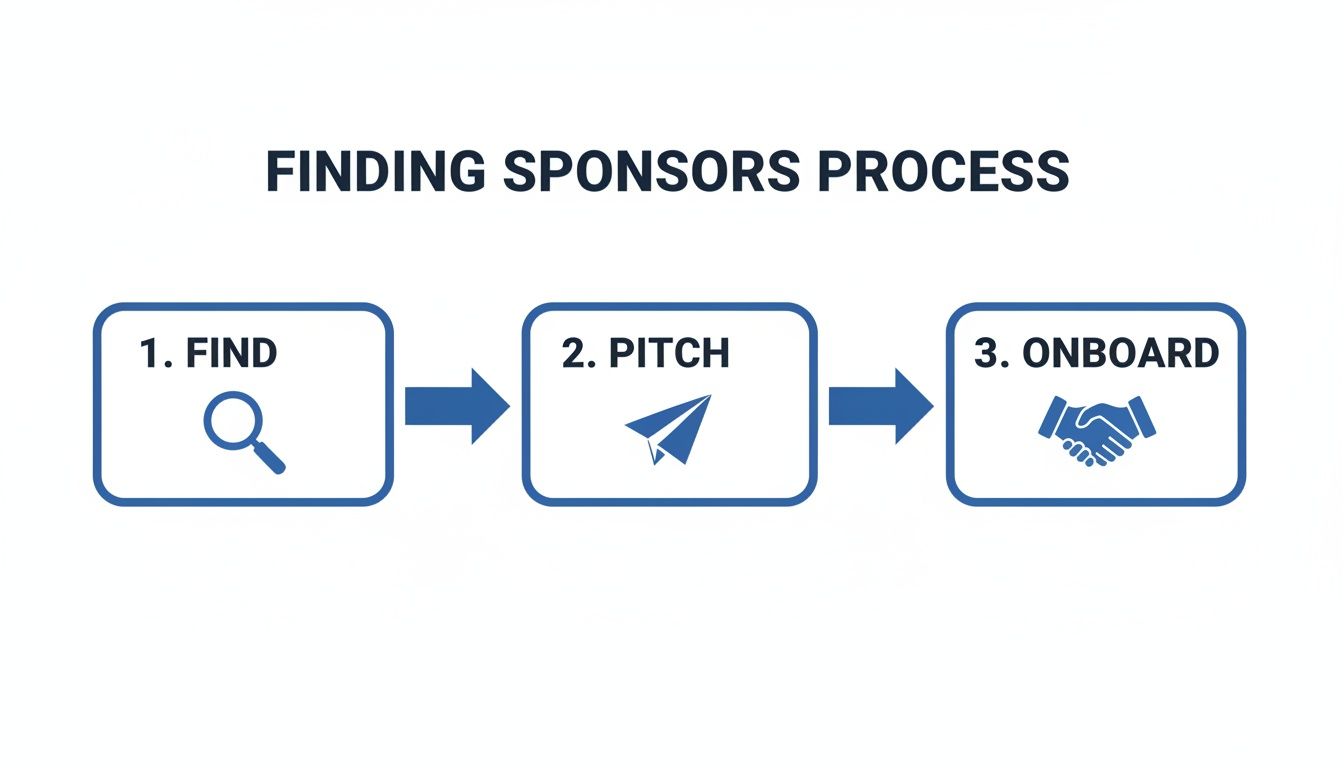
This simple flow, find, pitch, onboard, is the bedrock of a scalable ad business. Let's break down how to nail each part.
Contracts and Invoicing Done Right
The second a sponsor agrees to a campaign, your operational clock starts ticking. This is your first real chance to show them you are a professional. A messy process with delays can make them instantly regret their decision.
Kick things off with a simple but solid advertising agreement. Do not overthink it; this does not need to be a 20-page legal document drafted by a team of lawyers. A clean one or two-pager is usually all you need. Just make sure it clearly covers:
- The deliverables: What are they actually getting? (e.g., one "Premium" ad placement).
- Run dates: The specific date their ad will go live in your newsletter.
- Total cost and payment terms: The final price and when you expect to be paid (e.g., "Net 15" or simply "Due on receipt").
As soon as that agreement is signed, send the invoice. Do not wait. Using a tool that lets them pay instantly with a credit card is a game-changer. It removes friction and, most importantly, helps you get paid a whole lot faster.
Building Your Ad Scheduling Calendar
Your ad calendar is the command center of your entire operation. It is your single source of truth for what is booked, what is open, and when you need to chase down ad creative.
When you are first starting out, a simple Google Sheet or a dedicated Google Calendar gets the job done. You can set up columns for the sponsor's name, their ad package, the run date, and a little checkbox for "Creative Received." It works.
But that manual system starts to creak and groan as you grow. Try juggling five different sponsors across four upcoming newsletters in a spreadsheet. It is a recipe for accidentally double-booking a premium slot or completely forgetting to follow up for ad copy. It happens.
This is exactly when dedicated tools start to make sense. Using a platform with specialized newsletter ad scheduling software can handle all of this for you. You get a bird's-eye view of your inventory, and when a sponsor books a spot, it is instantly marked as sold. No more guesswork.
The most successful newsletter operators run their ad business like a well-oiled machine. They have a system for everything, from the first point of contact to the final campaign report. This predictability is what allows them to scale without burning out.
Managing Ad Inventory and Fulfillment
Your ad calendar is not just for scheduling; it is your inventory management system. If you do not have a crystal-clear picture of your available slots, you cannot sell them with confidence.
Here is a simple workflow I have seen work time and time again for fulfillment:
- Set a Creative Deadline: Put a clear deadline for receiving ad materials right in the contract (e.g., "5 business days before the run date").
- Send Automated Reminders: If the deadline is getting close and you have heard nothing but crickets, a polite nudge is crucial. The best ad management platforms can even automate these follow-ups.
- Confirm and Schedule: Once the ad creative lands in your inbox, give it a quick review to make sure it fits your guidelines. Then, plug it directly into your email service provider's template for the scheduled send. Done.
Think about it: the team behind Morning Brew did not grow to over 4 million subscribers by using messy spreadsheets. They built tight, repeatable systems from the very beginning. When you have a process for every ad you sell, nothing falls through the cracks, and your sponsors feel like they are in good hands.
Proving Your Value With Clear Reporting
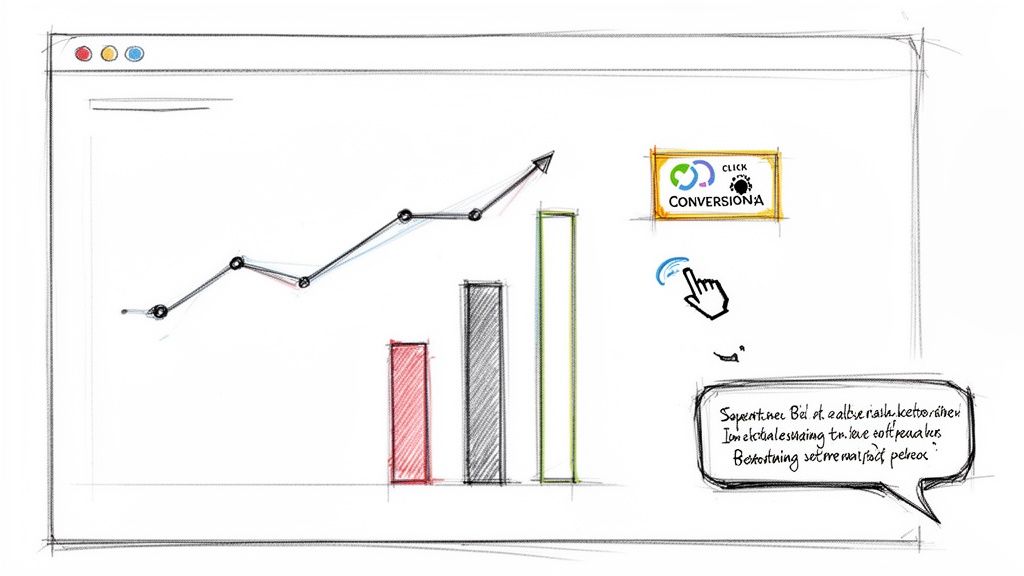
Getting the ad live is only half the battle. The other, more critical half, is proving it actually worked. Your sponsors are spending real money, and they need to see a return. It is your job to hand them the data in a way that is clear, compelling, and leaves no doubt about the value you provided.
This is where trust is built. Great reporting is what turns a one-off sponsorship into a long-term partnership. Do not just send a messy screenshot from your email service provider. A professional, easy-to-read report shows you are a serious operator who cares about their success.
Think of it this way: a sloppy report suggests a sloppy business. A clean, insightful one builds the confidence needed for that next booking.
Key Metrics That Actually Matter
Sponsors care about results, not fluff. While your overall open rate is a great health indicator for your newsletter, it does not tell an advertiser the full story. Your reports need to zero in on the numbers that tie directly to their goals.
Make sure every single campaign report includes these essentials:
- Total Sends: The exact number of subscribers the email went out to. This establishes the ad's total potential reach.
- Open Rate: The percentage of people who opened the email, showing how many were actually exposed to the ad.
- Click-Through Rate (CTR): The percentage of recipients who clicked the sponsor’s link. This is a crucial metric for measuring engagement.
- Total Clicks: The raw number of clicks the ad generated. This gives the sponsor a concrete number of prospects you drove to their site.
For context, industry benchmarks from sources like Omnisend's email marketing statistics show average open rates hovering around 37-38% in 2024. This gives you a good baseline, but a highly engaged niche audience can often beat that number.
From Clicks to Conversions: The Holy Grail
For most sponsors, the ultimate win is not just a click. It is a conversion. A conversion could be a sale, a demo request, a webinar sign-up, or a whitepaper download. Tracking this can be a bit more involved, but it is the single most powerful way to prove your newsletter's worth.
The simplest method is to give your sponsor a custom UTM link. This is just a standard URL with a few tracking tags added on. It allows them to see traffic from your newsletter directly inside their own tools, like Google Analytics, and trace it all the way to a final action.
When you can show a sponsor that your newsletter generated 15 qualified leads or $2,500 in direct sales, the renewal conversation is a slam dunk. You are no longer selling ad space; you are selling tangible business outcomes.
Don't Forget to Ask for a Testimonial
After you have wrapped up a successful campaign, use that positive momentum. A fantastic performance report is the perfect opener for asking for a testimonial. Send over the great results and, while they are happy, ask for a quick quote about their experience.
These testimonials are gold for your media kit and future sales pitches. A powerful statement like, "Working with [Your Newsletter] was a huge win. We saw a 25% increase in demo sign-ups from a single campaign," is far more persuasive than any stat you can share yourself. It provides the social proof that gives new sponsors the confidence to say yes.
Common Questions About Selling Newsletter Ads
Even with the best playbook, you are going to have questions as you get your newsletter ad business off the ground. That is a good thing. It means you are in the trenches. Let's tackle some of the most common hurdles creators face with some straight-up, practical answers.
How Many Subscribers Do I Need to Start Selling Ads?
This is the big one. Everyone asks this, and the answer is not what most people expect: there is no magic number. Stop focusing on subscriber count and start obsessing over engagement. A small, dedicated audience that opens and clicks every single week is infinitely more valuable to a sponsor than a massive, silent one.
Most successful newsletters I have seen land their first sponsors with just 2,000 to 5,000 dedicated readers. If you have open rates consistently hitting 40% or more and your click-throughs are solid, you are sitting on a goldmine. Do not be shy about starting small.
A great way to get the ball rolling is to offer a friendly "introductory" rate to your first couple of sponsors. This gets you cash in the door, but more importantly, it helps you build case studies and get testimonials. That social proof is what you will use to land much bigger brands down the road.
What Legal Documents Do I Need?
Let's talk legal. You do not need to hire a full-time legal team, but you definitely need to protect yourself. The absolute bare minimum is a simple advertising agreement or insertion order that you send to every single sponsor. This little document can save you a world of headaches if a disagreement ever pops up.
At its core, your agreement just needs to spell out the basics:
- What they're buying: Be specific. Is it one sponsored content block? A classified ad?
- When it runs: The exact date the ad goes live.
- The cost & terms: How much they owe you and when it's due (e.g., Net 15, upon receipt).
- Your policies: A few lines on how you handle ad approvals, reporting, and cancellations.
You can find plenty of templates online, but it is a really smart move to pay a lawyer for an hour of their time to look over your template just once. Also, make sure your website's privacy policy is crystal clear about how you handle subscriber data. It is all about building and keeping trust with your readers.
How Do I Handle Ad Renewals and Upsells?
The easiest money you will ever make comes from a happy sponsor who wants to run another campaign. The trick is not to wait until their current ad run is over to bring it up. You have to be proactive.
I usually start the renewal conversation about two weeks before their last ad is set to run. I will send over the final performance report, pointing out all the wins, and then just ask, "Hey, looks like this went really well! Would you be interested in booking another campaign?"
This is also your golden opportunity to upsell.
If a sponsor got great results from a simple ad, they are often primed to spend a bit more. You could suggest a higher-impact package, like a dedicated email send, or offer a small discount if they commit to a three-month campaign.
Your goal is to make it ridiculously easy for them to say yes. Often, a quick email with a pre-filled invoice is all it takes to lock in that next chunk of revenue.
What Tools Can Help Me Manage My Ad Business?
When you are starting out, a Google Sheet for tracking sales and a calendar for scheduling ads works just fine. But that manual system becomes a huge time-suck and a recipe for mistakes as you start to grow.
Eventually, you will want to bring in some tools to handle the admin work so you can focus on creating great content and selling.
Here are a few types of tools that can make a world of difference:
- Ad Management: This is where platforms like AdSlots come in. They can completely automate your ad sales. Think self-serve booking pages, real-time inventory management (so you never double-book a spot), and automatic invoicing.
- Contracts and Invoicing: For more general freelance work, tools like Bonsai or HoneyBook are great for sending professional contracts and getting paid.
- Email Service Providers: Many of the big ESPs are leaning into monetization now. Platforms like beehiiv and ConvertKit have built-in features to help you manage and sell newsletter sponsorships right inside their platform.
The idea is to build a system that saves you time and stress. Investing in the right tools is not just an expense; it is an investment in your own sanity and your business's ability to scale.
Ready to stop juggling spreadsheets and start running your ad business like a pro? AdSlots automates the tedious parts of selling ads, from booking and scheduling to invoicing, so you can focus on what you do best: writing an amazing newsletter. Check out how AdSlots can transform your operations today.