
Managing a handful of newsletter sponsors can feel like a juggling act. The trick is to stop winging it and build a solid system. The best, most repeatable formula I've found covers everything from a sponsor's first inquiry to tracking their ad's performance. It is what keeps you looking professional and allows you to scale up without drowning in spreadsheets.
Your Playbook for Juggling Multiple Sponsors
Handling one sponsor is easy enough. When you have five, ten, or even more knocking at your door, things get chaotic fast. Think of this guide as your operational playbook, designed to turn a messy process into a smooth, predictable revenue stream. Instead of just guessing what to do next, you will learn how to build a scalable sponsorship program that actually grows your income without alienating the audience you worked so hard to build.
A well-oiled system frees you up to focus on what you do best: creating great content. The real secret is to get these processes locked in before you sign another contract. This groundwork is what prevents rookie mistakes, like accidentally double-booking an ad slot or forgetting to chase up an invoice.
Building Your Core Sponsorship System
To really get a handle on multiple sponsors, you need a central hub for all your client data, sales info, and communications. Many successful creators use a simple but surprisingly powerful Notion CRM template to pull everything into one place. This alone saves you from the headache of digging through old email threads for crucial details.
The entire workflow breaks down into three core stages: laying the foundation, getting sponsors onboarded smoothly, and tracking how everything performs.
This quick overview shows the essential stages for effectively managing multiple newsletter sponsors.
| Stage | Key Objective | Primary Tool or Method |
|---|---|---|
| Foundation | Set clear expectations, pricing, and availability. | Media Kit, Sponsorship Page, Ad Calendar |
| Onboarding | Collect assets, sign agreements, and schedule ads. | Intake Form, Digital Contracts, Shared Calendar |
| Tracking & Fulfillment | Deliver ads, report performance, and get paid. | Email Automation, Analytics, Invoicing Software |
Getting these three stages right separates the amateurs from the pros.
This process flow gives you a visual map of what a solid sponsorship management system looks like in action.
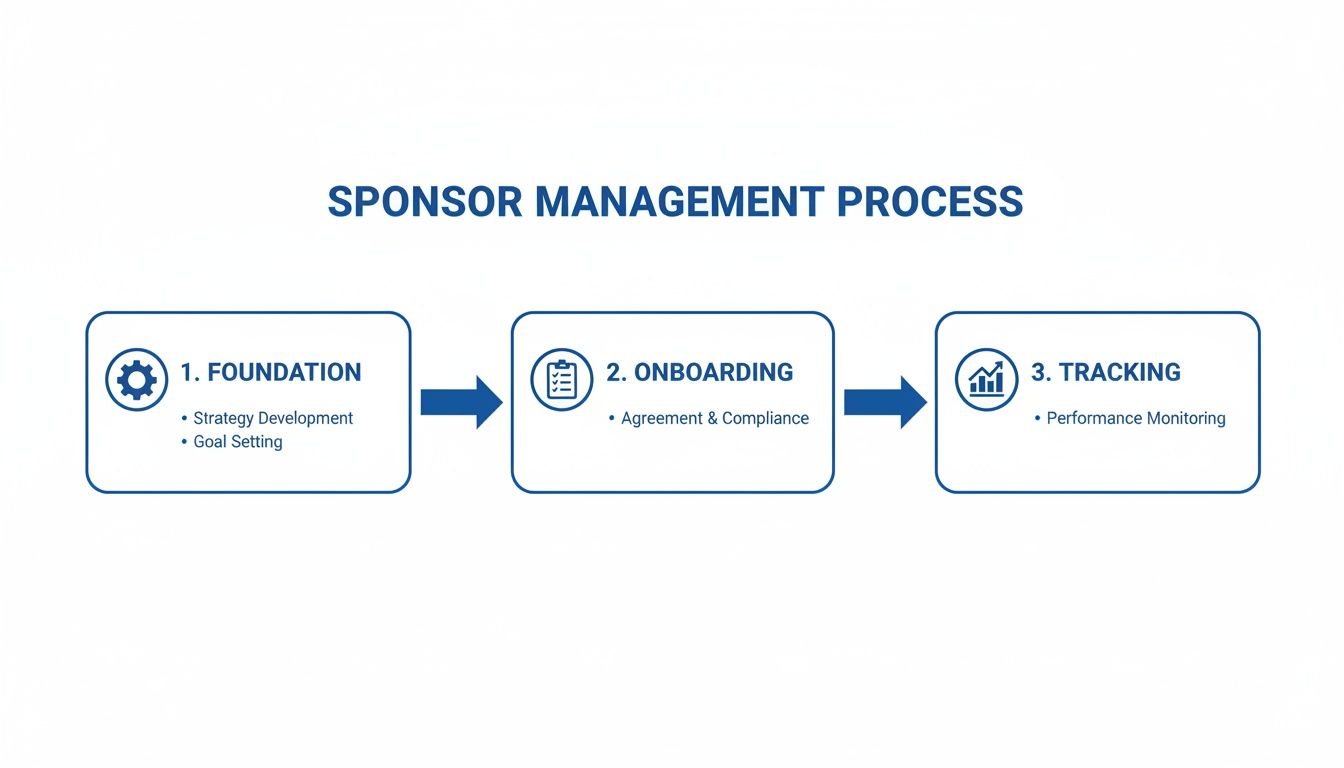
As you can see, a successful program is built on connected stages, not just a random checklist of tasks. Mastering each one is a huge part of what we consider https://adslots.co/newsletter-advertising-best-practices/.
The goal isn't just to manage sponsors. It is to create an experience so smooth and professional that they can't wait to book with you again. A repeatable system is how you make that happen.
Making a Great First Impression: Your Sponsor Onboarding Process
The moment a sponsor says "yes" is where the real work and the real opportunity to impress them begins. A clunky, disorganized onboarding is a red flag. Your goal should be to swap those endless, confusing email chains for a repeatable, professional workflow.
This is not just about making your life easier. It is about setting the tone for the entire partnership. You want them to feel confident they made the right choice.
The All-In-One Sponsor Intake Form
The key to a smooth start is getting everything you need in one clean shot. I cannot tell you how many hours I wasted in my early days with back-and-forth emails asking for "just one more thing." Do not do that.
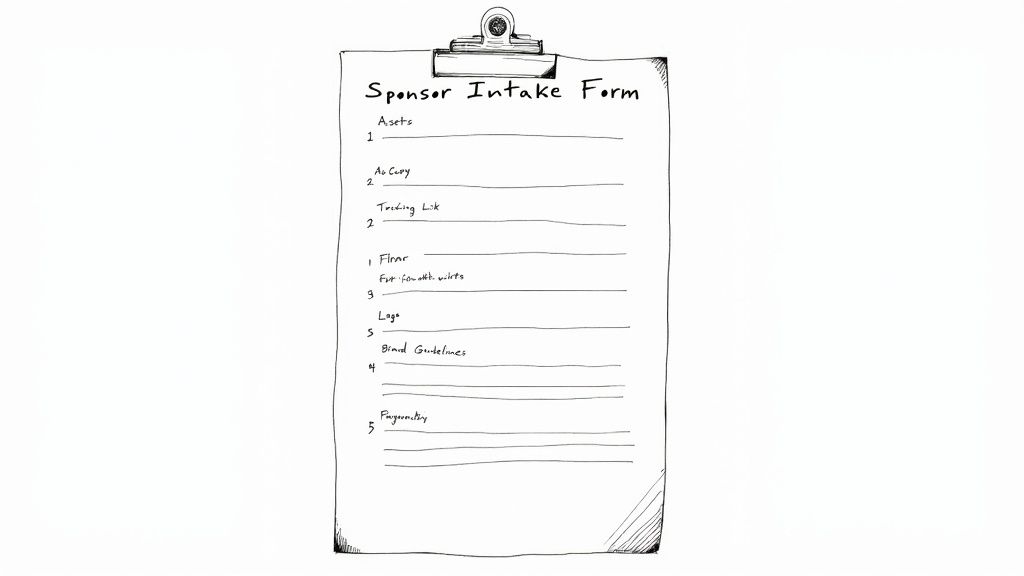
A simple sponsor intake form is your best friend here. It is the single source of truth for their campaign. You can build one for free using tools like Tally, Jotform, or a basic Google Form.
Make sure your form covers all the bases:
- Company Details: The official company name and the primary point of contact for any questions or approvals.
- Ad Creatives: Clear instructions and upload fields for their logo, images, and the exact ad copy they want to run.
- Tracking Links: A dedicated spot for the URL they want to use, including any UTM parameters. You need this to be exact.
- Brand Guidelines: Ask for a link or PDF of their brand rules. This prevents you from accidentally using the wrong logo color or tone of voice.
- Target Run Date: Their preferred date or week for the ad to go live.
This simple step immediately shows sponsors you're a pro who values their time.
The Contract and Welcome Kit
With all their assets in hand, it is time to make it official with a sponsorship agreement. This is not just a formality. It is a crucial document that protects everyone involved. It should clearly spell out the deliverables, payment terms (like Net 30), and the ad placement they've purchased. A tool like PandaDoc makes sending and signing these digitally a breeze.
Once the contract is signed, send them a simple welcome kit. This does not need to be anything fancy. A clean one-page PDF or a Notion page works perfectly.
Your welcome kit is the final touch that seals the deal. It should confirm all the key campaign details, reiterate the ad run date, and let them know what to expect next, like when they'll receive their performance report. It is all about making them feel secure in their investment.
This structured onboarding system is the foundation for scaling your sponsorships. It lets you manage a growing roster of partners without letting details slip through the cracks. As you grow, you might find that tracking every partner from initial outreach to final payment gets complicated. That is when a dedicated newsletter sponsor CRM can become an invaluable part of your toolkit.
Keeping Your Ad Calendar and Inventory Straight
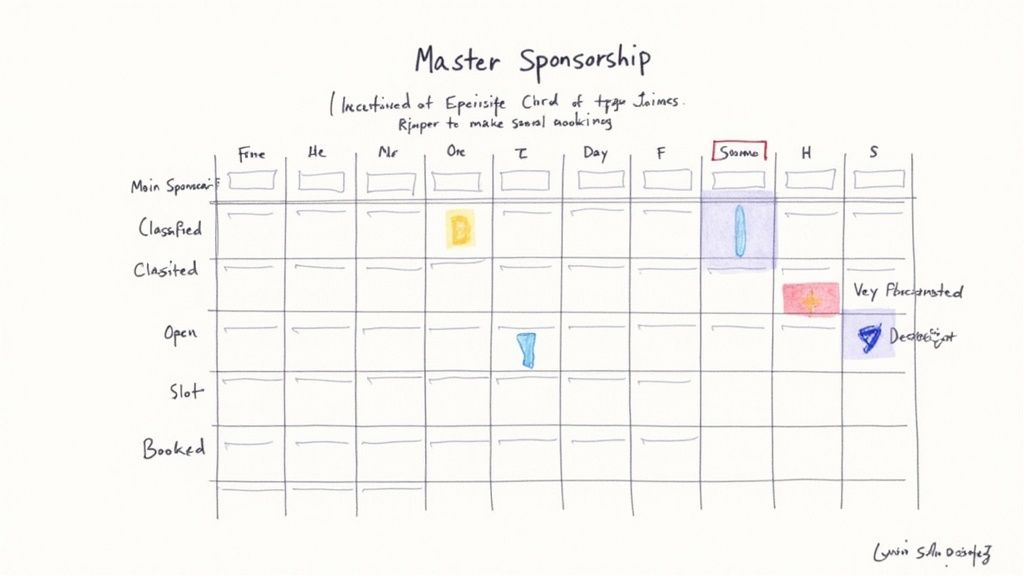
Once you have signed contracts, the real juggling act begins: managing your ad inventory. Without a solid system, it is frighteningly easy to double-book a slot, miss a deadline, or just create a messy reading experience. This is where a master sponsorship calendar becomes your best friend.
When you're just starting, a simple Google Sheet can absolutely do the trick. Set up columns for the send date, sponsor's name, ad type (e.g., "Main Sponsor," "Classified"), the status of their creative assets, and whether they've paid. This gives you a bird's-eye view of your commitments and open slots, saving you from some painful mistakes.
Just look at a pro like The Morning Brew. They structure their newsletter with very specific ad placements. This creates a consistent feel for the reader while letting them sell different tiers to sponsors. You can bet they're not winging it. This is all planned out months ahead on a shared inventory calendar.
Seeing Your Sponsorship Pipeline Clearly
As your newsletter grows and you're working with more partners, that simple spreadsheet might start to feel like it is bursting at the seams. This is when dedicated platforms can be a lifesaver. Tools like Paved, for instance, are designed specifically to help publishers see their sponsorship inventory and even connect with new brands.
A purpose-built tool gives you a clean dashboard to manage everything.
This kind of visual clarity helps you spot booked, pending, and available slots instantly, which is a game-changer when managing a handful of sponsors at once. Many of these platforms even bundle scheduling, asset management, and payments all in one spot. If you're curious about the options, our guide on newsletter ad scheduling software breaks down some great tools that can save you a ton of time.
The Balancing Act: Ads vs. Editorial
Never forget that your readers' trust is everything. Your ad calendar is not just a scheduling tool. It is a curation tool. You have to be strategic about balancing sponsored posts with your regular content so your newsletter does not feel like one giant billboard.
A good rule of thumb is to stick to a consistent ratio, like one main sponsor per issue, and always clearly label sponsored content. It is not just about ethics. It is good business. A recent study by the American Press Institute found that 73% of readers said clearly labeling sponsored content as "advertising" or "sponsored" had a positive impact on their trust. Get this right, and you can see brand recall jump by as much as 35% for your sponsors.
A well-managed ad calendar does more than just stop you from double-booking. It is how you protect the relationship you have with your readers and turn your ad space into a predictable, scalable part of your business.
Tracking Performance to Prove Your Value
Sponsors are not just buying ad space. They are buying results. If you can clearly show them the return on their investment, they are not just likely to book again. They will become your biggest fans. This means looking past vanity metrics like open rates and focusing on what actually moves the needle for their business.
The only way to do this right is to track performance for each sponsor individually. This is not optional. You need to create unique tracking links for every single campaign. Most email service providers let you add UTM parameters to your links, or you can use a simple tool like Bitly to whip up custom URLs. Taking this step guarantees you can attribute every single click and conversion back to the right sponsor.
If you skip this, you're flying blind. You have no concrete proof of your value, and you give sponsors no real reason to renew.
The Metrics That Truly Matter
Sure, open rates are nice to know, but savvy sponsors care about engagement and, more importantly, conversions. When you wrap up a campaign, your report needs to spotlight the numbers that directly connect to their bottom line.
Here is what you should be tracking and sharing:
- Click-Through Rate (CTR): This is your proof of relevance. A high CTR shows that your audience didn't just see the ad. They engaged with it.
- Total Clicks: Sometimes, a simple raw number is the most powerful. Telling a sponsor their ad drove 500 potential customers to their website is a tangible, easy-to-understand result.
- Conversion Rate: This is the holy grail. If you can show how many readers signed up for a trial or bought a product, you're demonstrating direct ROI. This usually requires a bit of collaboration, like having the sponsor place a tracking pixel on their confirmation page.
- Cost Per Lead (CPL): Do the math for them. Divide the total sponsorship cost by the number of leads generated. A low CPL proves your newsletter is an incredibly efficient way for them to acquire new customers.
The real goal here is to shift the conversation. You're not just selling an ad placement. You're offering a reliable customer acquisition channel. Clear, actionable data is how you make that case convincingly.
Creating a Simple and Effective Report
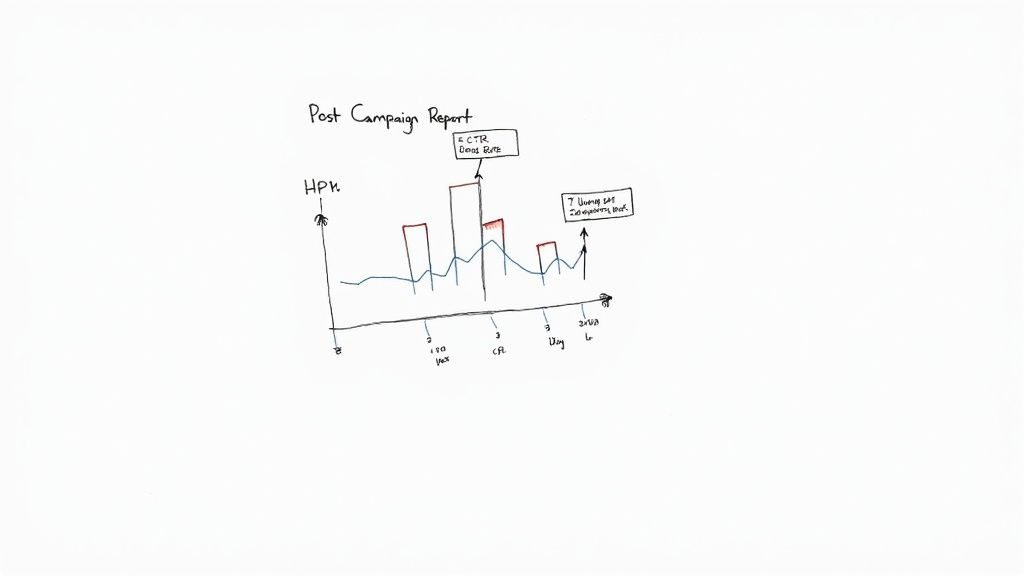
Your post-campaign report does not need to be a 20-page dissertation. In fact, a clean, one-page summary is almost always better. Keep it simple and powerful.
Your report should have a quick snapshot of the key metrics, a screenshot of how the ad looked in the newsletter, and a brief summary of the results. This data-first approach separates the pros from the amateurs. When you're juggling multiple sponsors, a solid reporting process is crucial for keeping everyone happy and coming back for more.
Do not forget to highlight what makes your newsletter special. For example, the Stacked Marketer newsletter often shares specific click data in their public media kit, showing potential sponsors exactly what kind of engagement previous partners received. That level of transparency builds instant trust. To stay on top of the latest trends, you can discover more insights about the state of newsletters from beehiiv. This not only keeps your current partners happy but also gives you powerful case studies to attract even bigger deals down the road.
How to Streamline Invoicing and Get Paid on Time
Chasing down sponsor payments should not feel like a second job. When you're juggling multiple partners, a messy invoicing process can quickly become a serious cash flow problem. The secret is not some complex accounting wizardry. It is building a simple, predictable system that ensures you get paid on time, every time.
This whole process actually starts way before an invoice is ever sent. Your sponsorship agreement absolutely must have your payment terms spelled out in black and white. Net 30 (payment due 30 days after the invoice date) is pretty standard and keeps things professional. Any ambiguity here will come back to bite you, so be crystal clear in every single contract.
Set a Consistent Invoicing Schedule
Consistency is your best friend when it comes to getting paid promptly. You need to lock in a fixed schedule for sending invoices. I have found the most effective approach is to invoice sponsors on the exact day their ad runs. This immediately links the bill to the value you just delivered, making it a clean and simple transaction in their minds.
This small habit removes all the guesswork for you and your sponsors. They know precisely when to expect your bill, and you have a recurring task that does not get forgotten. It keeps your accounts receivable tidy and prevents invoices from falling through the cracks, a huge risk when you are managing multiple newsletter sponsors.
Automate Your Follow-Up
Let's be real. Even with the clearest terms, some payments will be late. Manually keeping track of due dates and drafting follow-up emails for every sponsor is a soul-crushing time-suck, not to mention it is easy to make mistakes. This is the perfect place for a little automation to completely change your workflow.
A polite, automated reminder sent a few days before an invoice is due, and another a few days after it becomes past-due, can solve over 90% of late payment issues without you having to step in and have an awkward conversation.
Tools like Stripe or a dedicated automated newsletter invoice software can take this entire process off your plate. They will generate professional invoices, keep an eye on payment statuses, and send out those critical reminders for you. This frees you up to focus on what actually matters, creating a great newsletter, not chasing down money.
Ready to Scale? Let's Build a Smarter Sponsorship Workflow
When you first started, a simple spreadsheet and a few email templates probably worked just fine. As your newsletter grows, those manual systems start to feel like they're held together with duct tape. They will eventually break under the pressure.
The key is to get ahead of the chaos. You need to shift from frantically chasing one-off deals to building a smooth, sustainable sponsorship engine that can handle a steady stream of partners without overwhelming you.
With a 96.2% year-over-year explosion in newsletters on platforms like beehiiv, the space is getting crowded. A slick, professional system is not just a nice-to-have anymore. It is how you stand out and thrive.
From One-Off Deals to Recurring Revenue
The single most powerful way to scale is to stop selling individual ad slots and start building long-term partnerships. A one-time placement is a transaction. A quarterly or annual package is a real partnership. This simple shift provides you with predictable revenue and, just as importantly, slashes your admin time.
Think about it. Instead of onboarding ten different sponsors for ten separate slots, you onboard one partner for an entire quarter. That is a huge win. But selling these larger packages requires a different pitch.
- Talk Big Picture: Frame the conversation around their long-term marketing goals, not just a single ad. How can you help them become a trusted name with your audience over time?
- Sweeten the Deal: Offer a compelling incentive for the longer commitment. A 15% discount for booking a full quarter can be just the nudge they need.
- Show, Don't Just Tell: Use the performance data from an initial test campaign to build your case. Show them how a longer-term presence can compound their results and build real brand equity.
When you do this, you are no longer just selling ad space. You become a strategic part of their marketing plan.
Systematize Everything You Can
You cannot scale if you're still manually doing every little thing. The name of the game is automating the repetitive, time-sucking tasks. To handle a growing roster of sponsors without descending into chaos, you have to get your processes buttoned up. For a great overview, these 5 workflow automation tips for your team can help you spot the easy wins.
The real secret to scaling sponsorships is not just about efficiency. It is about closing the measurement gap. Most sponsorships don't fail spectacularly. They just quietly fizzle out because of fuzzy attribution.
When you're juggling multiple sponsors, the volume of testing becomes your superpower. You cannot get real performance insights from a single ad placement. True clarity comes from testing across many newsletters, cutting the losers, and doubling down on the winners. Find out more about how measurement will define the future of newsletter sponsorships.
True scale isn't about working more hours. It is about building systems that let you deliver incredible results for your partners without burning yourself out. It's about working smarter, not harder.
Common Questions About Sponsor Management
Even with a killer system in place, you're bound to run into some common hurdles when you start juggling multiple sponsors. Getting a handle on these questions early will help you navigate challenges like a pro and sharpen your strategy as your newsletter grows.
What’s the Best Way to Price Sponsorships?
From my experience, a tiered pricing model works wonders. It's a simple way to cater to sponsors with different budgets and ensures you're squeezing the most value out of every single send.
You can start by offering a few distinct packages:
- Main Sponsor: This is your premium, top-of-the-newsletter placement. The big kahuna. It commands the highest price.
- Featured Placement: Think one or two slots nestled right in the heart of your content. Still great visibility, but at a mid-tier price point.
- Classified Ad: A simple, lower-cost, text-only ad near the bottom. It's a fantastic entry point for sponsors with smaller budgets.
Whatever you do, base your rates on real data. You need to know your numbers: total list size, average open rates, and the typical click-through rates your ads get. This data-driven approach does not just justify your pricing. It shows sponsors you know exactly what you're delivering.
How Do I Handle an Unhappy Sponsor?
This is a tough one, but it happens. First things first, just listen. Take the time to genuinely understand their concerns and figure out exactly where the campaign fell short of their expectations.
Pull up the performance data and walk through it with them. Compare the results to the average metrics you shared upfront. If the numbers really did miss the mark, offering a "make-good" is a great way to salvage the relationship. That could be a free placement in a future edition or a steep discount on their next campaign. Proactive communication is everything here.
The goal is to show you're a partner invested in their success, not just someone selling ad space. This mindset can turn a negative situation into an opportunity to build a much stronger, long-term relationship.
What Tools Are Truly Essential for Management?
A spreadsheet might feel fine when you're managing one or two sponsors, but it becomes a massive bottleneck as soon as you start to scale. Trust me. To grow without pulling your hair out, you will need a few key tools.
A shared calendar like Google Calendar is non-negotiable for visualizing your ad inventory and avoiding double-bookings. An invoicing tool like Stripe is a lifesaver for automating payments and follow-ups. And a simple project management tool like Trello can help you track ad creative and deadlines without your inbox exploding.
Tired of spreadsheet chaos? Ad Slots automates your sponsor tracking, invoicing, and scheduling, so you can focus on writing great content instead of running ad ops. Learn more and streamline your workflow today.