
Selling a few ads in your newsletter feels easy at first. An email here, a spreadsheet row there. Soon, you start to grow. Suddenly, you're buried in back-and-forth emails, chasing payments, and trying to remember which creative goes where.
This is what I call newsletter advertising chaos. It's the tipping point where manual systems that used to work suddenly break. Your creative outlet turns into a full-blown administrative headache.
Confronting The Chaos In Your Newsletter Ads
If you make money from your newsletter, this probably sounds familiar. You land a couple of sponsors. Managing them with a simple spreadsheet and your inbox is no big deal. But as your list grows, so does the mess.
Before you know it, you spend more time juggling ad operations than writing the content your subscribers love. You've accidentally become an admin instead of a creator.
The newsletter world has exploded. While that's great for creators, it has also introduced new problems. Open rates are still fantastic. For instance, ConvertKit's 2023 report found the average open rate for newsletters is 36.9%. However, the market is now flooded with options. This has led to wild swings in ad pricing, making it even harder for creators to manage their business effectively.
The Real Cost Of Manual Management
Let’s be clear: managing your ads manually isn't just a time-suck. It actively costs you money and damages your brand. Every minute you spend digging through your inbox for ad copy or manually updating a spreadsheet is a minute you could have spent landing a new sponsor or improving your newsletter.
The symptoms of this chaos are painfully common:
- Inconsistent Pricing: You end up quoting different rates to similar sponsors simply because you cannot find your own pricing sheet.
- Clumsy Sponsor Onboarding: A messy, unprofessional experience with endless email threads for contracts, ad specs, and invoices.
- Lost Revenue: You forget to invoice a sponsor or never follow up on a late payment. That is real money left on the table.
- Fulfillment Errors: The ultimate nightmare is double-booking an ad slot or, even worse, completely forgetting to run a paid ad.
The biggest risk here is not just the time you lose. It is the damage to your reputation. A sponsor who has a terrible onboarding or fulfillment experience is not coming back, no matter how amazing your audience is.
Before you can fix the problem, you need to know exactly what you are up against. Here is a quick look at the symptoms of ad ops chaos and how they quietly hurt your business.
Common Failure Points in Manual Ad Operations
| Symptom | Common Cause | Business Impact |
|---|---|---|
| Forgotten Invoices | No automated system; relying on memory or calendar reminders. | Direct revenue loss and soured sponsor relationships. |
| Double-Booked Ad Slots | Using a confusing spreadsheet or multiple calendars. | Reputation damage and potential contract breaches. |
| Wasted Time on Emails | Manually sending every contract, invoice, and reminder. | Reduced productivity; less time for growth activities. |
| Inconsistent Sponsor Experience | Lack of a standardized onboarding process or templates. | Lower sponsor retention and fewer repeat bookings. |
| Lost Ad Creatives | Creatives buried in long, confusing email threads. | Fulfillment errors and last-minute panic. |
These issues feed into a cycle of stress and burnout. You feel like you’re always one step behind. The admin work starts to feel like it is not worth the money you are making.
Recognizing these failure points is the first step to taking back control. Building a solid foundation from the start is key. It helps to review some newsletter advertising best practices to get ahead of these problems. This guide is all about showing you how to get there.
Building Your Bedrock Ad Operations System
If you constantly chase down ad creative, dig through emails for tracking links, and wonder if an invoice has been paid, you're stuck in the ad ops chaos cycle. I have been there. The only way out is to build a system.
This is not about buying a fancy, expensive platform right out of the gate. It is about creating a simple, repeatable process that brings order to the madness. Think of it as your operational bedrock, built on three key pillars: a clear ad inventory calendar, a reliable invoicing process, and a straightforward fulfillment checklist. Get these right, and you will trade reactive panic for proactive control.
This is the all-too-common spiral that happens when you are managing everything manually. It starts with messy spreadsheets and ends with lost revenue and a mountain of admin work.
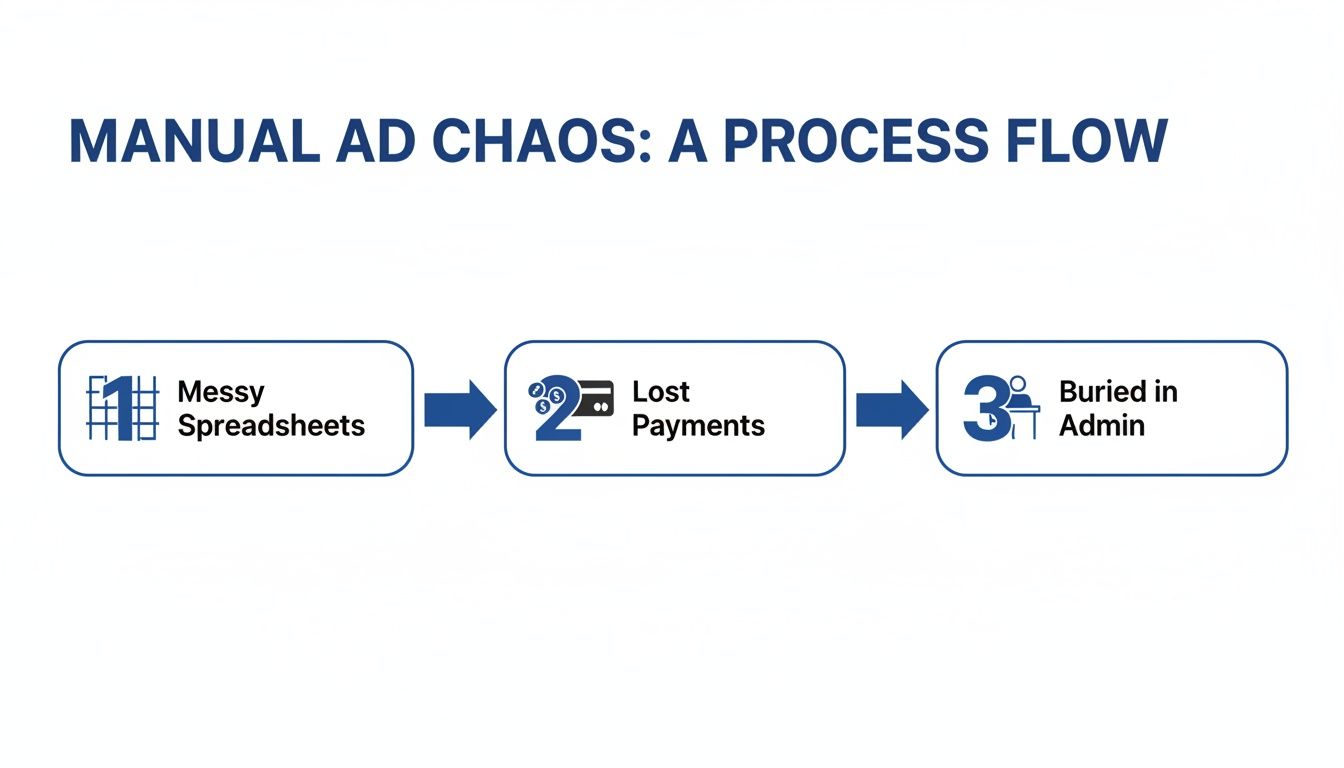
Sound familiar? This visual is a painful reminder of how easily disorganized data can tank your profits and sanity. Let’s fix that.
Your Ad Inventory Calendar
Your calendar is your command center. It needs to be the single source of truth for what’s sold, what’s available, and what’s in the pipeline. You do not need anything more complicated than a Google Calendar to start.
The key is a simple color-coding system that gives you the lay of the land in a single glance.
- Blue for Available: These are the open slots you can actively sell.
- Yellow for Pending: A sponsor is interested and you have sent an invoice, but the cash has not hit your account yet.
- Green for Booked: The slot is paid for, confirmed, and ready to go.
This simple visual trick instantly prevents the dreaded double-booking and helps you see future revenue at a glance. It is the first real step toward a workflow you can actually manage. If you want to go deeper on building a solid infrastructure, it is worth learning from established sales operations best practices.
Creating a Bulletproof Fulfillment Checklist
Think of your fulfillment checklist as the pre-flight check you run before every single newsletter goes out. Its purpose is to make sure you have everything you need from the sponsor long before your deadline. No more frantic, last-minute emails begging for creative assets.
Here is what every checklist should confirm:
- Final Ad Copy: Has it been approved by the sponsor?
- Required Images or Logos: Are they in the right format and resolution?
- The Correct Tracking Link: Is this the exact URL they want to use for measurement?
- Confirmation of Payment: Has the invoice been paid in full? No payment, no ad. Period.
This does not have to be complicated. A simple template in a Google Doc or Notion page is enough to professionalize your entire operation and save you from costly mistakes. Getting this habit down is crucial.
A strong operational bedrock does more than save time. It builds trust with sponsors, who see you as a reliable and professional partner, making them more likely to book again.
Getting your systems in order is becoming non-negotiable. A 2023 survey by The Tilt found that 46% of content creators were making more money than the previous year. Yet, the competition is getting fierce. A solid ad ops system is no longer a nice-to-have. It is what will separate the newsletters that thrive from those that get left behind.
Creating a Frictionless Sponsor Onboarding Experience
That first conversation with a potential sponsor sets the tone for the entire relationship. If getting basic info requires a dozen back-and-forth emails, they will assume your whole operation is a mess. A smooth, professional onboarding process is not just a nice-to-have. It shows you’re a serious partner worth their investment.
The goal here is to create a system that feels completely effortless for them but is dead simple for you to repeat. It all starts with a simple, one-page ad kit.
Think of your ad kit as your sales pitch and FAQ document all rolled into one. It should proactively answer 90% of a sponsor's questions before they even think to ask.
Build a Simple and Effective Ad Kit
A great ad kit is built on clarity and trust. You are not just selling a spot in an email. You are selling predictable results and access to a specific audience. Your ad kit needs to make it a no-brainer for them to say yes.
Make sure your kit includes these essentials:
- Audience Demographics: Who are your readers? Get specific. For example, a newsletter like The Hustle targets young professionals and entrepreneurs, so they share data about job titles, industries, and tech savviness.
- Key Metrics: Be transparent. Share your total subscribers, average open rate, and average click-through rate. Honesty builds trust.
- Ad Specs and Placements: Show them exactly what they're buying. Include image dimensions, word counts, and a screenshot of where the ad sits in the newsletter.
- Pricing and Availability: Be upfront with your rates. A link to a live calendar showing open slots is a fantastic touch.
Here’s a perfect visual of what I mean. This whiteboard sketch shows how you should be thinking about presenting your data to advertisers. It is all about the numbers that matter to them.
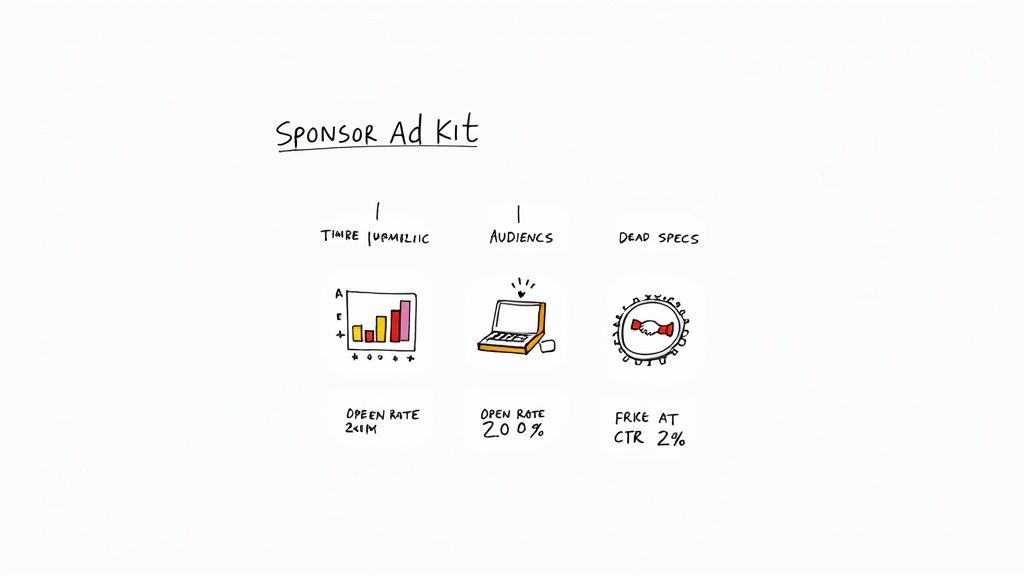
When you lead with data like this, it justifies your pricing and builds instant credibility. No hard sell is needed.
Templates to Standardize Your Process
Once a sponsor expresses interest, your communication needs to stay just as sharp. This is where templates become your secret weapon. They save you a ton of time and ensure no critical details get missed.
I recommend creating a simple onboarding email sequence that walks the sponsor through everything from contract signing to creative submission. If you’re juggling more than a couple of sponsors, managing these conversations in a dedicated newsletter sponsor CRM is a game-changer. It keeps everything in one place.
Don’t overcomplicate the contract. It does not need to be 20 pages of legalese. A straightforward agreement outlining run dates, payment terms, and creative deadlines is all you need to protect yourself and the sponsor.
This structured approach turns what was once newsletter advertising chaos into a polished, professional workflow. It impresses sponsors, slashes your admin time, and lays the foundation for a great partnership. It’s a win-win.
Using Simple Automation to Reduce Manual Work
Automation is your secret weapon against the tedious, repetitive tasks that eat up your day. These tasks create chaos in your ad operations. The good news? You do not need a complex or expensive tech stack to see a massive impact. A few smart, simple automations can easily free up 5-10 hours a week. This lets you get back to what you do best: creating great content.
This is not about building a robot to run your business. It is about finding the most monotonous parts of your workflow and letting a simple tool handle them for you.
Automate Your Scheduling and Booking
We’ve all been there. The endless email chains trying to nail down an ad slot. "Are you free the week of the 15th?" "Oh, wait, that's booked. How about the 22nd?" Every back-and-forth email is another chance for a sponsor to get distracted or lose interest. This is one of the easiest fires to put out.
Tools like Calendly or SavvyCal are perfect for this. You just set up your ad calendar with available slots, send sponsors a link, and they can see what’s open and book a spot themselves. It immediately cuts out the tedious communication. It saves you a ton of time and makes you look incredibly professional and organized.
Let's look at how a few simple switches can transform your manual ad tasks.
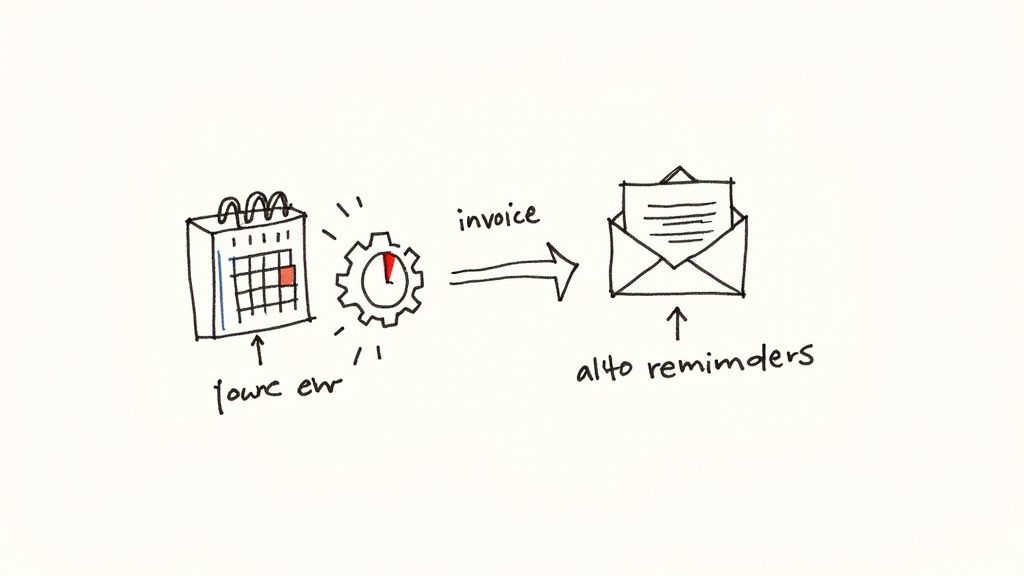
The idea is to build a system that hums along quietly in the background, doing the boring work for you.
Set Up Automated Invoicing and Reminders
Chasing down late payments is awkward for everyone involved. It’s stressful, drains your energy, and it is also completely avoidable. Modern payment platforms like Stripe or PayPal have fantastic, easy-to-use automation features that can handle the entire invoicing process for you.
You can set up a simple workflow to automatically:
- Send an invoice the moment a sponsor books their ad slot.
- Send a friendly reminder a few days before the payment is due.
- Follow up if a payment is late without you having to lift a finger.
This small change means you get paid on time, improve your cash flow, and never have to send another one of those cringey "just checking in…" emails again. You can learn more about how this foundation works by exploring automated newsletter ad insertion systems, which often build on this exact logic.
Automate Post-Campaign Reporting
Another huge time-saver is automating your post-campaign performance reports. Sending these reports is non-negotiable for building trust and encouraging sponsors to book again. But manually pulling stats and drafting a custom email for every single advertiser is a grind.
Pro Tip: Your email service provider likely has some basic automation features you can use here. Try setting up a simple trigger. For example, you can create a workflow that automatically sends a performance report (with key metrics like opens and clicks) to the sponsor 48 hours after their ad runs.
These little changes have a compounding effect. Below is a quick look at just how much time you can claw back.
Manual Tasks vs Simple Automation Solutions
| Manual Task | Automation Tool or Method | Time Saved per Week |
|---|---|---|
| Emailing back and forth to book slots | Calendly or SavvyCal | 1-2 hours |
| Creating and sending invoices manually | Stripe or PayPal Invoicing | 1 hour |
| Sending payment reminders | Automated follow-ups in payment tool | 1-2 hours |
| Pulling stats for performance reports | ESP-triggered report emails | 1-2 hours |
| Manually onboarding new sponsors | Zapier + Google Forms/Airtable | 1 hour |
By swapping out just a few manual processes for reliable, automated systems, you’re not just saving time. You’re building a more scalable and professional ad operation. That is how you finally put an end to the chaos.
Measuring What Matters to Scale Your Ad Business
If you want to truly get out of the ad ops weeds, you have to measure what actually moves the needle. Tracking just open rates and top-line revenue is like trying to navigate a ship with a broken compass. You're moving, but you have no idea if it's in the right direction. Building a predictable, scalable ad business comes down to focusing on the Key Performance Indicators (KPIs) that tell you how healthy your operations really are.
This is not about getting lost in a sea of data or building some ridiculously complex dashboard. It’s about being disciplined enough to track a handful of core metrics that paint a clear picture. These numbers will help you make smarter calls on everything from your ad pricing to where you focus your sales energy.
Key Metrics for a Healthy Ad Business
Let's get past the vanity metrics. The numbers below tell the real story of how your ad business is performing and, more importantly, where the opportunities are hiding.
- Ad Sell-Through Rate: This is your pulse check. It’s the percentage of available ad slots you actually sell over a month or quarter. If you consistently hit 85% or higher, it’s a great sign that your inventory is in demand and probably priced right.
- Average Deal Size: What is the average revenue you are bringing in from each sponsorship deal? Tracking this shows you if you’re successfully moving upmarket with bigger partners or getting bogged down by lots of small, time-consuming deals.
- Sponsor Retention Rate: How many of your sponsors come back for more? A high retention rate is the ultimate vote of confidence. It tells you that you’re delivering a great experience and real results, which is the bedrock of a sustainable business. For instance, the popular newsletter Morning Brew reports that a significant portion of their revenue comes from repeat sponsors who see consistent value.
These KPIs give you an objective look in the mirror. A low sell-through rate might mean it’s time to rethink your pricing or get more aggressive with sales outreach. If sponsors are not coming back, you might have a problem with your onboarding or the performance they are seeing.
Beyond the Click-Through Rate
For years, the click-through rate (CTR) was the gold standard. Not anymore. One of the biggest drivers of chaos in the newsletter world today is the explosion of automated, non-human traffic. It is a real problem. In fact, a 2023 report from Beehiiv showed that nearly 40% of all email clicks are generated by bots, not actual readers. This creates a massive disconnect. Sponsors see inflated click numbers but are left scratching their heads when no real business comes from it.
That does not mean CTR is totally worthless, but it absolutely needs context. Smart advertisers have shifted their focus to what happens after the click: conversions, qualified leads, or demo sign-ups.
To prove your value, shift the conversation from clicks to impact. Ask sponsors what their real goal is and help them track it. A single qualified lead is worth more to them than a thousand bot clicks.
To truly understand the impact of your ads and build a case for long-term partnerships, you need to implement solid strategies to accurately measure marketing ROI. This aligns your success directly with your sponsor's success. That is how you turn a simple ad slot into a powerful, sustainable revenue engine.
Common Questions About Newsletter Ad Management
Even with the best systems in place, navigating the world of newsletter advertising can feel tricky. As you move from spreadsheets and manual processes to a more organized approach, new questions naturally pop up. Here are some of the most common ones we hear from creators trying to finally escape the chaos.
When Should I Upgrade from Free Tools?
Honestly, the right time to upgrade is when the cost of your time officially outweighs the cost of a dedicated tool. Free tools like Google Calendar and spreadsheets are fantastic for getting started. I used them myself. But they have a clear ceiling.
You’ve probably hit that ceiling if you find yourself:
- Sinking more than 2-3 hours a week into ad-related admin.
- Making costly mistakes, like double-booking a sponsorship slot or forgetting to send an invoice. (We’ve all been there.)
- Feeling like you can’t take on more sponsors simply because the manual work is too much to handle.
If any of that sounds familiar, it’s a huge sign that your free system is now actively holding back your revenue. Investing in a platform is not just another expense. It’s about buying back your time so you can focus on work that actually grows your newsletter, not just organizing it.
What Is the Best First Step to Take When I’m Overwhelmed?
When you feel like you're drowning in newsletter ad chaos, trying to fix everything at once is a surefire way to burn out. The single best first step you can take is to create a central ad inventory calendar. This one simple action has a massive ripple effect.
Just setting up a color-coded Google Calendar immediately clarifies what’s available, what's pending, and what's sold. This becomes your single source of truth. It prevents double-booking, helps you forecast revenue, and gives you a clear snapshot of your business at a glance. It's a small, manageable win that brings immediate order and gives you the momentum to tackle bigger process improvements down the road.
How Do I Handle Difficult Sponsors?
Sooner or later, you're going to run into a difficult sponsor. It’s just part of the business. They might consistently pay late, demand endless revisions to ad copy, or push for performance guarantees you can’t possibly make. The key is to be proactive, not reactive.
Your best defense here is a rock-solid, crystal-clear advertising agreement. Before any work begins, make sure your contract outlines everything.
- Payment Terms: Specify that payment is due upfront and that the ad will not run until the invoice is paid. No exceptions.
- Creative Deadlines: Set a firm date for when all ad copy and assets are due.
- Revision Limits: Clearly state how many rounds of edits are included in the price.
- Performance Disclaimers: Clarify that you don’t guarantee specific click or conversion numbers.
Having these terms agreed upon from the start turns a potentially emotional conflict into a simple business conversation. You can politely but firmly point back to the agreement, protecting your time and professional boundaries. This simple document prevents one difficult client from derailing your entire operation and keeps you in control.
Ready to finally ditch the spreadsheets and automate your ad operations? Ad Slots turns your newsletter advertising from a time-sucking nightmare into a streamlined system. Save hours every week and scale your sponsorships without the chaos.