
Landing brand sponsorships for your newsletter isn’t some dark art. It’s a process. It starts with figuring out exactly what makes your audience valuable, packaging that value into a killer media kit, and then finding the right brands to pitch.
The key is to show that your subscriber list isn't just a number. It is a community that genuinely trusts your recommendations.
Build Your Sponsorship Foundation First
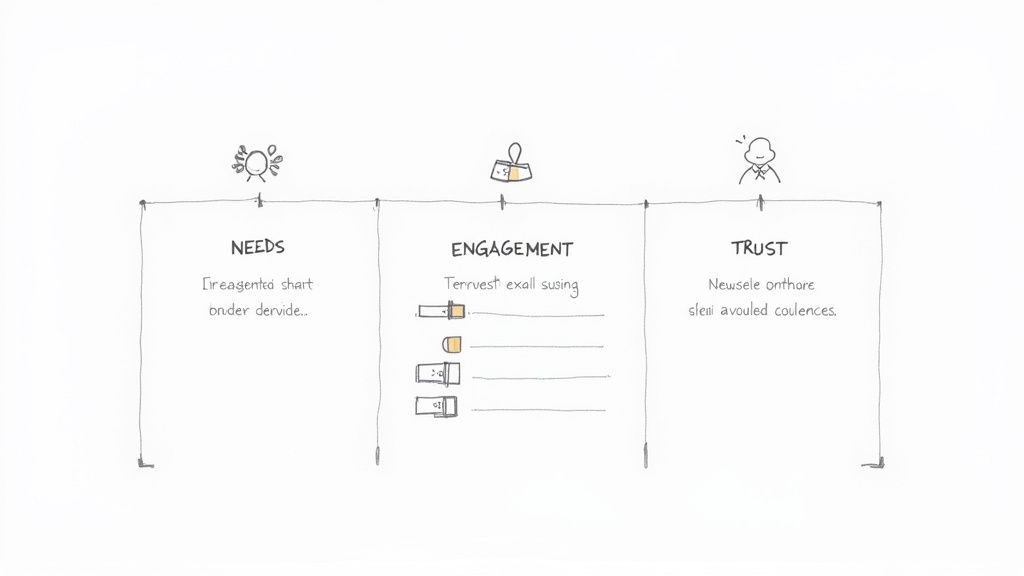
Before you even think about sending a pitch email, the most important work happens behind the scenes. You need to be crystal clear on what you're selling. And spoiler alert, it's not just ad space. You're selling access to a targeted, engaged audience that hangs on your every word.
This is the bedrock of every single successful sponsorship deal.
Get this right, and you become a strategic partner. Skip it, and you're just another email in a brand manager's crowded inbox.
Define Your Unique Audience Value
Forget basic demographics for a second. Sure, age and gender are nice to know, but they don't tell the real story. Sponsors are hungry for the psychographics of your audience. What keeps them up at night? What are their biggest goals? What problems are they trying to solve that your newsletter helps with?
Think about it. A newsletter for software developers isn't just reaching "males aged 25-40." It's reaching professionals actively hunting for tools to streamline their workflow, crush their project deadlines, and stay ahead of the curve. That is the kind of specific insight a brand like Asana or Slack will happily pay for.
So, how do you dig up these details?
- Run a simple reader survey. Ask direct questions like, "What's the single biggest challenge you're facing at work right now?" or "What's one tool you absolutely can't live without?"
- Look at your engagement data. What links do people click on the most? Which topics get the most email replies? This data is a goldmine for understanding what really makes your audience tick.
- Build an audience persona. Go ahead and give your ideal reader a name, a job, and a backstory. This simple exercise makes your audience feel real and makes it way easier to explain their value to a potential sponsor.
Articulate the Power of Trust
In the world of newsletters, trust is your most valuable currency. Period. An ad in your newsletter isn't like a random banner ad on a website. It comes with your implicit endorsement. You've spent months, maybe even years, building a real relationship with your readers. That hard-earned credibility is what sponsors are actually buying.
Your newsletter is a direct line to a community that has chosen to hear from you. Brands don't just get impressions. They get a warm introduction from a trusted friend. This is the heart of your entire value proposition.
Take a newsletter like Morning Brew. They didn't just build a huge list. They built a rock-solid reputation for delivering witty, sharp content. A sponsorship with them isn't just an ad. It is a chance to align with a brand that millions of people trust for their daily news.
This is the level of trust you need to learn to communicate. When you can point to high open rates (anything over 40% is fantastic) and share glowing reader feedback, you’re no longer just selling ad space. You’re selling influence. This is the first real step in learning how to get sponsorship from brands.
Create a Media Kit That Closes Deals
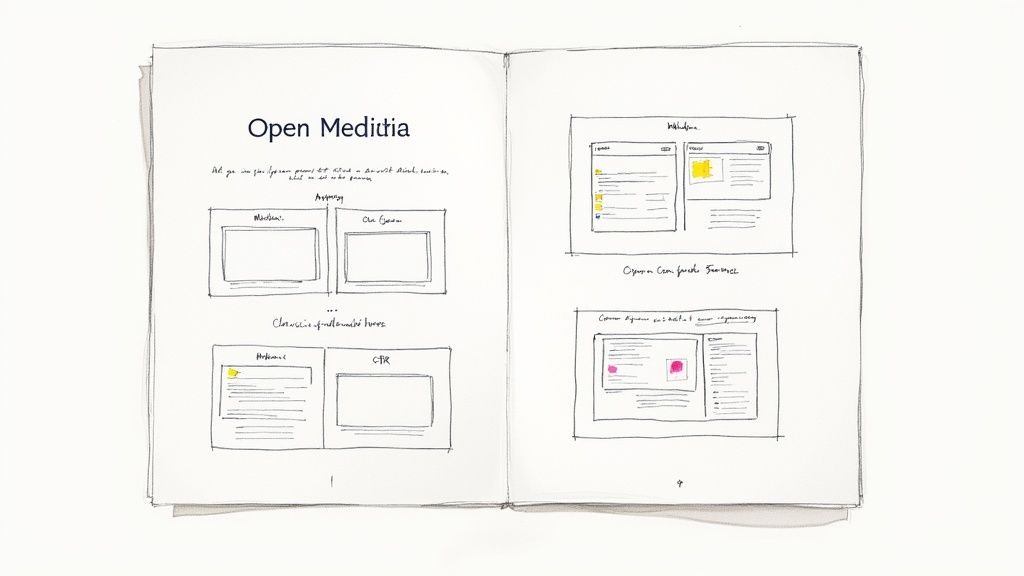
Your media kit is basically your newsletter's resume. It’s the first thing a brand sees, so it has to look sharp, professional, and get straight to the point. A great media kit answers all of a sponsor's questions upfront and shows them why a partnership with you is a no-brainer.
Think of it this way. A solid kit saves everyone a ton of time. It tells a clear story about who you are, the audience you've built, and the results you can deliver, preventing all that frustrating email back-and-forth.
What to Include in Your Media Kit
A powerful media kit is more than just a list of stats. It’s a snapshot of your newsletter's value. You want to give a potential sponsor a complete picture, and that means including a few key elements.
- About Your Newsletter: Kick things off with a punchy summary. What’s your mission? What makes your content unique? This is your chance to set the tone and establish your brand's personality right away.
- Audience Demographics and Psychographics: This is where you really bring your audience to life. Go beyond basic stats like job titles or age. What do your readers care about? What problems are they trying to solve? That’s the kind of insight sponsors are looking for.
- Key Performance Metrics: Be upfront with your numbers. This is how you build instant trust. You absolutely need to include your total subscriber count, average open rate, and average click-through rate (CTR).
Here's a practical example. A niche newsletter with 1,500 subscribers and a 55% open rate is way more valuable to the right brand than a generic one with 20,000 subscribers and a 15% open rate. Brands like Athletic Greens will pay premium rates for smaller, highly-engaged health and wellness audiences because the trust is already there.
Essential Metrics and How to Frame Them
Don't just throw numbers at sponsors and hope for the best. You need to give them context. Explain why your stats matter. A high open rate, for instance, proves you have a loyal audience that trusts what you have to say. A solid CTR shows your readers actually act on your recommendations.
Here’s a simple way to present your key metrics:
- Subscriber Count: The total number of people who get your newsletter.
- Average Open Rate: This is your loyalty metric. For most industries, an open rate of 40% or higher is fantastic.
- Average Click-Through Rate (CTR): This shows how many subscribers are clicking your links. A CTR above 3-5% is considered really strong.
- Audience Testimonials: Add a couple of short, powerful quotes from your readers. Nothing builds trust faster than social proof from the community you've built.
Putting this all together from scratch can feel like a chore. If you want a head start, you can use our free newsletter media kit generator to help structure everything professionally.
Design and Presentation Best Practices
The look of your media kit should match the quality of your content. It doesn’t need to be a design masterpiece, but it absolutely must be clean, professional, and on-brand. A sloppy kit sends the wrong message.
Just stick to these simple rules:
- Keep it clean and readable. Use plenty of white space and pick a simple, easy-to-read font.
- Use your brand colors and logo. Consistency is key to looking professional.
- Visualize your data. Simple charts or graphs can make your numbers pop and easier to digest.
- Keep it short. Aim for one or two pages, max. Brand managers are busy, so make it easy for them to scan.
If you need some inspiration, you can find a bunch of free media kit templates that provide a great starting point. When you combine solid data with a clean, professional design, you’re not just sending a document. You’re sending a powerful sales tool.
Find and Pitch the Right Brand Partners
Let’s be honest. Blasting out generic emails to a massive list of brands is a surefire way to get ignored. If you want to land great sponsorships, you have to ditch the spray-and-pray approach. It's all about smart research and a personal touch.
The goal isn't just to play a numbers game. It's to find brands that are a perfect fit for your audience and then craft a pitch they actually want to read. When you do this, you’re not just another cold email. You’re a potential partner who’s done their homework.
How to Identify Potential Sponsors
Before you can pitch anyone, you need a solid list of prospects. The best partners aren't always the biggest, most obvious names. More often than not, they're the up-and-coming brands in your niche who are hungry for targeted ways to grow. Your job is to find them.
So, where do you start looking?
- Spy on Similar Newsletters: Subscribe to other newsletters in your space. Who’s sponsoring them? These brands have already bought into the power of newsletter ads and get your audience. They're your warmest leads by a long shot.
- Use Social Media for Recon: Hop on LinkedIn or Twitter and search for keywords related to your newsletter's topic. Pay attention to which brands are running ads or are active in relevant conversations. If a company is already investing in social promotion, they're likely open to other marketing channels.
- Find the Natural Overlap: Just think about the products and services your readers already use and love. If you write for remote workers, brands selling ergonomic chairs, productivity software, or fancy coffee are a no-brainer. This kind of natural alignment makes your pitch incredibly compelling.
The most successful partnerships feel authentic because they are. When you promote a brand your audience would have been thrilled to discover on their own, it feels less like an ad and more like a genuinely helpful recommendation.
Crafting a Pitch That Gets a Response
Once you have your shortlist, it’s time to write a pitch that doesn’t scream "template." Brand managers are busy, and they can spot a generic, copy-pasted email from a mile away. To stand out, your pitch needs to be specific, concise, and focused on their goals, not just your own.
First things first, find the right person. Search on LinkedIn for titles like "Marketing Manager," "Brand Partnerships," or "Head of Growth." Sending your pitch to a generic info@ email is like tossing it into a black hole. For a masterclass in this, check out this guide on how to get PR from brands.
A killer pitch email follows a simple, effective formula.
- Write a Subject Line They'll Actually Click: Ditch the boring "Sponsorship Opportunity." Get specific. Try something like, "Partnership idea for [Brand Name] + [Your Newsletter Name]."
- Personalize Your Opening Line: Show them you've done your research right away. Mention a recent product launch, a campaign you loved, or a company value that resonates. It instantly proves you’re not just mass-emailing.
- Nail Your Value Prop: Get straight to the point. Explain who your audience is and why they’re a perfect match for the brand. Connect the dots for them. For example, "My newsletter reaches 5,000 project managers actively looking for new efficiency tools, and your software would be a game-changer for them."
- End with a Clear Call to Action: Make it easy for them to say yes. Suggest a quick call to chat about ideas or ask if you can send over your media kit. Don't leave them wondering what to do next.
If you want to see exactly how this looks in practice, we've put together several proven examples in our guide to newsletter sponsor outreach email templates.
The Art of the Follow-Up
Here's a secret. Most deals are closed in the follow-up. It's not that they're ignoring you on purpose. Your email just got buried. A polite nudge a few days later can make all the difference.
But there’s a right way and a wrong way to do it. Your follow-up should never feel like you're just pestering them. The key is to add a little more value each time you reach out.
Here is a simple, three-email sequence you can adapt to stay on their radar without being annoying.
| Subject Line Idea | Core Message | |
|---|---|---|
| Email 1: Initial Pitch | Partnership Idea for [Brand Name] | Your personalized, value-driven pitch introducing the collaboration idea and your audience. |
| Email 2: First Follow-Up | Re: Partnership Idea | A quick, friendly bump 3-5 days later to bring your original email back to the top of their inbox. |
| Email 3: The Break-Up | Closing the Loop | A final, no-pressure email after another week. Let them know you won't follow up again but are open to future opportunities. |
This professional and structured approach shows you're serious and that you respect their time. It’s a small detail that goes a long way in building the kind of long-term relationships that lead to recurring sponsorships.
Price Your Sponsorships and Structure Packages
Let's talk about the part that trips up most creators. How much to charge. It can feel like a total black box, but I promise it's a straightforward process once you know which levers to pull. Getting comfortable with setting your rates and building clear, attractive packages is a non-negotiable skill if you want to land brand sponsorships.
Think of your pricing as a signal of your value. If you charge too little, brands might not take you seriously. Go too high, and you risk scaring off great partners before the conversation even starts. The sweet spot is a rate that’s confidently backed by your audience size, their engagement, and how unique your niche is.
Common Sponsorship Pricing Models
In the newsletter world, things usually boil down to two models: CPM and a Flat-Rate Fee. Getting a handle on how each one works will help you pick the right approach for where your newsletter is at right now.
- CPM (Cost Per Mille): This is just a fancy way of saying "cost per thousand." While it originally meant impressions, for newsletters, it almost always means cost per thousand subscribers. It’s a standard metric that helps brands compare apples to apples across different publications. For a quality newsletter, you’ll see CPMs anywhere from $25 to $100, sometimes even higher depending on the niche.
- Flat-Rate Fee: This is simply a fixed price for a specific ad placement. Like one main sponsorship slot in your next edition. It's clean, simple, and predictable for everyone involved. Honestly, this is the best place to start. It’s easy to explain and you don’t have to get bogged down in complicated math.
For most creators, starting with a flat-rate fee is the path of least resistance. It separates your income from the ups and downs of open rates and lets you anchor your price to the total value you deliver.
If you're still stuck on a number, our free newsletter ad pricing calculator is a great tool to get a realistic starting point based on your stats.
How to Calculate Your Rates
Your subscriber count is just one piece of the puzzle. A small, hyper-engaged audience in a specific niche is way more valuable to the right brand than a massive, disengaged one. Smart brands know this and will happily pay a premium to reach the right people.
When you're putting a number on your ad slots, you need to look at the whole picture:
- List Size: The raw number of people subscribed.
- Engagement Metrics: What are your average open and click-through rates? An open rate north of 40% is a huge green flag for sponsors. It shows your readers are loyal and paying attention.
- Audience Niche: A newsletter for enterprise CFOs is worth a lot more per subscriber than a general pop culture one. The more specialized your audience, the more you can charge.
- Ad Placement: A "primary sponsor" spot at the top of the email is prime real estate. It's going to be worth a lot more than a small classified link at the very bottom.
This simple workflow of finding, pitching, and following up with brands is the engine of any successful sponsorship strategy.
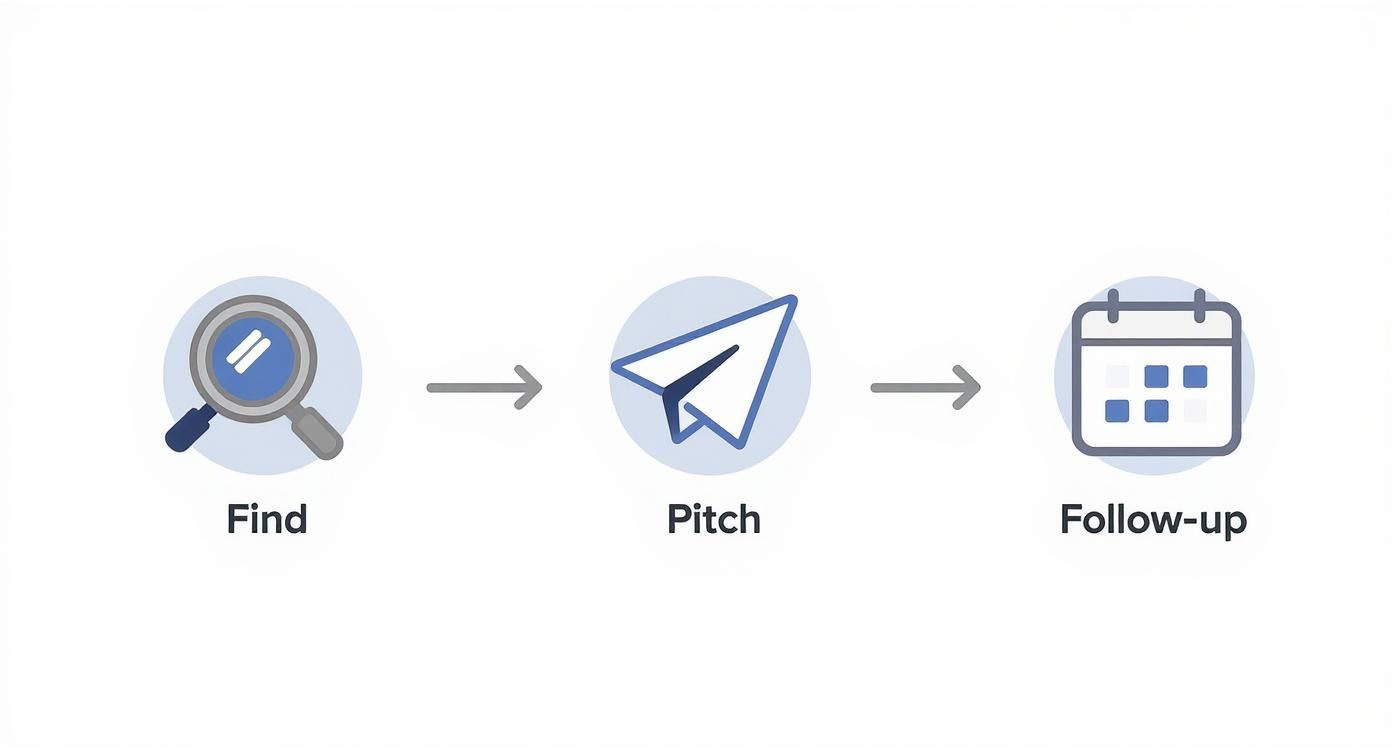
It’s all about creating a repeatable system. Getting great sponsors isn't about luck. It's about having a solid process.
Creating Tiered Sponsorship Packages
Want to make it incredibly easy for a brand to say "yes"? Offer them pre-built packages. Instead of kicking off a long negotiation, you present clear options that fit different budgets and goals. This immediately positions you as a professional who understands their needs.
And make no mistake, brands are ready to invest. A 2024 SponsorUnited report showed that North American sponsorship spending is projected to grow 6.6% to reach $35.1 billion. The money is there, but brands need partners who can show them a clear path to a return on their investment.
By creating tiered packages, you give brands a choice of how to work with you, not if they should. This simple shift in framing can dramatically increase your closing rate.
Here are a few package ideas you can steal and adapt for your own newsletter.
- The Primary Sponsor (High-Tier): This is your top-shelf offering. It gets them the premium ad slot right at the top, maybe a personal mention in your intro, and even a shout-out on your social media. This is for the brands who want to be seen by everyone.
- The Featured Content (Mid-Tier): Think of this as a "deep dive" or a dedicated section that feels more like an editorial piece than a banner ad. It's perfect for brands that want to tell a story or provide real value to your audience.
- The Classified Ad (Entry-Level): A simple, text-based ad at the bottom of your newsletter. This is a fantastic, low-risk way for smaller brands to test the waters with your audience, and it’s an easy way for you to fill unsold inventory.
Negotiate Terms and Manage the Partnership
Getting an enthusiastic "yes" from a potential sponsor is a fantastic feeling, but don't pop the champagne just yet. The real work is just beginning. This is where you transition from pitching your newsletter to building a genuine partnership. How you handle the next steps, negotiation and management, is what separates a one-off ad from a profitable, long-term relationship.
It can be tempting to just accept the first offer that comes your way, especially when you're just starting out. I get it. But taking the time to negotiate thoughtfully protects you and, just as importantly, signals to the sponsor that you're a serious professional. The goal here isn't to squeeze every last penny out of them. It's to land on a deal that’s fair, crystal clear, and sets you both up for a win.
Secure a Fair and Clear Deal
The secret to a good negotiation is knowing exactly what you want before the conversation even starts. What does a perfect partnership look like to you? Having that clarity gives you the confidence to talk terms and find that sweet spot of common ground.
To avoid any misunderstandings down the road, make sure your negotiation covers a few key points.
- Deliverables: Get specific. Really specific. Are they getting one primary ad slot? A simple text link? A mention on your social channels? Clearly define everything the brand gets for their investment.
- Exclusivity: Will you agree not to feature their direct competitors in the same issue, or even for a set period? Exclusivity is a premium feature, so if they want it, you should absolutely charge more for it.
- Payment Schedule: Nail down the payment terms from the get-go. Net 30 (payment due within 30 days) is pretty standard, but don't be afraid to ask for 50% upfront to lock in the booking, especially for larger campaigns. For any brand you haven't worked with before, I always recommend getting payment before the ad goes live.
Negotiation isn't about winning or losing. It's about building a partnership on a solid foundation of mutual understanding. A clear, well-defined agreement is your best friend for preventing headaches later on.
Understand the Sponsorship Agreement
Here's a non-negotiable rule. Never, ever run a sponsorship without a written agreement. This doesn't have to be a 50-page document drafted by a team of lawyers. A simple contract or even a detailed email confirmation that both parties agree to is often enough.
Whatever form it takes, make sure your agreement clearly outlines these essentials:
- Campaign Dates: The exact date (or dates) the sponsorship will run.
- Ad Creative Deadline: The final date for the sponsor to provide all their materials (copy, images, links, etc.).
- Cancellation Policy: What happens if you or the sponsor has to cancel? A fair policy might be a full refund up to 14 days before the run date, and no refund after that point.
- Approval Process: Include a clause that states you have the final say on ad copy. This is crucial for ensuring it fits your newsletter's tone and maintains quality for your readers.
Deliver on Your Promises
Once the agreement is signed, it's time to show the brand they made the right choice. A smooth, professional process is what turns a happy sponsor into a repeat customer.
Start with a simple onboarding workflow. This could be a welcome email that confirms all the details and gives them a clear, easy way to submit their ad creative. This is where tools like AdSlots can be a lifesaver. It’s designed to automate this whole process, from collecting payment via Stripe to tracking ad fulfillment on a calendar, so you never miss a beat. It keeps you organized and makes you look incredibly polished.
Keep in mind, the market is always changing. Recent data shows that 74% of brands trimmed their sponsorship spending in 2024, with many renegotiating deals to combat rising costs. This means your proposal needs to be backed by solid data and a clear alignment with the brand's values to really prove its worth. You can read more about these global sponsorship trends to get a better feel for the current climate.
Prove Your Value with Performance Reporting
The partnership doesn’t end when you hit "send." A few days after the campaign runs, you need to follow up with a concise performance report. This simple step is your most powerful tool for securing renewals and proving your value.
Your report should be easy to scan and highlight the metrics that matter most:
- Total Sends: The list size the ad was sent to.
- Open Rate: The percentage of subscribers who opened that email.
- Clicks and CTR: The total clicks on the sponsor’s link and the click-through rate.
But don't just throw numbers at them. Add a sentence or two of context explaining what the results mean. A strong report proves the ROI of sponsoring your newsletter and naturally opens the door to a conversation about their next campaign. This is how you turn a single sponsorship deal into a predictable, recurring revenue stream.
Common Sponsorship Questions Answered
Even with a solid plan, diving into brand sponsorships can bring up a ton of questions. What if my list is too small? Am I charging the right amount? What's the one thing I absolutely shouldn't do?
Let's get those sorted. Here are my straight-up answers to the questions I hear most often from creators just starting out.
How Many Subscribers Do I Need to Get a Sponsor?
Forget the idea that you need some magical number like 10,000 or 20,000 subscribers. That’s a myth. Brands worth working with care way more about engagement than raw numbers.
Think about it from their perspective. A tightly-knit community of 1,000 subscribers with a 50% open rate is a goldmine. It's a direct line to a loyal audience. A bloated list of 10,000 subscribers with a 15% open rate? That’s just noise.
Focus on proving you have a real connection with your readers. I've seen countless creators land their first deals with just 500 to 2,000 subscribers by starting with a compelling introductory rate. It’s all about the quality of your audience, not the quantity.
What's the Biggest Mistake Creators Make When Pitching?
Easy. Sending a generic, copy-and-paste email. It’s the fastest way to get your pitch deleted. Brand managers see dozens of these lazy emails every single day, and they can spot them a mile away.
Your pitch absolutely has to show that you've done your homework. Prove you understand their brand, who their customers are, and why your audience is the perfect fit for what they're trying to achieve.
A personalized pitch is your secret weapon. Mention a recent product launch, a campaign you admired, or a company value that genuinely connects with you. This simple step transforms you from just another creator asking for money into a potential partner they want to talk to.
Should I Put My Prices in My Media Kit?
Yes, but with a bit of strategy. Instead of listing rigid, non-negotiable prices, I always recommend providing a starting price range. It's the best of both worlds.
For instance, you could say "Sponsorship packages start at $250." This does two crucial things. First, it gives brands an immediate sense of your value and helps filter out those who can't meet your baseline budget, saving everyone time.
Second, it keeps the door wide open for negotiation. You can still create custom packages for bigger, more involved partnerships. Showing a starting point signals you're a professional, but it doesn't box you into a corner.
How Should I Handle Performance-Based Deals?
Tread very, very carefully. In a performance-based deal (where you get paid per click or per sale), you're taking on all the risk. You have zero control over the brand's landing page, their checkout process, or their product pricing. A brilliant ad in your newsletter can easily fall flat if their website is a clunky mess.
Because of all those variables, it's almost always better to stick with a flat-rate fee for your ad placements. This guarantees you get paid for the value you deliver, access to your audience, no matter how well their sales team performs that week.
If a brand pushes for it, you could offer a hybrid model as a compromise. Suggest a lower flat fee combined with a commission on sales. This protects your baseline income while giving the brand that performance incentive they're looking for. It can be a great foundation for a long-term partnership with a brand you truly believe in.
Juggling all of this, tracking ad inventory, sending invoices, chasing payments, can turn into a full-time job. With AdSlots, you can put that entire workflow on autopilot. Our platform replaces spreadsheet chaos with a clean, automated system, freeing you up to focus on what you actually love: creating amazing content. Take a look at how AdSlots works and get your time back.